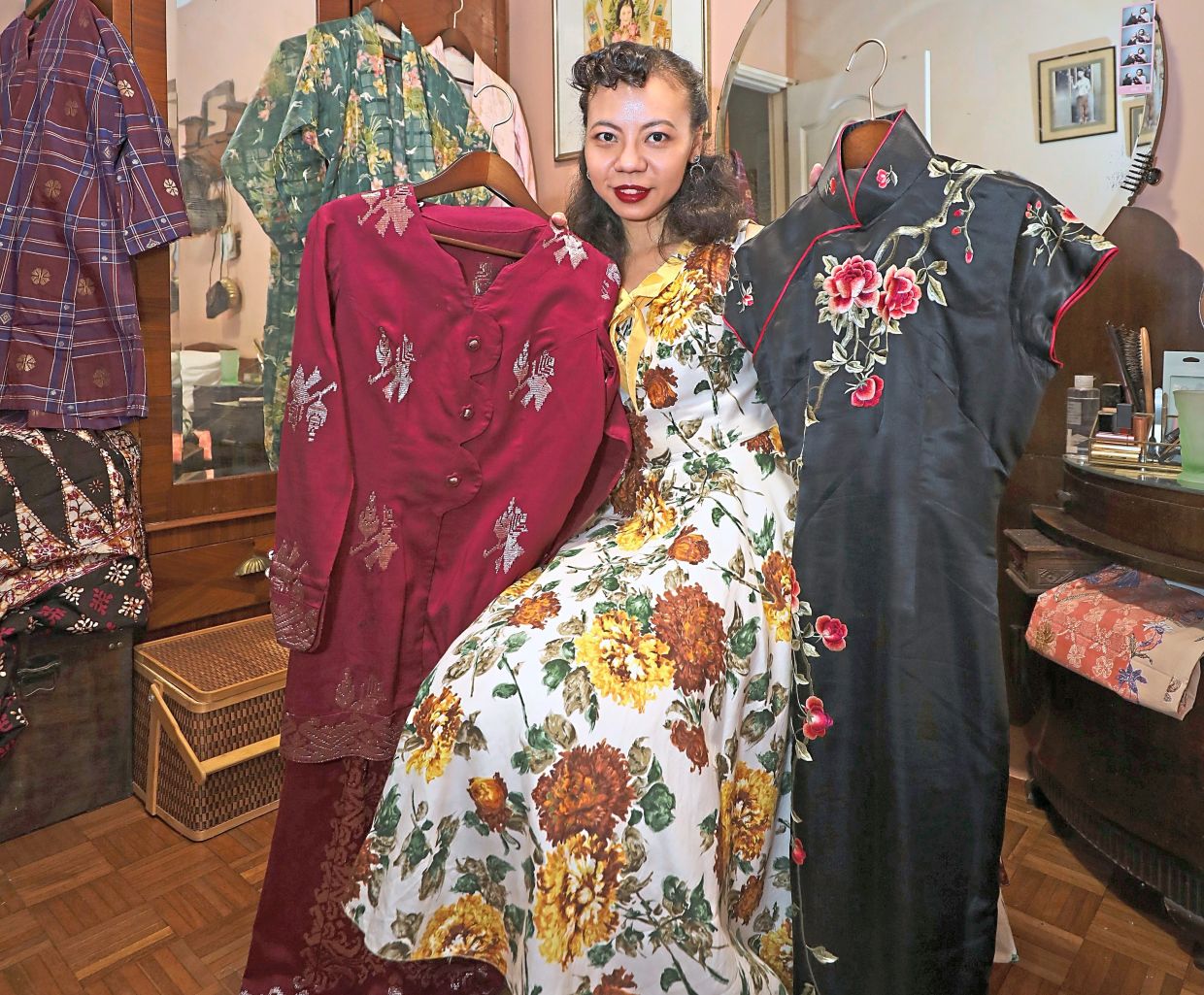
A black and white photograph from the 1950s captures Suzanne Lim's grandparents mid-dance inside a local dance hall, both dressed impeccably for the era. That single image became the catalyst for a lifelong pursuit that now defines her relationship with Malaysia's sartorial heritage. For Lim, a 33-year-old graphic designer, vintage clothing represents far more than fashion nostalgia—it is a tangible bridge to understanding how previous generations expressed identity, status, and cultural belonging through what they wore. Her grandparents' love of dance and their fashion-forward sensibilities shaped her artistic vision, eventually leading her to curate an extensive collection of traditional Malaysian pieces including kebaya, cheongsam, batik, and songket that she now documents and shares with growing audiences online.
Lim's immersion in dance from age four onwards naturally evolved into an appreciation for the elaborate costumes accompanying traditional performances. During her secondary school years, participation in her school's cultural club exposed her to the intricate design and cultural significance of traditional garments. What began as costume requirements for cultural events gradually transformed into genuine fascination with the historical narratives embedded within fabric, stitching, and pattern. Unlike museum curation or academic study, Lim's approach to these garments is deeply personal and experiential. She wears them, photographs them against heritage sites and meaningful backdrops, and shares these visual interpretations on social media platforms where they reach contemporary audiences who might never encounter such pieces in institutional settings.
For Lim, the value of vintage Malaysian clothing extends well beyond aesthetics. Each piece functions as historical documentation, revealing economic circumstances, social hierarchies, and cultural priorities of its era. "Fashion from the past can tell you a lot about how people lived," she explains, emphasizing how garments serve as windows into understanding the lived experiences of previous generations. This perspective transforms her collection from a personal wardrobe into an educational resource and cultural archive. By wearing and presenting these pieces authentically, she challenges the perception that heritage clothing belongs only in museums or formal ceremonial contexts. Her work demonstrates that traditional garments can be integrated into contemporary life while maintaining their historical and cultural integrity.
Parallel to Lim's journey is that of Mohamad Alif Daniel Mohammad Nor, a 25-year-old graduate whose connection to historical clothing runs through his passionate engagement with Malaysia's past. His fascination germinated from stories shared by his late grandmother, conversations that sparked broader interests in historical documentation, vintage music, cinema, and military uniforms. Beginning in his mid-teens with the collection of currency notes issued by the Japanese military during Malaya's occupation, his intellectual curiosity deepened into serious historical scholarship. This progression ultimately led him to join Persatuan Reka Ulang Sejarah (PRUS), an organization dedicated to historical re-enactment and preservation. Through this involvement, Mohamad Alif Daniel discovered that hands-on engagement with historical artifacts and clothing teaches cultural understanding in ways that textbooks cannot replicate.
The distinction between Lim's approach and Mohamad Alif Daniel's lies in methodology rather than intent. While Lim focuses on wearing and visually documenting vintage pieces through contemporary photography and social media, Mohamad Alif Daniel emphasizes historically accurate re-enactment as a pedagogical tool. Both practitioners, however, share a conviction that fashion and material culture provide pathways to understanding identity and history that bypass traditional institutional frameworks. For young Malaysians increasingly disconnected from museums and formal historical education, these grassroots approaches offer alternative channels for cultural engagement and learning. The rise of such initiatives reflects broader demographic shifts in how younger generations access and process information about their heritage.
Lim remains thoughtful about the balance between authenticity and creative interpretation. She acknowledges that not every outfit she presents maintains strict period accuracy, particularly when applying contemporary styling to vintage pieces. However, when she possesses access to authentic textiles and historical garments, she prioritizes fidelity to original design and construction. This nuanced approach recognizes that cultural preservation need not mean rigid, unchanging presentation. Rather, heritage can remain vibrant and relevant when thoughtfully adapted for contemporary contexts. The act of simply showcasing that traditional Malaysian textiles and garment types exist—making them visible and tangible to digital audiences—contributes meaningfully to cultural continuity.
Lim has observed a discernible uptick in vintage clothing collection among young Malaysians, a phenomenon she attributes partly to digital culture's paradoxical effect. The predominantly virtual nature of contemporary life has created psychological and cultural yearning for tactile, material experiences and nostalgic connection to tangible objects. This manifests as "escapism from the world we know today," she reflects, but not escapism meant to recreate the past wholesale. Rather, young collectors draw inspiration from historical periods while asserting creative autonomy through modern adaptations. "A lot of young people enjoy that kind of creative freedom," Lim observes, suggesting that this combination of respect for heritage alongside contemporary innovation drives expanding interest in vintage Malaysian clothing.
Yet Lim remains attentive to preserving boundaries around cultural representation. While creative reinterpretation holds value, she maintains that such freedom must operate within certain parameters. "We still need to stick to the fundamentals of the clothes so they don't get muddled and misrepresented, in a way that may threaten our cultural identity," she asserts. This perspective reflects mature understanding that cultural preservation requires balancing innovation with responsibility. Careless or disrespectful adaptation risks hollowing out the meaning embedded within traditional garments, reducing them to aesthetic accessories divorced from their cultural contexts and historical significance. For Lim, wearing and presenting vintage Malaysian clothing responsibly means honoring not just the craftsmanship and design, but the cultural worldviews and lived experiences they represent.
Mohamad Alif Daniel's work contributes additional dimensions to this cultural conversation. He has observed that his social media documentation of traditional attire has encouraged others, particularly those previously hesitant or embarrassed to wear heritage clothing publicly, to reclaim these garments as expressions of legitimate pride rather than markers of backwardness or cultural irrelevance. This phenomenon carries significant implications for Malaysian identity formation, particularly among younger demographics potentially susceptible to internalized cultural inferiority. When visible, respected figures normalize and celebrate traditional dress, they challenge pervasive narratives positioning Western fashion as the default or superior aesthetic standard. Mohamad Alif Daniel's platform becomes site of resistance against cultural erasure and validation of heritage as contemporary and worthy.
The broader movement represented by figures like Suzanne Lim and Mohamad Alif Daniel speaks to deeper currents within Malaysian society. As globalization accelerates and digital culture mediates increasingly more social interaction, deliberate engagement with material heritage and local history emerges as counterbalancing force. These individuals model how cultural preservation need not be antiquarian or backward-looking, but rather an ongoing practice of meaning-making that informs contemporary identity. Their work suggests that heritage clothing serves generational purposes: connecting younger Malaysians to family histories and ancestors, substantiating abstract national identity through concrete material experience, and asserting local cultural significance against homogenizing global pressures. Through vintage garments photographed and worn in present-day contexts, these cultural practitioners render visible the continuities linking past generations to current ones, suggesting possibilities for future cultural belonging rooted in acknowledged historical depth and material specificity.

