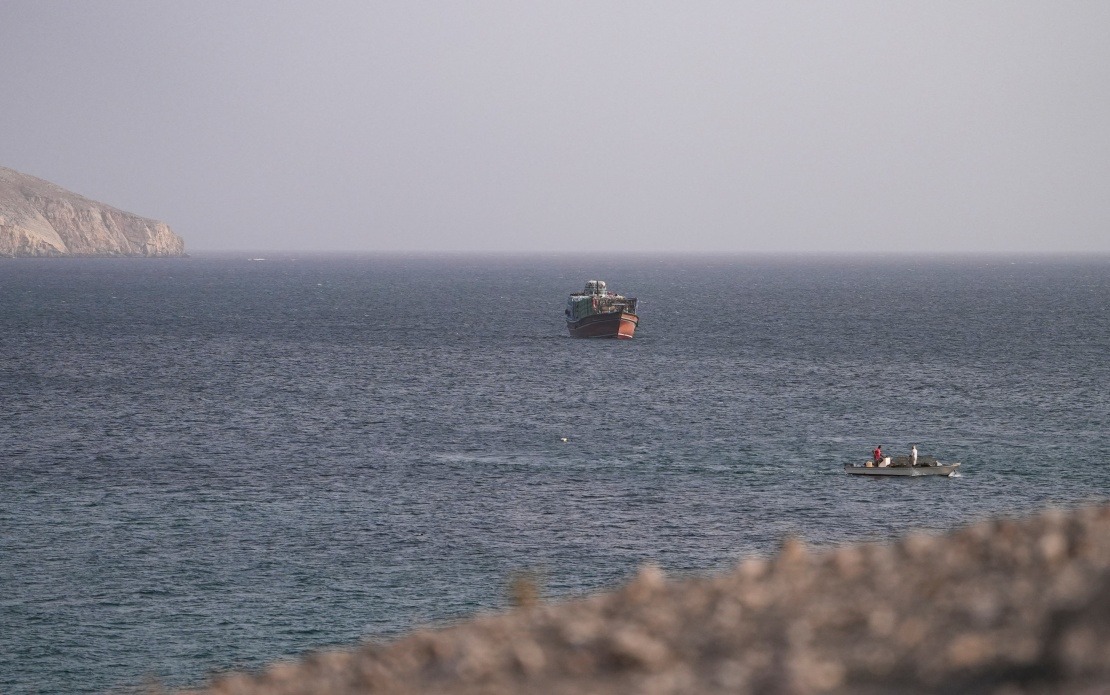
Iran has firmly rejected any prospect of restoring the Strait of Hormuz to its pre-conflict operational status, according to Iranian Foreign Ministry Spokesperson Esmaeil Baqaei. Speaking during a televised address, Baqaei stressed that collaborative efforts between Tehran and Muscat to establish new maritime security frameworks represent a departure from earlier conditions rather than a simple reopening of shipping lanes. This declaration carries significant implications for global energy security and regional stability, particularly given the strait's role as a critical chokepoint through which roughly one-third of internationally traded petroleum passes annually.
The Iranian official emphasised that protracted discussions between Iran and Oman, as the two nations bordering the strategically vital waterway, have been underway for several months with the express aim of establishing coordinated security protocols for maritime transit. Baqaei explained that formal negotiations commenced immediately following a ceasefire announcement on April 8, with multiple rounds of substantive exchanges taking place subsequently. This diplomatic engagement reflects a recognition by both capitals that the strait's future management requires binding institutional arrangements rather than ad hoc coordination, a shift that underscores the seriousness with which regional actors view the necessity for lasting frameworks.
The memorandum of understanding that concluded hostilities explicitly allocates responsibility for the strait's governance to Iran, though with mandatory consultation involving Oman and broader regional dialogue mechanisms. Baqaei referenced the fifth clause of this accord, highlighting that future management procedures must incorporate Tehran's consultations with Muscat and meaningful engagement with other regional stakeholders. This multilayered approach reflects an attempt to balance Iranian sovereign prerogatives with the legitimate interests of other maritime nations dependent upon unobstructed passage through these waters.
Initially, during the opening weeks following the ceasefire agreement, the northern shipping corridor operated without significant incident, enabling vessel movements to proceed relatively unimpeded. However, Baqaei stated that before the prescribed 30-day period for full restoration of pre-war maritime conditions could elapse, an undisclosed military action targeting Iran interrupted this progress. This assertion provides context for Tehran's insistence that fundamental conditions have irreversibly shifted and that restoration of previous arrangements remains untenable.
Crucially, the prospective maritime corridor that Iran and Oman are negotiating will diverge from both existing northern and southern passages, representing instead a newly configured route to be formalised through bilateral agreement. This strategic redrawing of maritime boundaries reflects Iranian determination to prevent what Tehran characterises as potential exploitation by adversaries while simultaneously accommodating legitimate international commerce. For Southeast Asian nations and other countries dependent on reliable Hormuz access, this reconfiguration introduces uncertainty regarding future passage protocols and potential compliance requirements.
Baqaei underscored that Tehran's bilateral negotiations with Muscat are purely regional matters not involving external parties, signalling resistance to international pressure regarding the strait's operational parameters. The Iranian official asserted that preventing misuse of the waterway by parties that have perpetrated military aggression against Iran represents a paramount consideration, requiring institutional safeguards that preserve Tehran's sovereignty while enabling legitimate maritime traffic. This formulation appears designed to justify potential future restrictions whilst maintaining technical neutrality.
The Iranian spokesperson addressed contemporary tensions with Washington, rejecting US threats as merely the latest iteration of long-standing adversarial rhetoric. Baqaei referenced previous American military operations against Iran and characterised contemporary statements by US officials, including claims that Iran has sought to curtail attacks, as historically inaccurate assertions employed as psychological warfare. He contended that past experiences demonstrate Iranian resilience against intimidation and media pressure, positioning Tehran's decision-making as anchored exclusively in national interest calculations rather than external coercion.
Baqaei noted that Iran had received diplomatic overtures from Bulgaria, the United Kingdom, and Ukraine within the preceding 24 hours, suggesting active diplomatic engagement despite heightened regional tensions. The Iranian official reiterated that Tehran bears responsibility for communicating consequences should additional military aggression or escalation occur, warning that any nation providing military support, bases, or logistical assistance to parties attacking Iran would bear accountability for participating in such aggression.
The Iranian position reflects a broader strategic posture that distinguishes between the technical reopening of maritime lanes and the fundamental recalibration of governing arrangements for the Strait of Hormuz. From Tehran's perspective, any future configuration of the waterway remains contingent upon regional security conditions and actions undertaken by external powers, particularly the United States. This conditional framing suggests that Iranian compliance with international maritime norms cannot be presumed independent of broader strategic calculations regarding regional power dynamics and perceived threats to national security.
For Malaysia and other Southeast Asian nations, these developments carry substantial implications. Any sustained disruption to Hormuz transit would reverberate through regional energy markets and supply chains dependent upon Middle Eastern petroleum exports. Malaysian strategic planners and shipping interests therefore possess considerable incentive in monitoring whether the Iran-Oman framework ultimately produces functional maritime security arrangements or whether unresolved tensions generate periodic transit complications. The outcome will substantially influence regional economic stability and energy price volatility in coming quarters.
The Iranian foreign ministry's insistence that the strait cannot return to pre-conflict operational modalities reflects a determination to extract strategic concessions from the international community whilst maintaining the appearance of reasonable engagement. By conditioning the strait's future status upon regional security developments and the actions of external powers, particularly Washington, Tehran has positioned itself to justify future restrictions whilst maintaining rhetorical commitment to bilateral cooperation with Oman. Whether this approach ultimately produces a durable maritime security framework or merely masks deeper unresolved tensions will substantially determine regional stability throughout the remainder of 2024.

