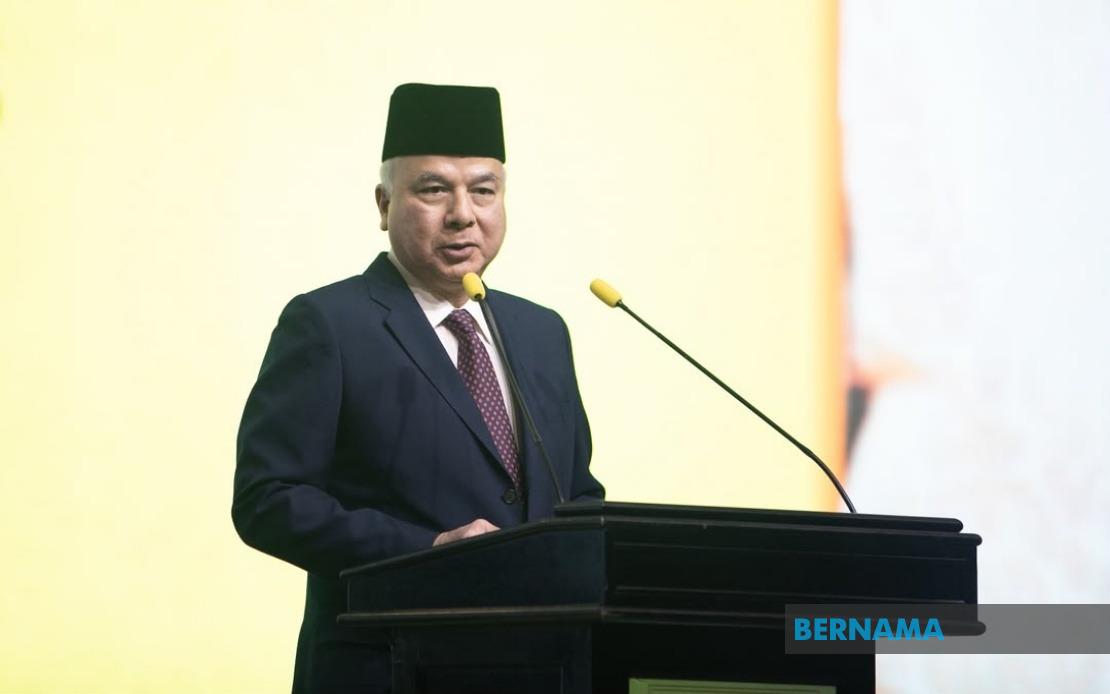
The Sultan of Perak, Sultan Nazrin Shah, has delivered a powerful message about the foundations of national success, arguing that even the most resource-rich and culturally vibrant societies will falter without the bedrock of institutional strength and genuine accountability from those in power. Speaking at the 8th World Conference on Islamic Thought and Civilisation in Ipoh, the royal leader warned against the corrosive effects of self-serving politics, emphasising that tangible prosperity and citizen welfare depend fundamentally on the quality of governance infrastructure rather than on natural wealth alone.
At its core, Sultan Nazrin's conception of good governance rests on the successful integration of several reinforcing elements, each designed to outlast any individual leader or political cycle. The first pillar involves transparency in public finances—ensuring that citizens understand how their taxes are collected and deployed, thereby building confidence that their contributions genuinely serve the broader population rather than enriching a narrow elite. This transparency functions as a check on arbitrary power and creates the conditions for informed public debate about priorities and resource allocation.
The second pillar concerns the impartial and universal application of law. In Sultan Nazrin's formulation, the rule of law means that no person, regardless of wealth or political station, can escape accountability, while simultaneously ensuring that the poorest and most vulnerable receive equal protection. This principle stands in direct opposition to systems where legal processes become tools of factional advantage or where the connected enjoy impunity while the marginalised face harsh enforcement. For Malaysia and other Southeast Asian nations navigating rapid development, this message carries particular weight, as questions about judicial independence and equitable application of justice remain live concerns in regional discourse.
Beyond institutional mechanics, Sultan Nazrin highlighted the necessity of a particular political culture—one in which disagreement, while vigorous, remains fundamentally civil and channelled through legitimate structures rather than through violence or extraconstitutional pressure. Paradoxically, he noted, many of the world's most stable democracies are simultaneously among the most contentious, with vigorous debate characterising their public sphere. The difference lies not in the absence of conflict but in the shared acceptance of procedures for resolving it. When that procedural consensus erodes, when citizens lose faith in the fairness of elections, the independence of courts, or the integrity of public office, the state itself begins to deteriorate—and it is invariably the poor and powerless who suffer first and most severely from institutional collapse.
The characterisation of a budget as a moral document alongside its financial function represents a significant reframing of how development priorities should be evaluated. Rather than treating budgetary decisions as merely technical exercises in resource allocation, Sultan Nazrin insisted that every spending choice reveals what a government truly values and whom it genuinely prioritises. This perspective carries implications for how Malaysia and other developing economies approach questions of inequality, social investment, and the distribution of opportunity. It suggests that fiscal policy cannot be divorced from ethical considerations about inclusive development and justice.
Sultan Nazrin underscored the importance of a professional civil service that operates without regard to race, religion, or political affiliation—positioning such institutional neutrality as the concrete embodiment of national unity. When bureaucrats use public office to favour particular communities or advance partisan interests, they actively undermine the legitimacy of the state itself. Conversely, when governance structures deliver services impartially, they reinforce the notion that citizenship transcends narrow identities and that the state exists to serve all. This message resonates powerfully in Malaysia's multiethnic context, where perceptions of unfairness in public administration remain a recurring flashpoint in political debate.
On the question of development strategy, Sultan Nazrin rejected isolationism and autarky as viable paths to prosperity. Modern economic success, he argued, depends fundamentally on engagement with the global economy—drawing capital, technology, knowledge, and markets from beyond national borders. Trade, foreign investment, and international knowledge exchange function as the currents upon which contemporary prosperity flows. Economies that simultaneously embrace openness while cultivating diverse, resilient domestic industries systematically outperform those retreating into protectionism or dependent on single sectors. For Malaysia, which has long positioned itself as a regional trade hub and manufacturing centre, this framing validates existing orientations toward globalisation while cautioning against over-reliance on any single external relationship or commodity.
Yet Sultan Nazrin sounded a note of caution about the potential pitfalls of international engagement. Cooperation must not become synonymous with dependency, and openness ought not to erode a nation's capacity for autonomous decision-making and strategic independence. This tension—between the genuine benefits of integration and the need to retain agency—represents a persistent challenge for developing economies in Southeast Asia, particularly when dealing with large trading partners or significant foreign investors. The balance lies in welcoming external capital and expertise while deliberately building domestic capabilities and institutional capacity that ensure long-term self-sufficiency rather than perpetual reliance on foreign goodwill.
Islamic finance emerged as a focal point in Sultan Nazrin's analysis of regional economic potential. While Malaysia has established itself over decades as a global centre for Islamic financial instruments—from sukuk issuance to takaful insurance to Syariah-compliant asset management—Sultan Nazrin contended that the sector has not yet fulfilled its deeper promise. Beyond mere technical compliance with prohibitions on interest-based transactions, Islamic finance embodies a philosophical approach centred on risk-sharing, asset-backing, and equitable participation in economic returns. If taken seriously, he argued, this philosophy could catalyse cross-border infrastructure investment, small and medium enterprise financing across Organisation of Islamic Cooperation member states, and the provision of patient capital for long-term development challenges—from clean water access to renewable energy deployment—that demand commitment beyond quarterly shareholder returns.
The implications of Sultan Nazrin's address extend across Southeast Asia and the Islamic world more broadly. His emphasis on institutional resilience over individual charisma, on procedural legitimacy over personality-driven governance, and on inclusive development over elite enrichment offers a counternarrative to prevailing regional trends. In an era when several Asian democracies face questions about backsliding on accountability and transparency, and when populist leadership often prizes decisiveness over institutional constraint, Sultan Nazrin's advocacy for strong, durable institutions serves as a reminder of the long-term costs of institutional erosion. His vision suggests that sustainable prosperity and genuine national pride emerge not from nationalist rhetoric or short-term performance metrics, but from the patient, often unglamorous work of building governance structures worthy of genuine public trust and confidence.
The presence of Deputy Prime Minister Datuk Seri Fadillah Yusof, Perak Menteri Besar Datuk Seri Saarani Mohamad, and Higher Education Minister Datuk Seri Dr Zambry Abd Kadir at the conference underscored the official weight attached to these messages about governance and development philosophy. As Malaysia continues to navigate economic pressures, demographic change, and questions about political direction, the emphasis on institutional strength, transparency, and accountable leadership provides a framework for evaluating policy choices and political directions—one rooted not in ideology or factional interest but in the empirical observation that nations genuinely serving their citizens require the foundational scaffolding of governance systems that transcend any individual leader.

