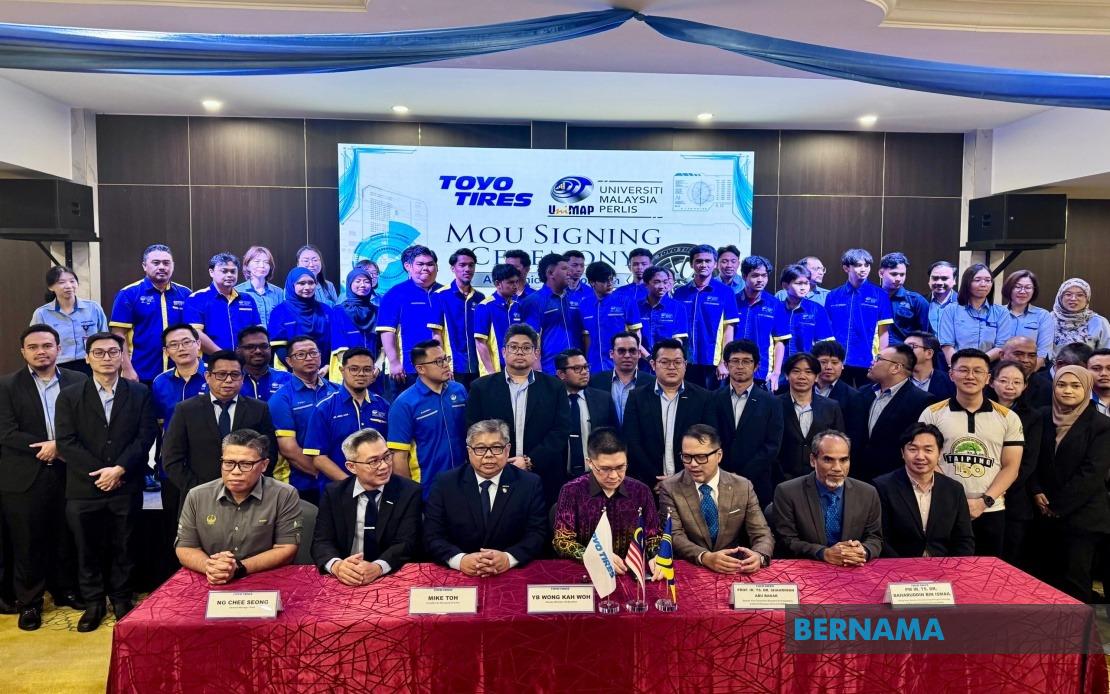
Malaysia's vocational education sector is experiencing unprecedented demand, with applications for admission to Ministry of Education Vocational Colleges (KV) reaching 67,045 as of mid-August, according to Deputy Education Minister Wong Kah Woh. The figure represents a striking mismatch between interest and capacity, with available places standing at just 19,567. Wong, speaking in Taiping after signing a memorandum of understanding between Toyo Tyre Malaysia and Universiti Malaysia Perlis, predicted that applications would exceed 68,000 by the midnight deadline, signalling robust enthusiasm for skills-based pathways among Malaysian students.
The surge in applications underscores a significant shift in educational preferences within Malaysia, moving toward technical and vocational training that directly prepares graduates for employment. This momentum reflects wider recognition among Malaysian families that career-ready credentials offer a pragmatic alternative to traditional academic routes. The Government's MADANI initiative has prioritised technical and vocational education and training (TVET), framing it as essential infrastructure for economic competitiveness and workforce development. Wong credited the Ministry of Education and the government's policy direction with catalysing this renewed interest, positioning vocational colleges as viable and attractive educational destinations.
The employment outcomes for vocational college graduates provide the strongest validation of this approach. Wong highlighted that KV graduates achieved a 99.95 per cent employability rate in 2023, with consistent rates between 98 and 99 per cent recorded across preceding years. These figures are substantially higher than many university graduate employment rates, presenting vocational education as a tangible pathway to economic participation. For Malaysian families weighing educational options, this data becomes persuasive evidence that vocational training delivers immediate labour market value, reducing years spent in formal education before securing stable income.
The alignment between curriculum offerings and industry demand explains the remarkable employment success. Wong emphasised that close collaboration between the Ministry and private sector employers ensures vocational colleges teach skills that companies actively seek. This partnership model creates a feedback loop where employers communicate labour market gaps to educational institutions, enabling curriculum adjustments that maintain relevance. The memorandum signed between Toyo Tyre Malaysia and UniMAP exemplifies this collaboration, fostering direct industry-education partnerships that strengthen the entire TVET ecosystem.
For Malaysia's broader economic strategy, the surge in vocational applications carries significant implications. The country competes for investment and skilled workers in a regional context where Singapore, Thailand, and Indonesia are similarly developing technical workforces. A growing pipeline of job-ready vocational graduates enhances Malaysia's attractiveness to manufacturing, automotive, and technology sectors seeking reliable skilled labour. The dominance of employment across nearly all KV graduates suggests that Malaysia is successfully converting training into productive economic participation, reducing unemployment and underemployment among working-age populations.
The capacity constraint revealed by the 67,000 applications against 19,567 places demands policy attention. While high demand validates the sector's direction, the substantial shortfall indicates that current infrastructure cannot accommodate all interested students. Expanding vocational college capacity would require investment in facilities, instructors, and equipment—a substantial undertaking but one justified by evident demand and proven employment outcomes. State governments and the federal Ministry of Education must coordinate resource allocation to increase places, perhaps through hybrid delivery models or satellite campuses that extend access beyond urban centres.
Regional dynamics also influence Malaysia's vocational education landscape. Southeast Asian neighbours have invested heavily in TVET as manufacturing and services sectors evolve. Thailand's emphasis on technical colleges and Vietnam's rapid TVET expansion create competitive pressure for Malaysia to maintain quality and accessibility. Malaysian vocational graduates compete regionally for positions; high employability rates translate to competitive advantages in attracting premium jobs. The Government's continued investment in TVET becomes an investment in regional competitiveness rather than merely domestic skill development.
The demographic composition of applicants merits further investigation. The surge likely reflects students from diverse socioeconomic backgrounds seeking accessible pathways to employment. Vocational colleges typically charge lower fees than universities and deliver faster entry into labour markets, making them attractive to families with limited financial resources. This democratisation of skills training aligns with inclusive growth objectives, enabling broader populations to participate in economic advancement. Understanding which communities access vocational training reveals whether TVET genuinely functions as an equity-enhancing mechanism or primarily serves already-advantaged students.
Industry players are increasingly recognising that graduate quality depends on sustained investment in teaching quality and modern equipment. The 99.95 per cent employment rate reflects not merely graduate persistence but employer satisfaction with graduate capabilities. This places responsibility on vocational institutions to maintain standards as enrolments expand. Scaling operations while preserving quality presents ongoing challenges that require funding, monitoring, and accountability frameworks. Wong's emphasis on industry collaboration suggests that employers will continue pressuring institutions to deliver capable graduates, creating a quality discipline within the sector.
Looking forward, the sustained high demand for vocational education positions TVET as a permanent pillar of Malaysia's educational system rather than a secondary option. The success metrics—overwhelming applications and exceptional employment rates—validate policy choices prioritising skills development. However, translating demand into opportunity requires sustained commitment to expanding capacity while maintaining quality. The Government must signal long-term TVET investment through budget allocation, facility development, and instructor recruitment. Malaysian students choosing vocational pathways increasingly represent rational economic decision-making, selecting education aligned with measurable employment outcomes. This fundamentally reshapes Malaysia's educational landscape, elevating technical skills alongside academic qualifications as legitimate and economically superior choices for many learners.

