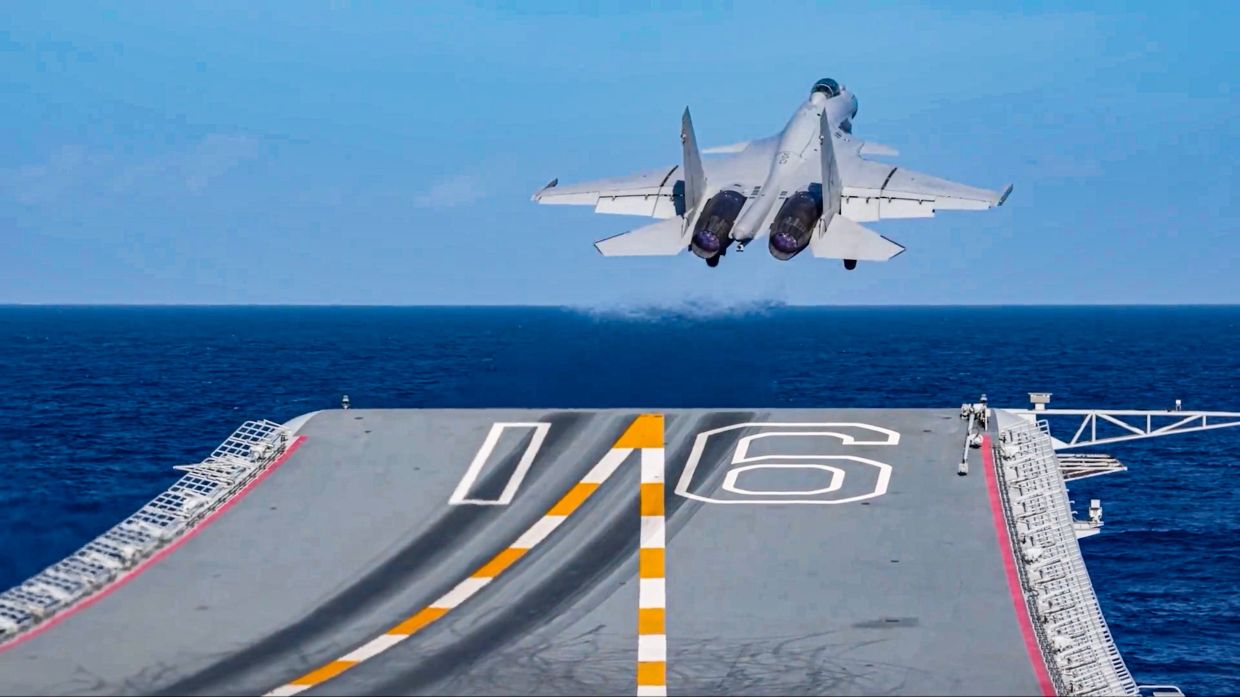
China's modernising naval forces, particularly its expanding aircraft carrier fleet, face a strategic vulnerability that could significantly constrain their operational effectiveness in any major conflict: the persistent difficulty in detecting and countering enemy submarines operating in the western Pacific. This undersea weakness has emerged as a central concern among defence strategists examining how regional military balances may evolve, with particular implications for Southeast Asia and the broader Indo-Pacific.
The Centre for Strategic and International Studies in Washington recently outlined how the United States and its allies might employ a "cost-imposition" strategy targeting Chinese carriers. The multi-faceted approach encompasses land-based strike networks, satellite-guided long-range air operations, electromagnetic and cyber warfare, and coordinated drone attacks. Yet military analysts consistently identify submarine operations as the element where the People's Liberation Army Navy remains most acutely exposed. The Pentagon's attack submarines, acknowledged as among the world's quietest and most capable platforms, operating throughout the western Pacific represent perhaps the single most potent threat to Chinese carrier groups. This vulnerability stems largely from documented gaps in the PLAN's undersea detection infrastructure and its limited capacity to track submerged vessels across vast ocean areas.
Geographic circumstances reinforce this strategic disadvantage. The western Pacific maritime environment presents natural chokepoints through which any Chinese naval force must transit, from the South China Sea northward through passages between the Philippines, Taiwan and Japan toward open ocean. Controlling these limited waterways would enable US and allied submarine forces, working alongside surface and air assets, to position themselves along predictable transit routes where Chinese carrier groups would become increasingly vulnerable. The geometry of regional waters thus compounds the technological gap, creating scenarios where even advanced carriers must navigate predictable pathways where sophisticated adversaries might concentrate their submarine forces.
Christopher Sharman, director of the China Maritime Studies Institute at the US Naval War College, acknowledges that China's undersea vulnerability "remains significant today," though he emphasises it constitutes "not a static weakness." The PLAN has invested substantially in recent years to develop capabilities addressing this specific deficiency. Critically, Chinese oceanographic knowledge lags that of the United States Navy—a seemingly technical matter with profound operational implications. Effective anti-submarine warfare requires comprehensive understanding of water temperature, salinity and density layers that affect acoustic propagation. This meteorological and oceanographic disadvantage particularly constrains PLAN operations beyond the first island chain, where Chinese forces operate farther from supporting shore infrastructure and where environmental conditions become less predictable.
Beijing has launched ambitious programmes to close this knowledge gap. The Transparent Ocean initiative, conceived over a decade ago, envisions establishing integrated networks combining satellites, research vessels, buoys, underwater gliders and seabed sensors across strategically vital waters including the South China Sea, western Pacific and Indian Ocean. Chinese officials have explicitly linked this oceanographic infrastructure to national security requirements, recognising that superior environmental awareness directly translates into enhanced submarine detection and anti-submarine capabilities. The Ocean University of China has already deployed hundreds of deep-sea observation systems and expanded monitoring networks extending from the South China Sea into the western Pacific, representing a long-term commitment to achieving oceanographic parity with American capabilities.
Simultaneously, the PLAN has expanded its dedicated anti-submarine warfare capacity. The maritime studies institute has documented growing fleets of fixed-wing maritime patrol aircraft and Type 927 ocean-surveillance vessels equipped with advanced towed-array sonar systems. Equipment upgrades affecting aircraft, helicopters and shipboard sensors reflect systematic efforts to enhance the detection and targeting of submarines. These incremental improvements, however, address symptoms rather than fundamental constraints. Timothy Heath, head of defence research firm Perceptum, underscores that US submarines remain extraordinarily quiet, presenting targets that Chinese detection systems struggle to identify with certainty. This technological gap means that even as China improves its overall anti-submarine capabilities, American submarine advantages may persist for years.
The strategic implications extend beyond carrier protection. Undersea warfare constitutes a core component of PLA naval strategy, particularly relevant to the first island chain where the PLAN seeks sea control in any potential conflict. Beyond that chain and extending into the Indian Ocean, Chinese strategists view effective submarine operations as essential to countering American naval superiority and preventing third-party intervention in scenarios involving Taiwan. Military-affiliated Chinese authors have occasionally acknowledged that their coastal waters represent a "wide-open door" through which adversaries can penetrate due to insufficient monitoring and control capabilities. This candid assessment reflects serious concern within defence circles about the implications of undersea vulnerability.
The Taiwan dimension adds complexity to submarine vulnerability calculations. Washington opposes any forcible reunification attempt and maintains legal obligations to provide Taiwan with defensive weapons systems. Japanese involvement in any Taiwan conflict would substantially elevate submarine warfare's significance, as Japanese forces could target Chinese warships operating near Japanese waters. In such scenarios, Chinese carriers might theoretically operate in the western Pacific providing air cover for naval forces seeking to delay third-party intervention. Yet Heath argues this deployment pattern would prove reckless given multiple American targeting options available in those expansive waters. China's land-based intermediate-range ballistic missiles remain superior instruments for threatening US naval assets beyond the second island chain. Deploying extraordinarily expensive and irreplaceable carriers in such exposed circumstances contradicts basic military logic.
The strategic dilemma facing Chinese planners reflects broader constraints on carrier utility in contested waters. While carriers provide power projection capabilities and maintain political presence, their vulnerability to submarines, aircraft and long-range missiles increasingly requires supporting forces of prohibitive scale and complexity. American and allied strategists argue that recognising China's submarine vulnerability should shape Western procurement decisions. The report's authors advocate substantially increased investment in advanced torpedoes, undersea drone systems, and collaborative missile production with Japan and Australia—allies with their own interests in maintaining maritime stability and deterring adventurism across the Taiwan Strait.
For Southeast Asian observers, these dynamics carry profound implications. Regional nations depend upon freedom of navigation throughout Pacific waters and observe closely how great-power military competition shapes the security environment. Chinese carrier development signals Beijing's determination to project power farther from its shores, potentially affecting regional autonomy. Yet simultaneous recognition of Chinese submarine vulnerability suggests limitations on how effectively these carriers can operate in contested environments. The submarine factor thus introduces strategic friction that may constrain aggressive actions while preserving deterrence. As China invests in oceanographic monitoring and anti-submarine capabilities, the region witnesses a long-term competition in military technologies that will substantially influence regional stability and the prospects for either conflict or continued peaceful coexistence.

