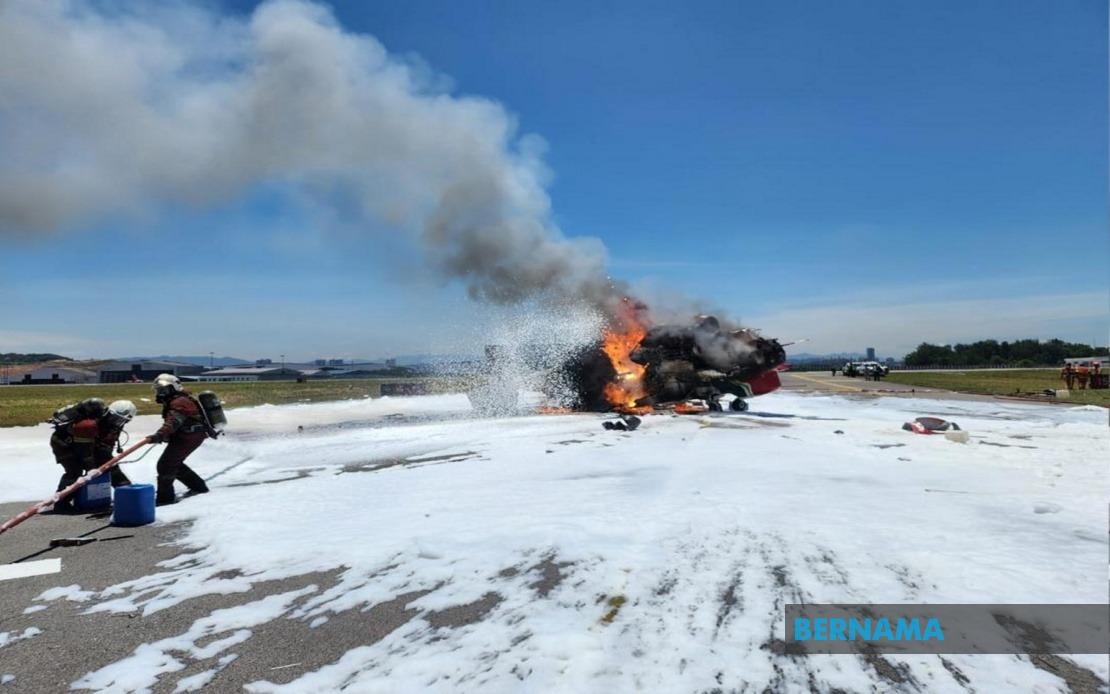
The runway at Sultan Abdul Aziz Shah Airport in Subang returned to normal operations on Thursday afternoon following an incident involving a Ukrainian-registered helicopter that ignited during routine maintenance work. The facility, which serves the Klang Valley region as a key aviation hub, had been temporarily closed to manage the emergency, but Malaysian Civil Aviation Authority officials confirmed full resumption of air traffic by 2.57 pm the same day.
The explosive incident unfolded at Taxiway Victor when a Kamov KaV-32S helicopter burst into flames while undergoing an engine run-up test shortly after midday. Run-up tests, a standard part of aircraft maintenance procedures, involve running engines under controlled conditions to verify proper function before the aircraft returns to active service. The timing of the explosion—at 12.28 pm—caught airport authorities and the aircraft crew off guard, requiring swift emergency response protocols to secure the airfield.
Four members of the Ukrainian crew were present during the maintenance operation, including the pilot, co-pilot, and two additional crew members. One of these personnel sustained minor injuries from debris that scattered during the blast, though none required hospitalization. The rapid containment of the fire and evacuation of personnel prevented what could have been a more serious incident at one of Malaysia's busiest general aviation facilities.
CAAM chief executive officer Capt Datuk Norazman Mahmud detailed the operational impact, noting that the temporary closure disrupted regular flight schedules. Eight inbound aircraft were diverted to alternative airports during the suspension period, while three flights scheduled to depart were held on the ground awaiting runway clearance. Though the numbers appear modest, such diversions create cascading delays across the region's aviation network and can strain capacity at neighboring airports.
The reopening brought relief to airlines and passengers navigating the busy afternoon schedule. Sultan Abdul Aziz Shah Airport, commonly known as Subang Airport, handles a significant volume of corporate, charter, and general aviation traffic, making even brief closures consequential for business operations and traveler schedules. Flight information displays throughout the terminal updated in real time as revised schedules were distributed to affected passengers, though the relatively quick resolution minimized major disruptions to the broader traffic pattern.
The incident raises questions about maintenance protocols and engineering standards, particularly for foreign-registered aircraft operating within Malaysian airspace. While routine engine tests are essential for aircraft safety, the explosion suggests either an unexpected mechanical failure or procedural deviation that warrants investigation. The Malaysian Civil Aviation Authority typically conducts thorough examinations of such occurrences to identify root causes and implement preventive measures.
Ukraine-registered aircraft are not uncommon in Southeast Asian airspace, as Ukrainian operators maintain business interests in logistics, cargo operations, and specialized aviation services across the region. The presence of this helicopter at Subang likely relates to commercial operations or maintenance contracts, though the specific purpose of the aircraft and its operational base remain unclear. Understanding how such aircraft are regulated and monitored becomes relevant as Malaysia manages increasingly diverse aviation activities.
The quick restoration of operations reflects the airport's preparedness for emergency situations and its resilient infrastructure. Ground crews and airport management executed closure protocols efficiently, secured the incident site, and coordinated with relevant authorities to determine when safe resumption was possible. The absence of further complications during the afternoon's resumed operations suggests that initial damage assessments and debris clearance were thorough.
For Malaysian travelers and freight operators dependent on Subang's services, the incident was ultimately a brief inconvenience rather than a major disruption. The airport's role as a secondary hub for the Klang Valley means that while major international flights utilize Kuala Lumpur International Airport, significant numbers of domestic, regional, and specialized operations flow through Subang. Maintaining reliable service at this facility supports economic activity and connectivity throughout the region.
The broader aviation sector in Malaysia continues to navigate post-pandemic recovery and capacity management across multiple facilities. Incidents like helicopter explosions, though rare, underscore the importance of rigorous maintenance standards and safety oversight. Regulatory bodies must balance facilitating aviation commerce with ensuring public safety, a challenge that requires constant vigilance and effective coordination among all stakeholders in the aviation ecosystem.
Investigations into the helicopter fire will likely examine maintenance records, crew qualifications, parts specifications, and whether procedures aligned with both international standards and Malaysian Civil Aviation Authority requirements. Results from such investigations typically inform updates to safety protocols and may influence how certain aircraft operations are monitored or restricted. For now, Subang Airport has returned to normal rhythm, but the incident serves as a reminder of aviation's inherent risks and the importance of rigorous safety management.

