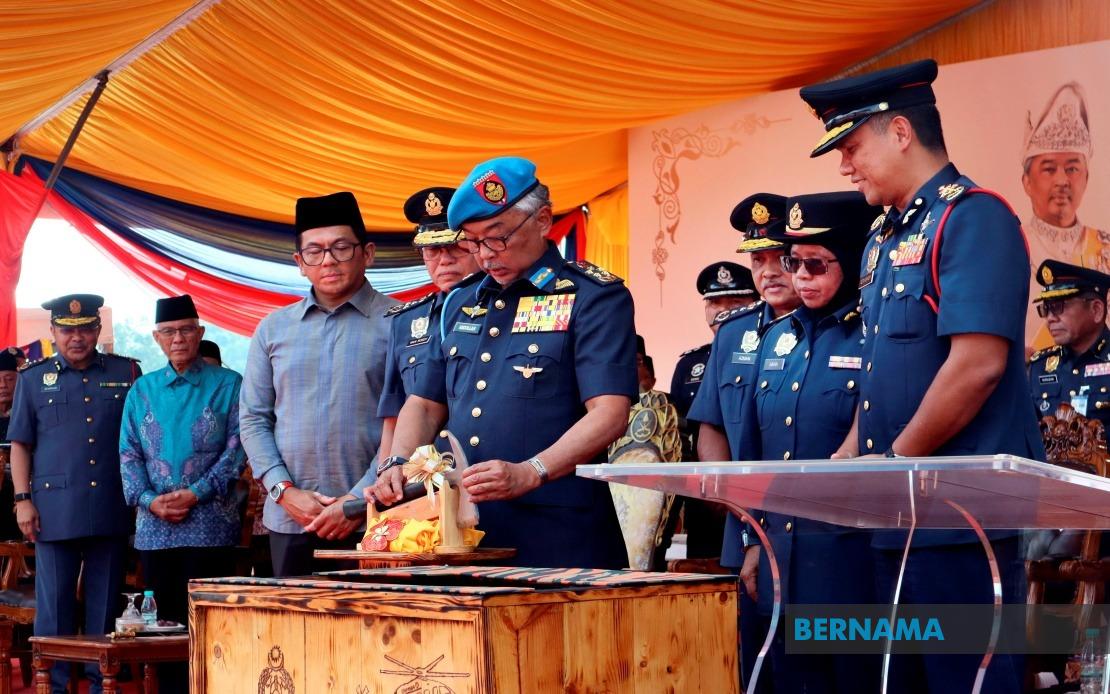
The Sultan of Pahang, Al-Sultan Abdullah Ri'ayatuddin Al-Mustafa Billah Shah, has publicly acknowledged the commitment of federal and state authorities to advancing the state through targeted infrastructure investment, with particular emphasis on flood prevention measures that directly affect vulnerable communities. During his attendance at the opening of the Sungai Lembing Fire and Rescue Station in Kuantan on July 2, His Royal Highness articulated the significance of sustained governmental effort in addressing persistent environmental challenges that threaten residents across the state.
Flood management has emerged as a critical priority for Pahang's leadership, given the recurring nature of inundation events that plague certain districts during monsoon seasons. Sungai Lembing occupies special status within this framework, as the locality frequently experiences among the earliest and most severe flooding episodes each year. The area's hydrological characteristics make it an effective bellwether for broader flooding risks throughout the Kuantan district, meaning that successful mitigation efforts there carry cascading benefits for downstream settlements and infrastructure.
Al-Sultan Abdullah's expression of gratitude extended specifically to both tiers of government for channelling resources toward capital-intensive infrastructure projects that require long-term financial commitment and technical expertise. The monetary allocations directed toward Sungai Lembing and comparable locations throughout Pahang represent a tangible manifestation of stated policy priorities. Such projects demand sustained budgetary discipline and coordination between federal ministries and state administration, underscoring the collaborative nature required to execute meaningful development outcomes.
Beyond ceremonial recognition, the Sultan issued a substantive directive regarding river management practices. His Royal Highness ordered that waterways traversing densely populated residential zones be widened and deepened to enhance their capacity during high-rainfall events. This intervention reflects an understanding that natural disaster prevention requires structural modification of landscapes alongside institutional preparedness. Deepening river channels represents an engineering solution that addresses the root cause of overflow events rather than merely managing consequences after inundation occurs.
The occasion brought together senior political figures across multiple governance levels, including Pahang Menteri Besar Datuk Seri Wan Rosdy Wan Ismail, Deputy Housing and Local Government Minister Datuk Aiman Athirah Sabu, and Deputy Economy Minister Datuk Mohd Shahar Abdullah, who also represents the Paya Besar constituency. The convergence of these officials at a single event underscores the priority status assigned to flood mitigation within state and national development agendas, sending a signal to constituents that disaster prevention commands attention from decision-makers across administrative hierarchies.
The Sultan's remarks also highlighted the indispensable role performed by emergency response personnel who operate across multiple crisis categories. Fire and Rescue services in Malaysia extend far beyond their titular function, addressing road traffic incidents, natural disasters, and humanitarian emergencies with consistency that often exceeds public awareness. Al-Sultan Abdullah's observation that news of their operational activities appears regularly in his daily briefings illustrates the pervasiveness of their engagement, even as individual incidents may escape broader media coverage or public consciousness.
Acknowledging the psychological and physical toll of emergency services work, His Royal Highness positioned their contributions within a narrative of sacrifice for public welfare. The Sultan's stated intention to continue personal visits to disaster scenes and to accompany Fire and Rescue personnel during operations represents a form of institutional recognition that extends beyond financial compensation or administrative acknowledgement. This direct engagement by the state's constitutional head signals that emergency workers operate within a system that values their efforts and understands their contributions as foundational to social stability.
Looking beyond immediate infrastructure concerns, the Sultan identified service gaps affecting remote localities that lack adequate emergency response infrastructure. His proposal for establishing a volunteer fire brigade in Kampung Bantal, situated within the Ulu Tembeling region of Jerantut, addresses a persistent challenge in rural development throughout Malaysia. Geographically isolated communities often experience lengthy response delays during emergencies due to distance constraints and limited professional resources, creating disparities in safety outcomes between urban and rural populations.
The volunteer brigade concept represents a pragmatic approach to extending emergency coverage into areas where full-time professional services remain economically unfeasible. Such initiatives require training investment and ongoing coordination mechanisms but offer multiplicative benefits by creating local capacity that reduces response times and builds community resilience. The Sultan's advocacy for this approach demonstrates awareness of equity considerations within development planning, ensuring that infrastructure investment addresses not merely high-population-density centres but also the peripheral communities whose needs often receive lower priority in resource allocation.
For Malaysian observers, this episode exemplifies broader patterns within Southeast Asian governance where constitutional monarchs increasingly function as policy advocates and community liaisons, using ceremonial platforms to advance substantive development priorities. Pahang's flood challenges are shared by numerous Malaysian states and regional territories, making the Sultan's emphasis on flood mitigation relevant to wider policy debates. The convergence of federal and state officials at events highlighting disaster prevention initiatives suggests this has achieved status as a cross-party concern rather than remaining a parochial political issue.
The timing of these remarks, issued during the pre-monsoon period, suggests heightened awareness of imminent seasonal flooding patterns. By positioning government spending as benefiting flood-vulnerable populations and by directing specific improvements to river infrastructure, state leadership has attempted to shape public perception of preparedness before conditions become critical. Such positioning can influence electoral calculations and public confidence in administration, making the Sultan's role as validator of governmental performance particularly significant within Malaysia's constitutional framework.

