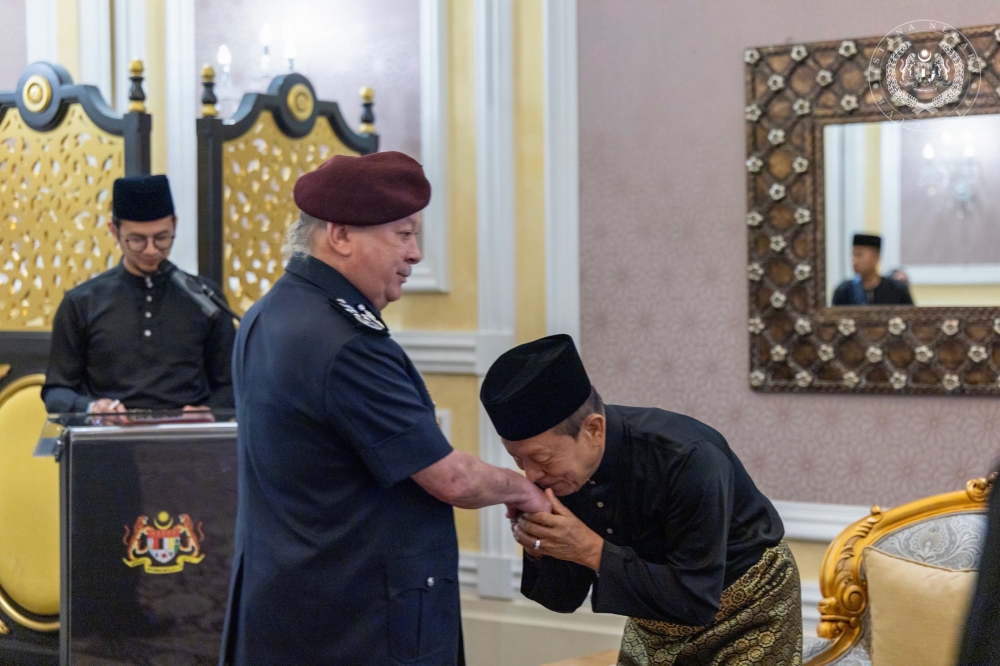
His Majesty Sultan Ibrahim, King of Malaysia, received Malaysian Anti-Corruption Commission Chief Commissioner Abdul Halim Murad in audience at Istana Negara today, marking a significant interaction between the monarchy and the nation's foremost graft-fighting agency. The meeting provided an opportunity for the MACC leadership to brief the sovereign on the commission's recent operational developments and strategic direction.
The audience represents part of the constitutional framework whereby key institutions maintain regular communication channels with the monarchy. As head of state, the King receives periodic updates from various government agencies and statutory bodies to remain apprised of national developments. The MACC's interaction with the palace underscores the commission's status as an independent body operating under the purview of the Prime Minister's office, with its activities carrying considerable weight in Malaysia's governance structure.
The timing of this briefing reflects the commission's ongoing efforts to enhance transparency and maintain stakeholder confidence in its anti-corruption mandate. By personally updating His Majesty, MACC leadership demonstrates commitment to keeping the highest office informed about progress in combating corruption across the civil service, judiciary, and private sector entities. Such engagements also reinforce the institution's independence and its role as a critical pillar in Malaysia's institutional architecture.
MACC's operations have increasingly come under public scrutiny as the commission continues investigating high-profile cases spanning multiple government departments and statutory agencies. The briefing likely covered recent investigations, enforcement actions, and capacity-building initiatives designed to strengthen the commission's effectiveness. For Malaysian readers, understanding these updates signals ongoing efforts to maintain institutional integrity at a time when public confidence in governance structures remains a significant concern.
The commission's work extends beyond investigation to encompass prevention, awareness, and education campaigns aimed at fostering a culture of integrity across public and private sectors. MACC's latest developments probably included updates on these preventive initiatives, alongside details of current investigations and legal proceedings. The monarchy's engagement with these matters reflects the constitutional significance of ensuring that anti-corruption efforts remain institutionally robust and politically independent.
From a Southeast Asian perspective, Malaysia's anti-corruption infrastructure attracts regional attention given the nation's standing as a developed economy with established institutional frameworks. The MACC's operational effectiveness influences regional perceptions of governance standards and investment climate assessment. Regular high-level engagement between anti-corruption bodies and constitutional authorities signals institutional maturity and commitment to rule of law principles.
The audience also carries symbolic weight in reinforcing the King's role as custodian of constitutional values and national interests. By receiving briefings from institutional leaders like the MACC chief, the monarchy demonstrates active engagement with governance matters whilst respecting the executive's constitutional responsibilities. This balance between engagement and non-interference represents a key characteristic of Malaysia's Westminster-influenced constitutional system.
Public awareness of these interactions builds confidence that anti-corruption efforts operate within properly supervised institutional channels. Transparency about such meetings, where appropriate, helps counter perceptions that graft-fighting initiatives function in isolation or face political interference. For citizens concerned about institutional independence, evidence of monarchical oversight provides reassurance that constitutional safeguards function as intended.
The MACC's briefing to His Majesty also reflects evolving standards in corporate governance and public sector accountability. Malaysian businesses and foreign investors monitor anti-corruption enforcement as a key indicator of operational risk and regulatory environment quality. Regular updates to the monarchy about commission activities reinforce market signals about governance commitment at the highest institutional levels.
Looking forward, such audiences will likely continue as the MACC pursues complex investigations and implements institutional reforms. The commission faces mounting pressure to demonstrate that enforcement actions serve public interest rather than political agendas, a challenge common to anti-corruption bodies across the region. Regular engagement with the monarchy provides institutional grounding for these efforts.
The briefing underscores broader national priorities regarding corruption prevention and institutional integrity. As Malaysia progresses through economic transformation and positions itself competitively within Southeast Asia, maintaining robust anti-corruption frameworks becomes increasingly essential. The MACC's direct communication with the King signals that such priorities command attention at the highest constitutional level, reinforcing the commission's mandate and independence in pursuing its mandate against graft.

