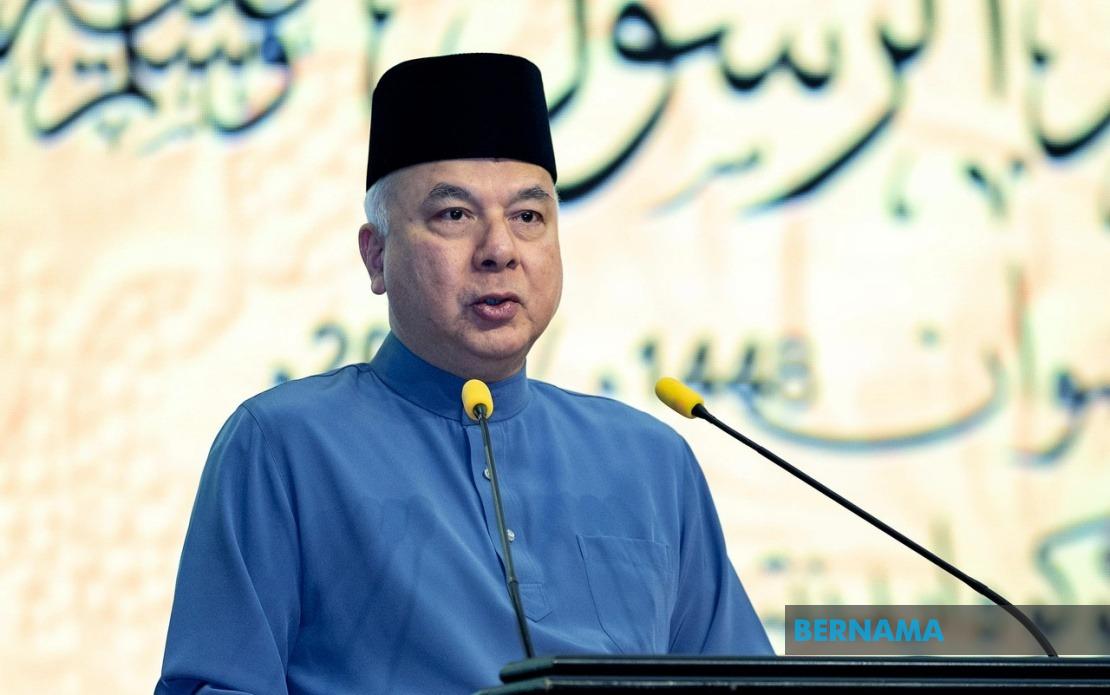
Sultan Nazrin Shah, the Sultan of Perak, has sounded a clarion call for the Muslim community to fortify its bonds of unity and shared identity, cautioning that contemporary challenges are increasingly testing the fabric of Islamic brotherhood. Speaking at the Perak-level Maulidur Rasul celebration in Ipoh on August 25, the Sultan identified a troubling pattern whereby political disagreements, ideological differences rooted in varying schools of Islamic thought, ethnic divisions, and personal ambitions are systematically undermining the cohesion that ought to bind Muslims together. This fragmentation, he suggested, reflects a deeper malaise in which the pursuit of influence, status, material wealth, and immediate worldly gratification has begun to eclipse the foundational Islamic values of mutual support and solidarity that should characterise the ummah.
The Sultan's remarks carry particular weight given Malaysia's complex religious and political landscape, where questions of Islamic identity, governance, and the balance between secular and religious authority remain contentious. His intervention underscores mounting concerns among senior traditional leaders about the way political competition has penetrated Islamic institutions and organisations, creating divisions that extend beyond mere policy disagreement into fundamental questions of identity and belonging. The presence of Raja Permaisuri Tuanku Zara Salim, Raja Muda Raja Jaafar Raja Muda Musa, and Raja Di Hilir Raja Iskandar Dzurkarnain Sultan Idris Shah at the ceremony, alongside Perak Menteri Besar Datuk Seri Saarani Mohamad, signalled the institutional gravity attached to these observations.
Centrally important to Sultan Nazrin's message was his appeal to Muslim leaders, Islamic organisations, and Islamic movements to exercise restraint and redirect their energies away from destructive competition. Rather than becoming mired in territorial disputes or jockeying for influence within religious hierarchies, these entities ought to focus collectively on strengthening Islamic identity and advancing the progress and welfare of the Muslim community across all dimensions of contemporary life. The Sultan acknowledged that amidst the numerous actors pursuing contradictory agendas, there nonetheless exist individuals and organisations engaged in genuinely constructive work, pioneering initiatives that demonstrate how Islamic principles can address modern challenges.
These positive efforts encompass an impressive range of domains. Islamic economics and Islamic finance represent sophisticated intellectual and practical endeavours to develop economic frameworks consistent with Islamic principles, responding to the reality that Muslim-majority societies must compete and prosper within the global economy. The halal industry, which has expanded dramatically across Southeast Asia in recent decades, reflects both commercial opportunity and spiritual commitment. Waqf—the Islamic charitable endowment system—represents a time-tested mechanism for generating sustainable community welfare without reliance on government resources. Digital dakwah, or Islamic preaching through online channels, demonstrates how technological innovation can be harnessed to communicate Islamic teachings to younger generations who consume information and form beliefs primarily through digital platforms. The strengthening of family institutions addresses the Sultan's concern that modernisation and social fragmentation threaten the basic social units through which Islamic values have historically been transmitted.
Sultan Nazrin emphasised that these constructive initiatives require not merely maintenance but vigorous expansion, robust reinforcement, and successful large-scale implementation. This language suggests that current efforts, while laudable, remain insufficient in scope and impact to adequately counter the fragmenting forces he identified. The implication is that Muslim societies must commit resources, expertise, and sustained institutional attention to these domains if they are to successfully navigate contemporary challenges while preserving Islamic identity and purpose.
The Sultan then pivoted to address what may be the more fundamental challenge facing Muslim identity in the modern era: the relentless pressure exerted by global cultural and technological forces. Increasing exposure to international influences—channelled through social media, popular entertainment, contemporary music and visual media, and the lifestyle aspirations promoted through these channels—creates an environment in which traditional Islamic practices and values risk appearing antiquated or culturally irrelevant to younger Muslims, particularly those in urban settings. This represents not a challenge that Islamic organisations can necessarily "solve" through better communications or more vigorous advocacy, but rather a chronic condition requiring continuous, sophisticated management.
The Sultan's prescription for navigating this tension involved pursuing "wise approaches and strategies" that would permit Muslims to embrace technological and material progress while simultaneously preserving confidence in Islamic identity and values. This formulation acknowledges a genuine dilemma: modernisation is neither inherently compatible with nor fundamentally opposed to Islamic principles, but the relationship between them requires careful cultivation. The risk he identified is that uncritical embrace of modern lifestyles and values could lead to progressive erosion of Islamic identity—not through any sudden abandonment of faith, but through subtle, cumulative shifts in priorities, aspirations, and the frameworks through which believers understand their relationship to the divine.
This concern resonates deeply across Malaysia and throughout Southeast Asia, where rapid urbanisation, rising living standards, and technological integration have transformed social conditions within a single generation. The Sultan's emphasis on striking balance reflects recognition that neither wholesale rejection of modernity nor uncritical assimilation represents a viable path forward. Instead, Muslim communities must develop cultural and intellectual frameworks capable of discriminating between those elements of modern life compatible with Islamic principles and those that fundamentally contradict them.
The timing of Sultan Nazrin's remarks, delivered during celebrations of the Prophet Muhammad's birthday, carries symbolic significance. The Maulidur Rasul occasion invites reflection on the Prophet's life and teachings as a model for human conduct, making it an appropriate context for discussing the contemporary challenges facing Muslim communities that claim to follow his example. By framing his call for unity around this observance, the Sultan situated his appeal within Islamic tradition while addressing distinctly contemporary concerns.
For Malaysian policymakers and leaders across the Muslim-majority nations of Southeast Asia, Sultan Nazrin's message offers both diagnosis and prescription. The diagnosis identifies disunity, political competition, and material preoccupation as corrosive forces within Muslim societies. The prescription calls for conscious prioritisation of constructive initiatives that integrate Islamic principles with modern knowledge and technologies, coupled with sophisticated cultural strategies that help Muslims maintain strong identity commitments even as they participate fully in contemporary economic and social life. Whether political and religious leaders will heed this call remains to be seen, but the intervention from a senior traditional leader carries sufficient weight to influence subsequent public discourse on these vital questions.

