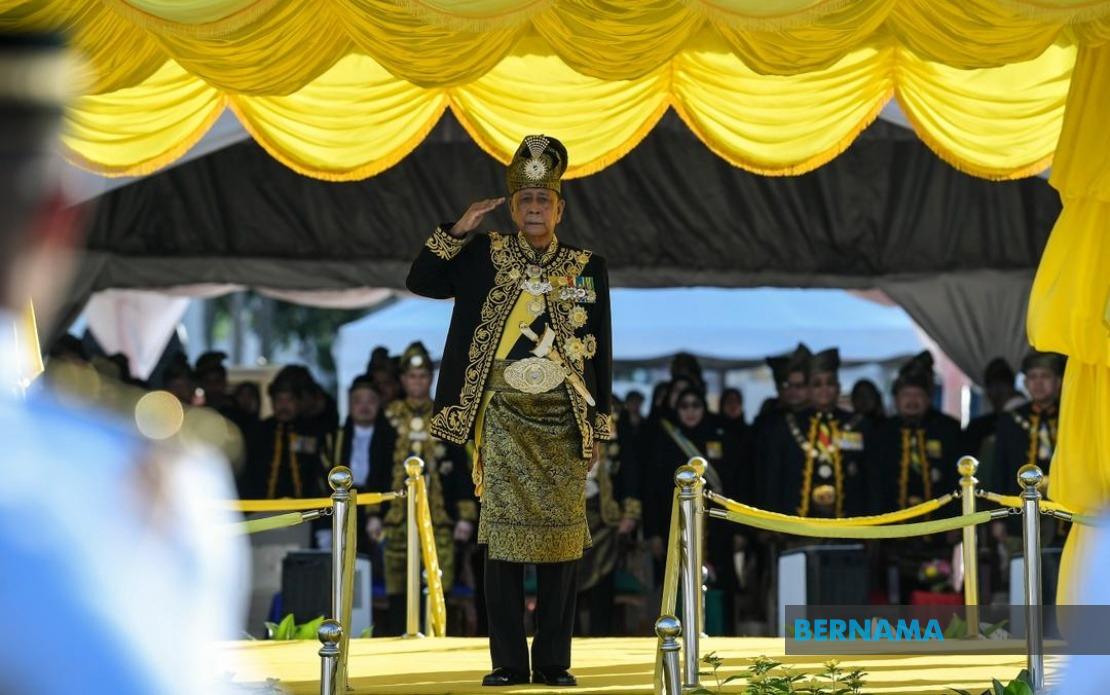
The Sultan of Kedah, Al Aminul Karim Sultan Sallehuddin Sultan Badlishah, marked his 84th birthday with a formal guard of honour ceremony held at Dataran Medan Bandar in Alor Setar on July 5. The occasion brought together Kedah's senior leadership and military representatives to pay their respects to the revered monarch, underlining the significant role the sultanate continues to play in Malaysia's constitutional framework and regional governance.
Joining His Royal Highness for the celebration was the Raja Muda of Kedah, Tengku Sarafudin Badlishah Sultan Sallehuddin, who represents the continuation of the state's royal lineage. The presence of the heir apparent at such ceremonies demonstrates the institutional importance placed on the succession and the steady transition of leadership responsibilities within the sultanate. This multi-generational participation reinforces public confidence in the stability of Kedah's traditional institutions.
State-level dignitaries were prominently represented, with Kedah Menteri Besar Datuk Seri Muhammad Sanusi Md Nor and State Secretary Datuk Seri Norizan Khazali attending alongside members of the State Executive Council. Their collective presence signified that the celebration was not merely a royal observance but a significant state affair, reflecting the close working relationship between the monarchy and the state administration. Such coordination is essential to the functioning of Malaysia's constitutional monarchy system, where the Sultan serves as both ceremonial head and constitutional guardian.
The military dimension of the celebration showcased the professional standards upheld by Malaysia's armed forces in ceremonial functions. A contingent of 103 soldiers and three officers from the 6th Battalion of the Royal Malay Regiment participated in the formal parade, commanded by Major Muhammad Nasrullah Abdullah. The careful selection and deployment of such a substantial military unit demonstrates the respect accorded to the Sultan's position as the supreme head of Islam in Kedah and the symbolic importance of the occasion.
The ceremonial parade featured traditional elements of military pageantry, with Lieutenant Mohamad Aiman Hanif Samsudin serving as the colour bearer and Warrant Officer 1 Mohd Fairuz Ramli carrying the regiment standard. These positions carry significant historical weight within Malaysia's military traditions, connecting contemporary celebrations to the broader continuity of national institutions that have evolved since independence. The careful orchestration of such roles reflects training and protocols that maintain the dignity of state ceremonies.
The RAMD Central Band, under the direction of Captain Muhamad Fauzee Japar with support from Sergeant Mohd Shahrilaizad Bakhtiar, provided musical accompaniment to the proceedings. Military bands play a crucial role in state ceremonies throughout Malaysia and Southeast Asia, and their participation elevates the formal character of celebrations. The presence of such cultural and musical elements transforms what could be a purely ceremonial event into a multisensory experience that resonates with public participation and national pride.
Aircraft from two different military training institutions performed a ceremonial flypast, adding a spectacular dimension to the celebration. Two EC120B helicopters from the Flying Training Institute (INSPEN) 2 and three PC-7 MK II turboprop trainers from INSPEN 1 executed precision flying manoeuvres over the gathered crowd. These aerial displays not only provide visual excitement but also serve as demonstrations of Malaysia's aviation capabilities and the quality of training provided at these defence establishments, which produce pilot talent for both military and civilian sectors.
The ceremonial gunfire component came courtesy of the 41st Battery of the Royal Artillery Regiment (Ceremonial), stationed at Sungai Buloh Camp in Selangor. Major Hafizan Md Ghani led the execution of a 21-gun salute, a tradition with deep historical roots in Commonwealth countries. This particular honour is reserved for individuals of the highest rank and constitutional importance, and its performance underscores the Sultan's position within Malaysia's hierarchy of state institutions. The coordination required to execute such a salute—involving communication, timing, and precision—demonstrates the professionalism of Malaysia's ceremonial military units.
Birthday celebrations for Malaysian sultans serve important functions beyond ceremonial tradition. They provide opportunities for states to reaffirm their institutional structures, for the public to express collective respect for their constitutional monarchs, and for military and civilian institutions to demonstrate their operational capabilities in a controlled, formal setting. For Kedah specifically, such occasions reinforce the state's identity and the continuing relevance of its traditional institutions in contemporary Malaysia.
The Sultan of Kedah's birthday parade exemplifies how Malaysia's constitutional monarchy system integrates religious authority, state administration, and military tradition into cohesive ceremonial expressions. The participation of the Raja Muda ensures that such observances carry forward institutional memory and reaffirm the principles of succession and continuity that underpin stable governance. For regional observers, the event illustrates how Southeast Asian monarchies maintain ceremonial practices while adapting to modern governance requirements.
At 84 years old, the Sultan of Kedah represents a generation of Malaysian leaders whose reigns have spanned periods of significant national development and transformation. The formal recognition of such milestones through ceremonial gatherings acknowledges the contributions of long-serving institutional figures to national stability. For Kedah's residents and beyond, these celebrations represent continuity amid change—a reassurance that core values and structures persist even as society evolves.

