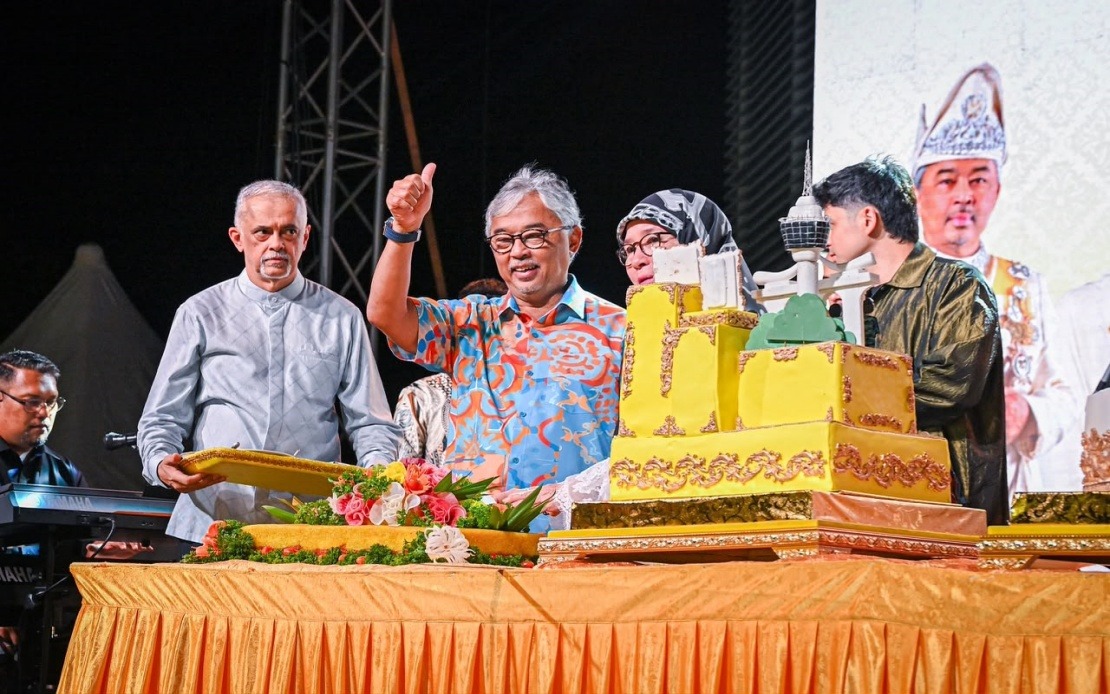
The Sultan of Pahang, Al-Sultan Abdullah Ri'ayatuddin Al-Mustafa Billah Shah, formally opened the Kuantan 188 Festival on Thursday evening, marking a significant occasion in the state's calendar. Arriving at the tower grounds at 9 pm, His Royal Highness was accompanied by the Tengku Ampuan of Pahang, Tunku Azizah Aminah Maimunah Iskandariah, and the Regent of Pahang, Tengku Mahkota Tengku Hassanal Ibrahim Alam Shah. The evening's programme centred on a ceremonial cake-cutting ritual that acknowledged the birthday celebrations of both the Sultan and the Tengku Ampuan, transforming a personal milestone into a public celebration that connected the monarchy with ordinary citizens.
The festival, which began the previous day and runs for three days, represents a carefully orchestrated blend of cultural performance and public engagement. The royal presence elevated the event beyond a routine entertainment showcase, signalling the monarchy's active participation in state-level festivities. The decision to hold such celebrations at Kuantan 188, a prominent landmark overlooking the Kuantan waterfront, underscores the strategic use of public spaces to foster connection between the institution and the broader community.
Musical performances constituted the evening's centrepiece, with a lineup that reflected Malaysia's diverse entertainment landscape. Datuk M Nasir, the legendary singer-songwriter known for his contributions to Malay popular music, headlined the event alongside contemporary acts including the rock band Hazama, vocalist Hael Husaini, and Nadeera. This carefully curated mix of established and contemporary artists ensured appeal across generational lines, transforming the occasion into a unifying cultural moment for Pahang residents.
During the proceedings, the Sultan articulated his broader vision for such state-level celebrations, emphasizing their multifaceted significance beyond mere festivity. His Royal Highness noted that organising such programmes contributes to the vitality and dynamism of birthday celebrations while simultaneously serving instrumental economic and cultural purposes. He highlighted how such events function as catalysts for the tourism sector, channelling visitor spending into local communities and supporting hospitality infrastructure that has struggled in recent years.
The Sultan's remarks underscored a sophisticated understanding of how celebratory events can catalyse economic activity. By framing the festival as a platform for tourism stimulus, he positioned royal celebrations within the broader context of state development strategy. For Pahang, which relies substantially on tourism revenue from its natural attractions, state-sponsored festivals represent opportunities to diversify visitor experiences and extend stays beyond conventional beach or mountain destinations.
Beyond economic considerations, the Sultan explicitly connected the festival to cultural preservation and promotion. The inclusion of diverse performance styles and the prominence given to local artists served as vehicles for showcasing Pahang's cultural heritage. In an era where globalisation and digital media homogenise entertainment consumption, state-backed cultural programming ensures that traditional and contemporary Malaysian artistic expressions receive prominent public platforms and financial support.
The festival also functioned as a mechanism for strengthening institutional bonds between the monarchy and the populace. The Sultan's reference to fostering "closer ties between the royal institution and the people" reflects an understanding that modern monarchies maintain legitimacy through active public engagement rather than ceremonial distance. By appearing at public venues, participating in popular entertainment, and addressing crowds directly, the Sultan reinforced the accessibility and relevance of the institution to ordinary Pahang residents.
The Kuantan 188 Festival programme extended beyond the opening ceremony to encompass three distinctive components. The Royal Pahang Dragon Boat Regatta, a traditional water sport event, connected contemporary competitive recreation with cultural traditions, while the Kuantan 188 Hot Air Balloon event offered visitors unique vantage points from which to experience the state's landscape. Together, these elements created a multisensory festival experience that appealed to families and diverse demographic groups.
For Malaysian readers, particularly those in Pahang, the festival represents a convergence of institutional celebration, cultural programming, and economic development strategy. The event demonstrates how state-level authorities leverage royal occasions to generate broader community activities that extend their reach and impact beyond ceremonial functions. The involvement of the Regent alongside the Sultan and Tengku Ampuan also underscores the continuity of institutional leadership and the stability that monarchical succession planning provides within Malaysia's constitutional framework.
The Kuantan 188 Festival exemplifies a regional approach to public celebration that other Malaysian states have increasingly adopted. By anchoring festivities around specific dates, venues, and diverse programming, state governments create recurring events that develop their own institutional identities and attendee expectations. The festival's three-day structure allows for phased programming that sustains public interest and maximises tourism impacts through extended visitation periods.
Looking forward, the integration of traditional cultural activities, contemporary entertainment, and experiential tourism components suggests a template for balancing heritage preservation with modern event management. The festival's success, predicated on strong royal patronage and multi-sector coordination, offers lessons for how Malaysian regional authorities can leverage public celebrations as vehicles for economic development, cultural promotion, and institutional legitimacy simultaneously.

