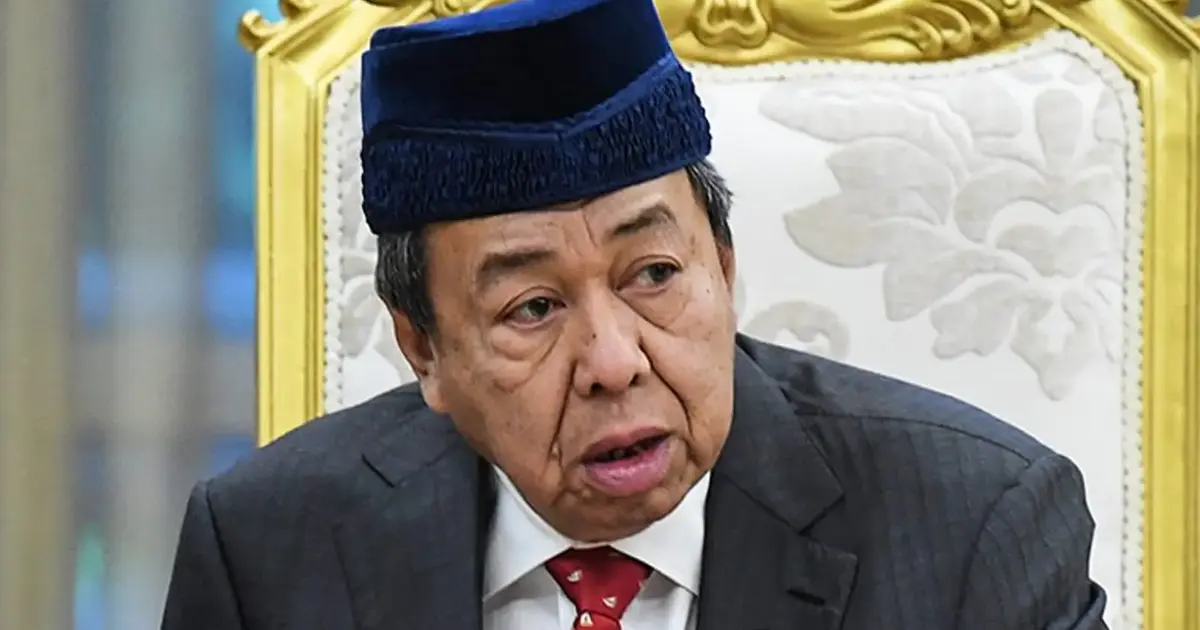
Sultan Sharafuddin of Selangor has publicly acknowledged the contributions of both former Prime Minister Najib Razak and current Prime Minister Anwar Ibrahim towards the development of the LRT3 project, representing a notable recognition spanning two separate administrations with contrasting political trajectories. The royal statement underscores the complexity of major infrastructure initiatives that often transcend electoral cycles and require sustained commitment from multiple political leaderships to reach fruition.
The Selangor ruler's recognition of Najib's role points to the initial planning and foundational work undertaken during the Barisan Nasional era, when the Light Rail Transit Line 3 concept was conceived and pushed through preliminary stages. This acknowledgment is particularly significant given the subsequent legal and political challenges that Najib has faced, suggesting that institutional assessments of his tenure may distinguish between specific policy achievements and broader governance concerns. Infrastructure projects of this magnitude typically require years of conceptualisation, feasibility studies, and preliminary government backing before implementation can commence under successive administrations.
Simultaneously, Sultan Sharafuddin's commendation of Anwar Ibrahim's efforts highlights the current government's role in translating earlier groundwork into actual construction and progress. Since assuming office, the Anwar-led administration has prioritised major transportation infrastructure as part of its development agenda for the Klang Valley region. The recognition from the state's constitutional head carries particular weight as it validates the government's continued investment in the project despite fiscal constraints and competing budgetary priorities.
However, the ruler's pointed criticism of Democratic Action Party leaders Lim Guan Eng and Tony Pua introduces a contentious dimension to the otherwise celebratory acknowledgment of project progress. The DAP figures, who hold significant positions within the ruling coalition, have been singled out apparently for their roles or positions concerning the LRT3 initiative. This public critique from the palace represents an unusual intervention in what might otherwise be considered routine coalition disagreements, elevating the matter beyond typical political discourse.
Lim Guan Eng, who has held positions of considerable influence in the federal government including Finance Minister, and Tony Pua, known for his vocal involvement in economic and infrastructure policy debates, have both been frequent participants in discussions surrounding major projects. Their specific criticisms by the Sultan suggest potential disagreements over project execution, cost management, scope of work, or allocation of resources. The nature of the royal displeasure remains an important consideration for understanding the underlying tensions within the administration's infrastructure policy framework.
The LRT3 project itself represents one of Selangor's most ambitious transportation infrastructure undertakings, designed to enhance connectivity across the greater Klang Valley region. The project's significance extends beyond mere transportation convenience, carrying implications for urban planning, property development, economic corridors, and the state's broader vision for sustainable metropolitan growth. Completion of such a line requires coordination across multiple government agencies, private contractors, and local authorities, creating numerous opportunities for policy disagreements and implementation challenges.
For Malaysian readers and policymakers, this royal statement offers insight into how major infrastructure projects navigate political transitions and institutional pressures. The willingness of the Sultan to publicly comment on different administrations' contributions suggests recognition that infrastructure development transcends partisan politics and requires continuity of vision. Simultaneously, the criticism of specific political figures indicates that implementation quality and governance standards remain subjects of royal scrutiny and concern.
The statement also reflects broader patterns within Malaysia's political landscape where traditional institutions maintain active interest in governance matters affecting their respective states. Selangor, as the nation's most economically developed state and home to the federal territories, holds particular strategic importance. The Sultan's public positions on major projects effectively shape stakeholder expectations and can influence public perception of government performance and political leadership accountability.
Looking ahead, the royal recognition of multiple administrations' contributions may serve to maintain stakeholder confidence in the project's eventual completion, whilst the criticism of DAP leaders suggests that governance standards and implementation rigour remain areas where the palace expects demonstrable improvement. For the current administration, balancing coalition politics with institutional expectations and public accountability represents an ongoing challenge as major infrastructure projects progress toward completion.

