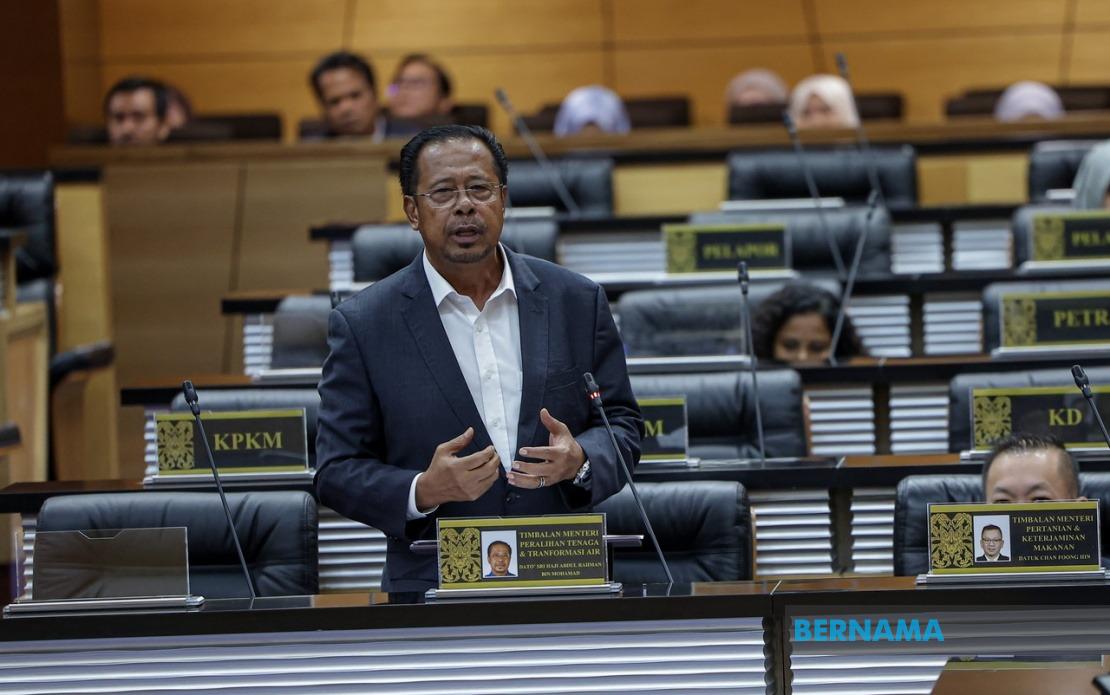
Parliament was informed that a major infrastructure initiative to manage flooding in Johor's Sungai Skudai river system will deliver substantial benefits to surrounding communities when fully operational. The RM99.8 million Integrated River Basin Development project, part of the nation's 12th Malaysia Plan, targets protection for roughly 15,000 residents whilst addressing flood vulnerability across a 50-hectare expanse, according to Datuk Seri Abdul Rahman Mohamad, Deputy Minister of Energy Transition and Water Transformation.
The undertaking remains in its preparatory phase, with planning activities, ground surveys and technical assessments underway before construction commences. A consultant engaged in May 2025 is finalising the project's conceptual framework, establishing the technical foundation necessary for subsequent implementation phases. This sequencing reflects a methodical approach to large-scale water management infrastructure, where preliminary data collection and design work prove crucial to successful delivery and cost management.
Field investigations began in November 2025 and are projected to conclude by May 2027, providing detailed hydrological and geological understanding of the 46-kilometre river corridor. Concurrently, land acquisition procedures initiated in June 2026 should be finalised by August this year, removing a potential bottleneck to construction commencement. Once these prerequisites are satisfied, the ministry plans to invite contractor tenders, with ground-breaking anticipated for mid-2027—a timeline that positions the scheme for substantial physical progress within the current five-year planning cycle.
The scope encompasses comprehensive river engineering to enhance water conveyance capacity and reduce inundation frequency in chronically affected zones. Bank reinforcement works will stabilise vulnerable stretches, whilst targeted widening to approximately 15 metres in selected sections will improve discharge potential during monsoon periods and storm events. These modifications directly address drainage bottlenecks that have historically exacerbated flooding in residential and commercial areas throughout the Sungai Skudai basin.
Beyond flood mitigation, the development targets multiple community outcomes. River ecosystem restoration efforts aim to reverse decades of degradation affecting fish populations and aquatic biodiversity. For local fishing communities, improved navigability promises safer passage and expanded livelihood opportunities. The scheme also bolsters coordination infrastructure for maritime security and emergency response agencies operating along the waterway, enhancing their operational effectiveness during crisis situations.
Parliament heard that the ministry has identified approximately 50 flood hotspots requiring intervention, with five concentrated in the Kulai locality. Targeted remediation of these vulnerability nodes could substantially diminish flood incidence across the region. Recognising the timeline lag before major works commence, the government is deploying six smaller-scale interim projects valued at around RM700,000 to provide immediate relief in particularly exposed areas, demonstrating commitment to addressing community flood concerns whilst awaiting principal project activation.
The Sungai Skudai initiative represents a significant infrastructure commitment by the federal government to Southeast Asian flood management challenges. Rising urbanisation and climate variability have intensified inundation pressures across Malaysian river systems, making comprehensive basin-level interventions increasingly essential. This project's integrated approach—combining structural works, ecosystem recovery and institutional capacity-building—reflects contemporary understanding that sustainable flood resilience requires multi-faceted solutions extending beyond simple channel widening.
In related parliamentary proceedings, the Ministry of Works provided reassurance regarding the RM174.53 million Phase Three upgrading of Pasir Gudang Highway (FT17), clarifying that railway land acquisition concerns had been resolved. Rather than acquiring property from Keretapi Tanah Melayu Berhad, the ministry will operate under work permits and right-of-way approvals secured from the national railway operator. This arrangement preserves KTMB's property rights whilst enabling highway enhancement, demonstrating pragmatic coordination between government agencies tasked with parallel infrastructure modernisation.
The railway-adjacent works, scheduled between February 2027 and December 2028, will proceed through operational agreements rather than property transfer, potentially accelerating implementation by circumventing lengthy acquisition procedures. This approach exemplifies administrative efficiency gains when transport authorities collaborate on overlapping corridor improvements. The Pasir Gudang corridor, a strategic commercial and industrial gateway in southern Johor, benefits from concurrent investment in both river management and highway capacity, enhancing the region's freight logistics and disaster resilience simultaneously.
For Malaysian readers, these parliamentary commitments signal sustained federal attention to Johor's infrastructure deficits following repeated flood events. The Sungai Skudai project's mid-2027 construction launch assumes continuity of political will and budgetary allocation across multiple government administrations. Implementation success will hinge on effective inter-agency coordination, particularly between water resource management, land administration and environmental agencies whose activities must align throughout the multi-year execution period. Regional stakeholders, including municipal authorities and business associations dependent on flood-free operations, will monitor milestone achievement closely.
The scale of intended benefit—protecting 15,000 residents and reducing vulnerability across 50 hectares—positions this scheme amongst Malaysia's more substantial water infrastructure commitments. However, the phased timeline extending to 2027 means communities currently experiencing seasonal inundation face continued exposure pending project activation. The interim smaller projects offer temporary mitigation, though permanent risk reduction awaits completion of major engineering works. This temporal gap underscores the tension between immediate community needs and the extended timeframes required for large-scale infrastructure procurement and construction in the Malaysian context.

