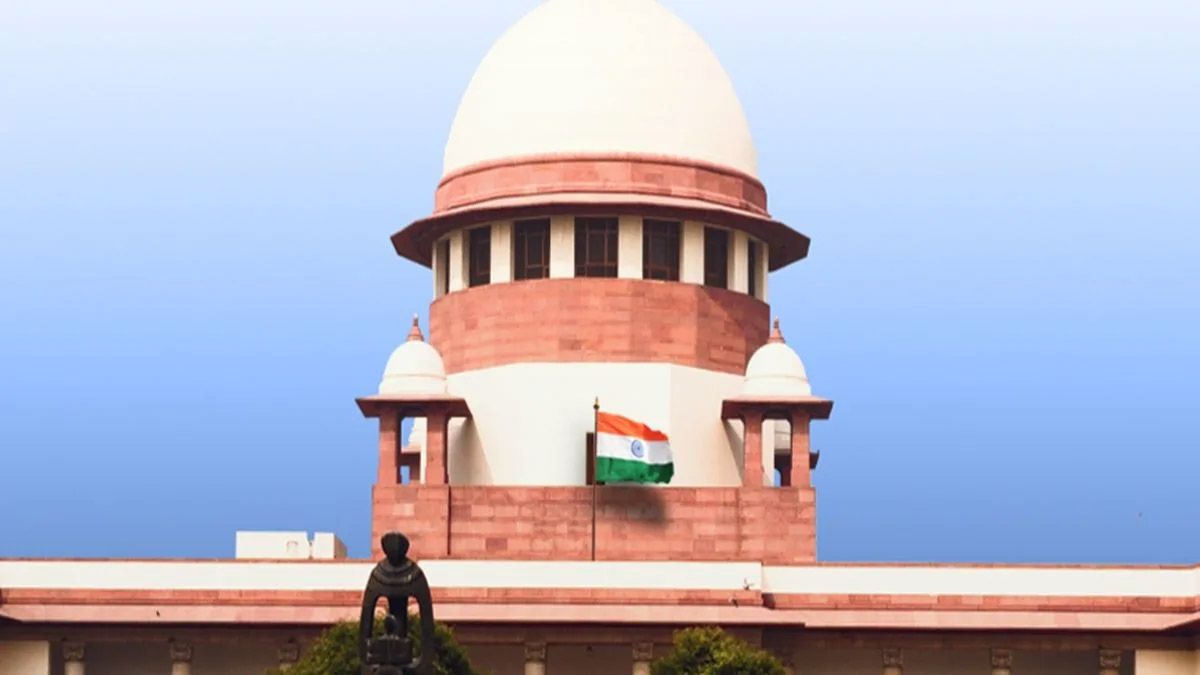
India's Supreme Court has intervened in a contentious animal welfare dispute by staying a sweeping prohibition on cow and calf slaughter across Tamil Nadu, signalling judicial concern about the scope of the lower court's ruling. A two-judge bench comprising Justices Vikram Nath and Sandeep Mehta issued the interim relief on Monday while hearing the Tamil Nadu government's appeal against a May 27 decision by the Madras High Court. The top court's decision to grant a temporary halt on the High Court's order indicates that the judges believe the original judgment requires substantial reconsideration before it can stand, with Justice Nath explicitly noting during proceedings that the impugned judgment needed "correction" before any final relief could be determined.
The central legal question before India's apex court concerns the proper limits of judicial authority in animal welfare matters. The Tamil Nadu government contended that the Madras High Court had fundamentally overstepped its constitutional mandate by converting a narrow petition about slaughter locations into a blanket prohibition affecting the entire state. According to the state's submission, the original public interest litigation sought merely to prevent cattle slaughter in public spaces and to ensure such activities occurred exclusively within authorised slaughterhouses operating under regulated conditions. Instead, the High Court issued an order prohibiting the slaughter of cows and calves anywhere in Tamil Nadu, irrespective of location, facility standards, or religious observances like Bakrid.
The regulatory framework governing animal slaughter in Tamil Nadu reflects a compromise approach rather than absolute prohibition. The state relies on the Tamil Nadu Animal Preservation Act of 1958, which establishes a permissive regulatory scheme prescribing conditions under which cattle slaughter may lawfully occur. This statute does not impose a categorical ban but rather permits slaughter under defined circumstances and within specified venues. The Tamil Nadu government argued to the Supreme Court that the High Court's order effectively nullified this legislative framework by preventing cattle slaughter even in designated slaughterhouses that comply with all applicable regulations, thereby contradicting the intent of existing law.
Beyond state legislation, multiple central laws govern the conduct of animal slaughter across India. The Prevention of Cruelty to Animals Act of 1960 and the associated Slaughter House Rules of 2001 establish national standards for humane handling during the slaughter process. The Tamil Nadu Urban Local Bodies Act of 1998 and its 2023 rules provide municipal authorities with regulatory power over slaughterhouse operations within their jurisdictions. Contemporary food safety regulations add additional layers of compliance requirements. The state's appeal emphasised that this multi-layered regulatory architecture demonstrates Parliament and state legislatures intended a system of managed permission rather than categorical prohibition, thereby supporting the contention that the High Court's blanket ban contradicts established legal principles.
The Madras High Court's May 27 judgment emerged from a petition filed by K Surya Prasanth, General Secretary of the Hindu Makkal Katchi political party, who alleged that temporary structures for cow slaughter had been erected in Coimbatore during the Bakrid festival period. Rather than addressing the specific complaint about unauthorised temporary facilities, the High Court issued a statewide directive prohibiting all cow and calf slaughter without temporal or locational qualification. The judgment invoked Article 48 of the Indian Constitution, which encourages states to take measures prohibiting cattle slaughter, though this constitutional provision frames such action as aspirational policy guidance rather than enforceable mandate. The court additionally relied upon a 1976 Tamil Nadu government order banning slaughter of cows and heifers in licensed slaughterhouses, claiming this administrative directive possessed enforceable legal force.
The tension underlying this case reflects competing constitutional values that courts across India continue to navigate. The emphasis on cow protection resonates deeply with significant portions of the population for whom cattle possess religious significance, yet the blanket approach adopted by the High Court created practical difficulties for communities for whom regulated animal slaughter remains a legitimate practice. The Supreme Court's decision to stay the High Court's order rather than immediately dismissing the appeal suggests the apex court recognises legitimate state interests in animal welfare while questioning whether those interests justify eliminating all regulated slaughter across an entire state.
For Malaysia and the broader Southeast Asian region, this Indian Supreme Court intervention carries implications for how different jurisdictions balance religious and cultural practices against animal welfare concerns. Several Southeast Asian nations, including Malaysia, operate under constitutional frameworks protecting religious practice while also maintaining animal welfare standards. This case demonstrates the judicial complexity of protecting both values simultaneously, particularly when lower courts attempt sweeping remedies without careful consideration of existing regulatory regimes. The Supreme Court's insistence on examining whether the High Court's order represented an appropriate judicial response to the actual facts presented in the petition reflects a measured approach to such culturally sensitive matters.
The interim stay will remain in effect pending further proceedings in the Supreme Court case, meaning the original Madras High Court order cannot be enforced across Tamil Nadu for the time being. This procedural development provides breathing space for the courts to examine whether a complete prohibition on regulated cattle slaughter represents a proportionate and legally justified response to concerns about unauthorised slaughter in public locations. The case will likely require the Supreme Court to articulate clearer principles governing when courts may issue sweeping injunctions affecting entire industries or populations based on public interest petitions, principles that extend beyond the specific context of animal slaughter to broader questions of judicial restraint and proportionality in granting relief.
For stakeholders across Tamil Nadu including religious communities, animal welfare advocates, and the livestock industry, the interim stay creates uncertainty about the legal status of regulated slaughter operations going forward. The Supreme Court's reference to the need for "correction" of the High Court's judgment suggests the apex court will ultimately require a more carefully calibrated approach that distinguishes between addressing specific violations of slaughter regulations and imposing categorical bans across entire jurisdictions. This distinction between targeted regulation and blanket prohibition may ultimately determine how Indian courts address similar cases in other states, influencing the practical ability of communities to continue regulated cultural and religious practices while protecting animal welfare within defined parameters.

