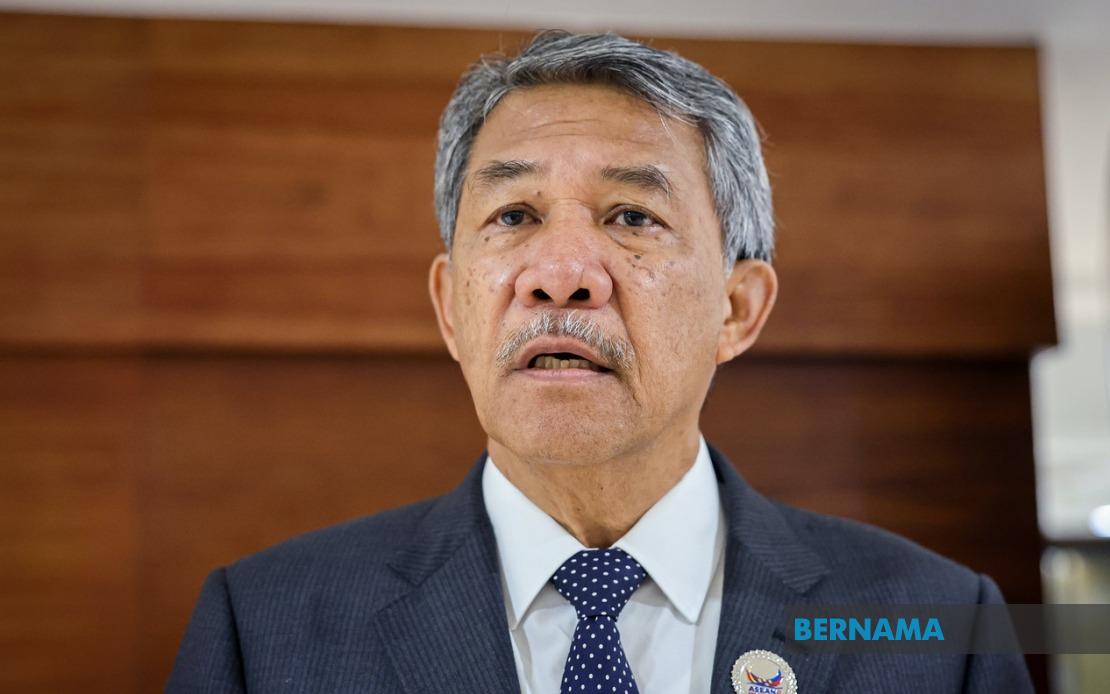
Four European countries have been formally admitted to the Treaty of Amity and Cooperation in Southeast Asia, marking another significant expansion of the regional bloc's diplomatic influence beyond its immediate geographic boundaries. Sweden, Poland, Romania and Lithuania will officially sign their instruments of accession during a ceremony on Friday, coinciding with celebrations of the treaty's 50th anniversary. The decision was announced by Malaysia's Foreign Minister Datuk Seri Mohamad Hasan during the 59th ASEAN Foreign Ministers' Meeting in Manila, held under the Philippines' current chairmanship of the organisation.
The admission of these four nations underscores the escalating appeal of ASEAN's foundational principles among distant yet strategically significant countries. The treaty, which was originally established in 1976, functions as the fundamental code of conduct governing peaceful relations among signatories. With these additions, the total number of High Contracting Parties reaches 58, encompassing all 11 ASEAN member states alongside nations spanning multiple continents. The expansion reflects what Malaysian officials describe as the international community's confidence in ASEAN's role as a stabilising force in regional and global affairs.
The four newest members join a growing roster of non-Southeast Asian countries that have recognised the treaty's value as a mechanism for promoting dialogue and cooperation. Current signatories outside the region include Australia, China, India, Japan, New Zealand, the United States, Brazil, Peru, Germany, Türkiye, Ukraine, Saudi Arabia, Iran, Egypt and Morocco. This geographic diversity demonstrates how ASEAN's framework has transcended its original regional scope to become a vehicle for countries across Europe, Asia, Africa and the Americas to signal their commitment to principles of peaceful coexistence and mutual respect.
For Malaysian policymakers and regional observers, the admission of European nations carries particular significance in the current geopolitical climate. The inclusion of Poland, Romania and Lithuania—all NATO members with active roles in European security debates—represents a subtle shift in how ASEAN's framework is being utilised by distant powers. These countries have shown willingness to engage with ASEAN's non-interference principle and respect for sovereignty, values that may offer them alternative diplomatic channels in an increasingly multipolar world. Sweden's accession is equally notable given its recent NATO membership and its historical emphasis on non-alignment.
Mohamad Hasan emphasised during his remarks that the expansion reflects broader recognition of ASEAN's effectiveness in maintaining stability across Southeast Asia. He noted that numerous additional applications from countries seeking accession are currently being processed by the ASEAN Secretariat in Jakarta, with these applications scheduled for submission to individual ASEAN member states for formal consideration. This pipeline of potential new members suggests that momentum for further treaty expansion is likely to continue, potentially bringing the total number of signatories even higher in the coming years.
The timing of these admissions during the Philippines' ASEAN chairmanship, operating under the theme "Navigating Our Future, Together," carries deliberate symbolic weight. The Philippines has championed ASEAN's role in maintaining regional peace and establishing rules-based engagement at a time when tensions in the South China Sea and broader geopolitical rivalries have tested the bloc's consensus-based approach. By welcoming distant nations into the treaty framework, ASEAN signals that its principles of peaceful dispute resolution and non-aggression have universal appeal beyond Southeast Asia's immediate periphery.
The Treaty of Amity and Cooperation has served as ASEAN's primary diplomatic instrument for establishing shared norms among states of vastly different political systems, economic capacities and strategic interests. Its core principles—peaceful settlement of disputes, mutual respect for sovereignty, non-interference in internal affairs and renunciation of the threat or use of force—have proven durable enough to accommodate countries ranging from liberal democracies to authoritarian regimes, from major powers to smaller nations. This flexibility helps explain why the treaty has attracted signatories spanning such diverse regions and political contexts.
For Malaysia specifically, the continued expansion of the treaty's membership base strengthens ASEAN's position as an institution capable of shaping diplomatic norms that extend far beyond Southeast Asia. As a middle power with significant trade and security interests across multiple regions, Malaysia has historically viewed ASEAN's frameworks as vehicles for amplifying its own voice in international affairs. Each new signatory, particularly major European nations, reinforces the relevance of these mechanisms and validates Malaysia's long-standing advocacy for multilateral solutions to regional challenges.
The admission process itself reveals how ASEAN member states maintain collective control over the treaty's expansion while accommodating growing international interest. Applications undergo scrutiny and deliberation at multiple levels before being accepted, ensuring that new members are expected to uphold the treaty's principles. This measured approach has allowed ASEAN to maintain the treaty's credibility while welcoming the prestige and practical benefits that come with expanding its global network of partners committed to peaceful cooperation and mutual respect.
Looking ahead, the processing of additional applications suggests that ASEAN will continue receiving interest from countries seeking to formally align themselves with the treaty's principles. The symbolic value of accession—demonstrating a nation's commitment to non-interference and peaceful resolution of disputes—appears to appeal to diverse countries navigating complex regional environments. Whether future signatories include other European nations, countries from Africa, or additional nations from other regions, each accession reinforces ASEAN's role as a custodian of diplomatic principles with genuinely universal relevance.

