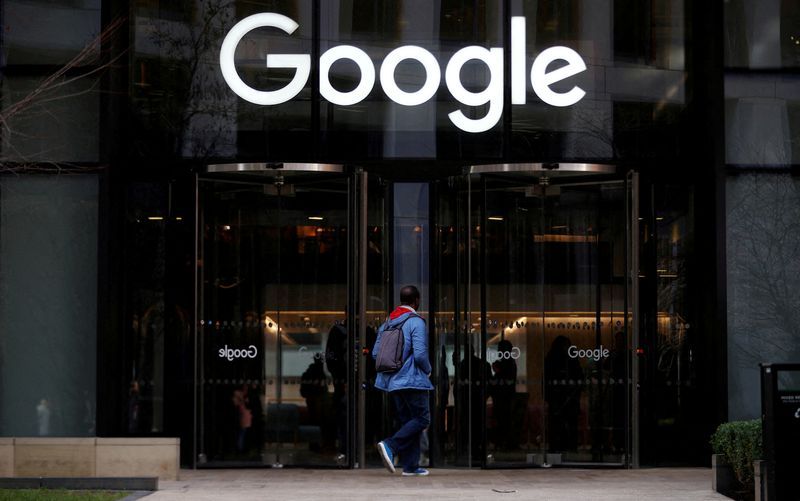
The Stockholm Patent and Market Court delivered a significant antitrust ruling on Wednesday, determining that Alphabet's Google must compensate PriceRunner, the price comparison service owned by Swedish fintech company Klarna, with damages equivalent to approximately 14.3 billion Swedish crowns, or roughly $1.5 billion USD. This decision represents a substantial legal victory for the independent price comparison platform and reinforces the growing pressure on major technology companies to answer for alleged anticompetitive practices across European jurisdictions.
According to the court's formal statement, the judges found that PriceRunner had indeed sustained measurable harm as a direct consequence of Google's unlawful conduct. Specifically, the court determined that Google had engaged in systematic illegal preferential treatment of its own price comparison service over many years, thereby disadvantaging competing platforms like PriceRunner in search rankings and visibility. This pattern of conduct violated established antitrust principles prohibiting dominant digital platforms from leveraging their market position to unfairly favour their own services.
The legal dispute traces its origins to 2022, when Klarna's PriceRunner subsidiary initiated formal proceedings against Google at the Stockholm court, seeking compensation of approximately €2.1 billion, equivalent to roughly $2.4 billion USD at the time of filing. The complaint centred on allegations that Google had deliberately manipulated its search algorithm and results pages to prioritise its own price comparison tools while systematically demoting or burying links to competing services, including PriceRunner. Such practices, if proven, would constitute a clear breach of European Union antitrust regulations that prohibit abuse of dominant market position.
This judgment comes at a critical juncture in the broader international regulatory climate surrounding big technology firms. The European Union has intensified scrutiny of Google's practices under both its traditional antitrust framework and newer legislation such as the Digital Markets Act, which targets the conduct of large digital gatekeepers. Sweden's decision demonstrates that national courts are willing to impose substantial financial penalties on tech giants for algorithmic manipulation that harms legitimate competitors, even when those competitors operate in adjacent digital markets.
For Malaysian businesses and entrepreneurs operating in the e-commerce and price comparison sectors, this ruling carries important implications. The decision signals that courts across developed markets increasingly recognise the competitive harm created when search engine operators systematically favour their own services, a practice that could affect similar dynamics in Southeast Asian digital markets. As regional platforms expand their capabilities and integrate price comparison tools, understanding how major search engines handle competing services becomes crucial for market participants across the region.
The financial magnitude of the award—approximately $1.5 billion—underscores the serious economic consequences that courts are now prepared to impose for algorithmic manipulation. This sum exceeds the original €2.1 billion claim, suggesting that either the court calculated damages more aggressively than PriceRunner initially sought, or that the plaintiff successfully proved additional harms during litigation. Such substantial penalties serve as a cautionary signal to other dominant platforms considering similar practices, effectively raising the cost of anticompetitive behaviour to levels that cannot be easily dismissed as minor business risks.
The Swedish court's analysis likely examined extensive evidence concerning search algorithm modifications, click-through rates, traffic patterns, and financial impacts on PriceRunner's operations. Swedish courts, operating within the European legal framework, would have applied rigorous standards of proof regarding causation between Google's conduct and PriceRunner's documented losses. The judgment thus represents not merely a symbolic victory but a forensically detailed finding of unlawful behaviour supported by concrete economic evidence.
Google has not yet publicly commented on the ruling, and it remains unclear whether the company intends to appeal the decision or negotiate a settlement. Appeals would likely proceed through Swedish appellate courts before potentially reaching the European Court of Justice if questions of EU law interpretation become central. The company typically challenges significant antitrust judgments vigorously, and a protracted legal process could extend this matter for additional years.
This case also reflects the evolution of competition law enforcement in the digital economy. Traditional antitrust analysis often struggled with defining the relevant market and measuring competitive harm in platform ecosystems where services are offered at nominally free or indirect-payment models. Swedish and European courts have developed increasingly sophisticated frameworks for evaluating such claims, recognising that monopolistic control over search visibility creates real economic damage even when users pay nothing for the search service itself. The decision validates this sophisticated analytical approach.
For the broader Southeast Asian context, the Swedish ruling demonstrates that regulators and courts in developed economies are establishing clear precedents that technology companies cannot exploit dominant search or platform positions to favour their own competitive services. As regulatory frameworks in countries like Malaysia, Singapore, and Indonesia continue to mature, such international precedents will likely influence how local authorities approach similar complaints. Malaysian consumers and businesses should be aware that major platform operators face increasing legal and financial exposure for anticompetitive algorithmic practices, which could eventually shape how digital markets function more broadly across the region.

