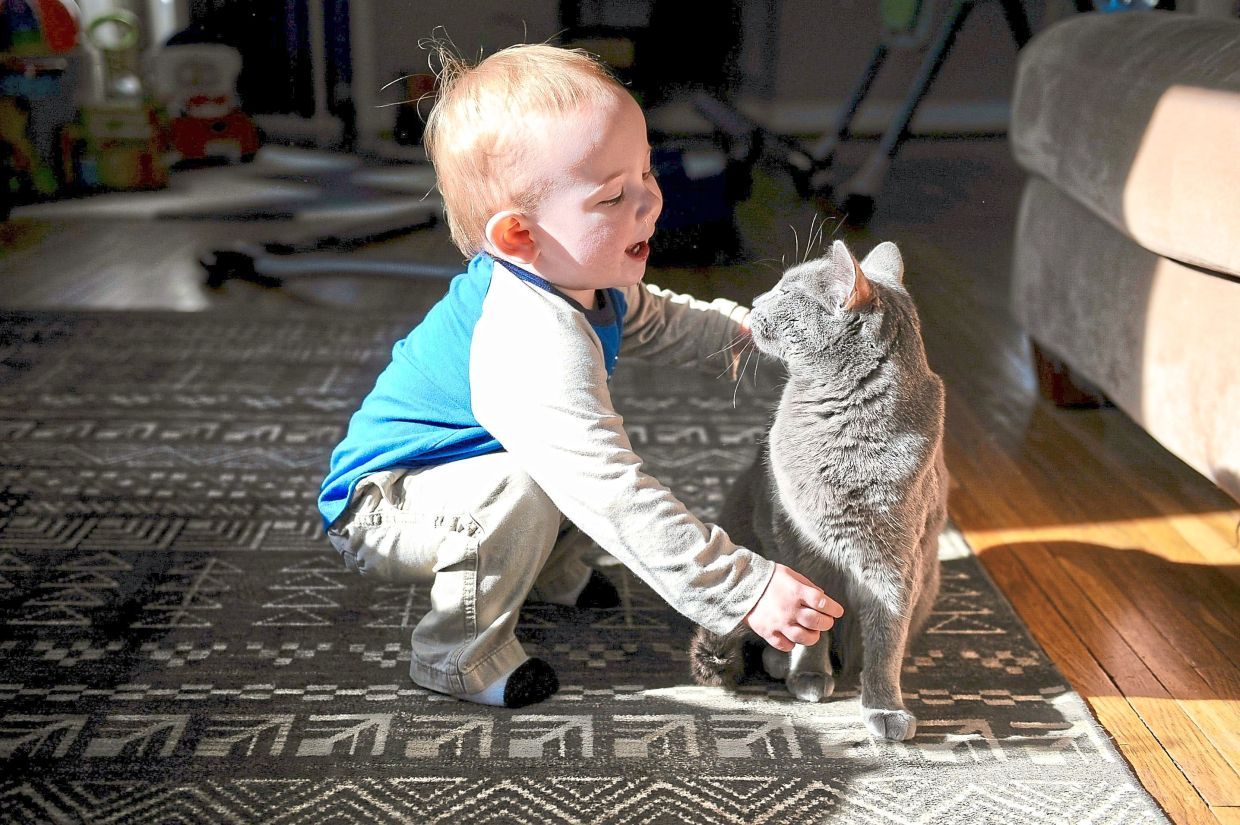
A major epidemiological study from Sweden has upended a widely held belief among parents and clinicians: that keeping cats at home substantially worsens asthma in children. Researchers tracking 30,277 children over two years discovered no meaningful difference in asthma severity, flare-ups, symptom control, or lung function between those living with cats and those without. The findings, which involved rigorous analysis of national health records, challenge decades of conventional wisdom that has led many families to rehome beloved pets in hopes of protecting children's respiratory health.
Asthma remains the most prevalent chronic condition affecting children globally, with serious consequences. The Global Asthma Network estimates the disease affects 9.1% of children and 11% of adolescents worldwide, though prevalence varies substantially across different regions and countries. For families managing this condition, the financial and emotional burden is considerable. Hospitalisation from asthma attacks represents a significant drain on healthcare resources, and children with poorly controlled asthma often miss school, affecting academic performance and family stability. In Malaysia and across Southeast Asia, where tropical climates and rapid urbanisation create conditions potentially favourable to respiratory disease, understanding genuine asthma triggers versus myths becomes particularly important for public health decision-making.
Physicians have long understood that certain established factors increase asthma risk: exposure to air pollution and secondhand smoke, childhood viral infections, obesity, and existing allergic conditions such as eczema or hay fever. Yet the role of pet exposure has remained murky. Patients frequently report that cat dander seems to provoke their asthma attacks, and this anecdotal evidence has shaped medical advice and parental behaviour for generations. However, when researchers have examined this relationship systematically, results have proven inconsistent and often unconvincing, largely because previous investigations typically involved small, non-representative populations rather than entire national cohorts.
The Swedish research team, led by Dr Resthie R Putri at Karolinska Institutet in Stockholm, took a different methodological approach. Beginning in 2023, they assembled a cohort of children aged four to seventeen years, all born between 2006 and 2020 and all carrying diagnoses of either asthma or airway allergies. By leveraging Sweden's integrated health information infrastructure—including the National Patient Register, Prescribed Drug Register, and National Airway Register—the researchers tracked each child's clinical course over 24 months through 2024. This meant accessing objective records of diagnoses, emergency department visits, medication prescriptions, formal asthma control assessments, and spirometry lung function tests. Such comprehensive data collection eliminates much of the recall bias and reporting inconsistency that weakens smaller studies.
Crucially, Sweden's recently implemented National Cat Register, mandatory since 2023 for cats born after 2008, provided researchers with reliable information about pet ownership. The team determined which parental households contained at least one cat during the study period. About 9.4% of the study population—roughly 2,850 children—lived with cats, allowing meaningful statistical comparison between exposed and unexposed groups. This relatively low prevalence of cat ownership among Swedish families itself reflects how seriously many parents take warnings about pet allergens and asthma.
The results demonstrated striking parity between the two groups. Among children in the full cohort, moderate-to-severe asthma (defined by reliance on prescribed asthma medications) appeared in 9.6% of those exposed to household cats compared with 10.1% of unexposed children—a difference so minimal as to be statistically insignificant. When examining asthma exacerbations, or acute attacks requiring medical attention, the figures were 3.3% for cat-exposed children versus 3.5% for others. For the subset of approximately 1,428 children where detailed lung function testing occurred, no meaningful differences emerged in spirometry measurements, the objective gold standard for assessing breathing capacity. These findings held firm regardless of how many cats lived in the home, the cat's sex, or its age.
Dr Putri offered a plausible explanation for these counterintuitive results. Cat allergen exposure, she noted, occurs ubiquitously in contemporary society—not merely within pet-owning households. Schools, public transportation, shopping centres, and other shared environments accumulate cat allergen on surfaces and in air circulation systems, meaning children without home cats may still encounter significant exposure. This widespread environmental presence of cat allergen could theoretically explain why researchers detected no protective benefit from avoiding household cats. If sensitised children are already encountering allergen in schools or transit anyway, the marginal additional exposure from a home cat may prove inconsequential to overall asthma control.
However, Putri appropriately cautioned that the study possessed limitations worthy of consideration. The research lacked detailed information about which specific allergens individual children were actually sensitised to—some may have been allergic to cat dander while others reacted to different triggers entirely. Additionally, since the National Cat Register remains relatively new, some households with cats may have escaped detection and been incorrectly classified as unexposed. Such misclassification would bias results toward finding no difference between groups, though the magnitude of this bias likely remains modest given the brief period elapsed since registration became mandatory. These caveats suggest that while the study's findings prove robust for general populations, subgroups of children with documented cat allergies might warrant closer monitoring.
For Malaysian and Southeast Asian families, this research carries practical implications. Healthcare providers across the region frequently counsel parents of asthmatic children to remove cats from the home, sometimes as a first-line intervention before attempting more targeted allergen reduction strategies. This Swedish evidence suggests such advice may unnecessarily burden families who gain little asthma benefit from relinquishing beloved pets. Simultaneously, the findings do not constitute permission for complacency about respiratory health. Rather, they redirect attention toward more impactful asthma interventions: reducing household air pollution from cooking and burning, controlling dust mites through humidity management, improving air quality during regional haze episodes, and ensuring access to preventive asthma medications. For children whose asthma truly does appear triggered by cat exposure, targeted approaches like keeping cats out of bedrooms or using air filtration may prove more proportionate and family-preserving than complete removal.

