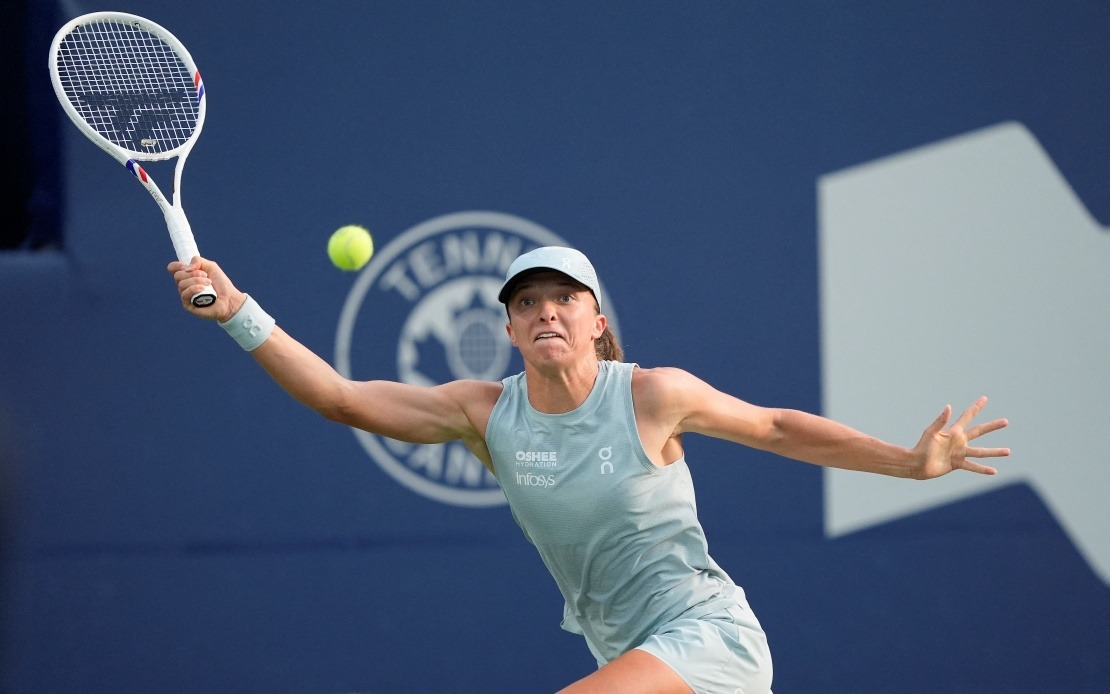
Iga Swiatek has ended an 11-month title drought by claiming victory at the National Bank Open in Toronto, where she overpowered Elena Rybakina with a clinical 6-2, 6-3 performance in the championship match. The Polish seventh seed's triumph marks a significant milestone in her season, arriving at a moment when competitive momentum has become increasingly crucial in the tennis calendar as players prepare for the year's final stretch of tournaments.
Swiatek's path to the title was characterised by dominant tennis from start to finish. In the opening set, she capitalised immediately when Rybakina, currently ranked second in the world, gifted her an early break through consecutive double faults. Rather than allowing her opponent any opportunity to regroup, Swiatek sustained her aggressive approach and consistently applied pressure at the baseline, ultimately seizing the opening set without significant resistance.
The second set followed a similar pattern, with Rybakina's unforced errors continuing to prove costly to her championship hopes. Two particularly damaging missed backhand attempts handed Swiatek another decisive break, further tilting the match in the Polish player's favour. The momentum had become entirely one-directional, with Swiatek controlling tempo and dictating points from the baseline with impressive consistency and depth.
While Rybakina managed to save one championship point during the closing stages, demonstrating the kind of resilience expected of a world number two, her efforts ultimately proved insufficient. Swiatek seized her opportunity on the second break point, closing out the match and securing the trophy after nearly a year without adding to her title collection. The last occasion she had won a significant tournament was in September of the previous year, making this victory particularly meaningful in terms of her competitive standing and confidence heading into the remainder of the season.
Swiatek's remarks during the awards ceremony offered insight into her mindset during what has been a challenging period for her both on and off the court. Rather than focusing solely on technical achievement, she chose to address broader themes of resilience and personal conviction. She acknowledged those facing unfair treatment and negativity, urging them to maintain focus on their own growth and development regardless of external circumstances. Her message of perseverance struck a chord that extended well beyond the sporting arena, reflecting the emotional and mental dimensions that accompany professional athletics at the highest level.
The victory carries particular significance within the context of the professional tennis calendar, occurring during the North American summer swing that has traditionally served as a proving ground for players aspiring to perform well at major tournaments. Toronto ranks among the most prestigious turf-to-hard-court transition events, attracting a competitive field that typically includes most of the world's top players. For Swiatek to triumph in such company, particularly against a player of Rybakina's calibre, demonstrates tangible progress in her overall form.
For Malaysian and Southeast Asian tennis enthusiasts, Swiatek's resurgence represents an encouraging narrative of redemption and renewal. Many emerging players across the region understand the pressure of recovering from extended periods without significant titles, and her successful response to that challenge offers a valuable lesson in mental fortitude. Her victory also reinforces the competitive depth that exists beyond the sport's most dominant figures, illustrating how success at tennis's highest level remains open to those willing to maintain focus and intensity.
Rybakina's loss, while significant, should be contextualised within her overall strong season performance. As the world number two, she entered the match as a favourite and played against a formidable opponent who was clearly in exceptional form throughout the tournament. The manner of her defeat, driven primarily by unforced errors rather than defensive inadequacy, suggests areas for refinement rather than fundamental concerns about her competitive standing.
As the professional tennis calendar continues toward its conclusion, Swiatek's Toronto triumph provides substantial momentum and psychological lift as she targets continued success in upcoming tournaments. The confidence derived from winning against elite opposition, combined with the demonstrated technical consistency that she displayed throughout the final, positions her favourably for the challenging matches that lie ahead in the season's most important events.

