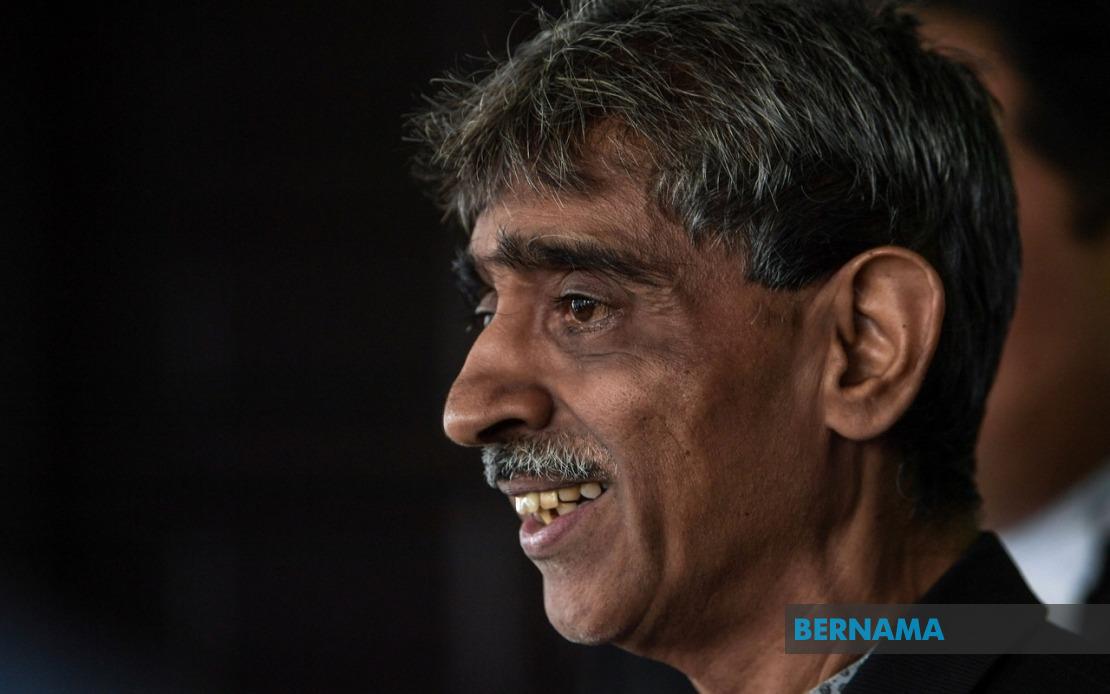
Legal professionals engaged with the Tabung Haji investigation are pushing for criminal action to be taken swiftly against wrongdoers, once enforcement agencies have amassed adequate proof of misconduct. Mohamed Haniff Khatri Abdulla, a lawyer who participated in the Royal Commission of Inquiry proceedings into the pilgrim fund, has emphasised that decisive measures are essential to translate the RCI's recommendations into prosecutions and rebuild depositor trust in one of Malaysia's most significant financial institutions.
The urgency of visible enforcement action cannot be overstated in this context. Public confidence in Tabung Haji, which manages the savings of over 9 million Malaysian Muslims preparing for the hajj pilgrimage, has been badly damaged by revelations of governance failures and questionable investment decisions. Without timely legal consequences for implicated parties, the perception will persist that wrongdoing goes unpunished, further eroding faith in the institution's management and future viability. Mohamed Haniff stressed that authorities must demonstrate willingness to prosecute regardless of the standing or position of those involved, signalling that accountability applies uniformly across all levels of leadership.
However, he cautioned against projecting a false impression that investigations have concluded simply because prosecutions commence in certain matters. The RCI report has spawned multiple concurrent investigations across different aspects of Tabung Haji's operations—governance structures, investment strategies, procurement practices, and potential statutory violations—each requiring meticulous examination. According to information disclosed by Mohamed Haniff, law enforcement agencies have summoned nearly 200 individuals to provide statements, an indication of the investigation's scope and complexity. The Attorney General's Chambers and investigating agencies must manage public expectations carefully to prevent misconceptions that surface charges represent the totality of accountability measures.
Strategic communication becomes critical in this environment. Mohamed Haniff proposed that authorities issue staged updates explaining which investigative segments have concluded and progressed to prosecution decisions, while clarifying that parallel inquiries into other facets remain active. This transparency prevents the public from drawing erroneous conclusions that prosecutions are politically motivated or represent the entirety of enforcement action. The lawyer cautioned against allowing a perception gap to widen over time, noting that without clear narrative management, observers might eventually attribute subsequent prosecutions to partisan political considerations rather than evidence-based law enforcement, particularly given Malaysia's recent history of administration changes affecting corruption investigations.
The investigative phase itself demands considerable time investment. Criminal inquiry into a sprawling financial institution involves technical financial analysis, examination of board minutes and decision-making processes, cross-referencing of investment transactions, and assessment of compliance with regulatory frameworks. Mohamed Haniff projected that a realistic timeline extends at least another three to six months before complete investigative closure becomes feasible. This duration reflects not procedural lassitude but the inherent complexity of financial investigations where investigators must construct evidential chains demonstrating deliberate misconduct, negligence, or breach of fiduciary duty rather than mere operational missteps.
Mohamed Haniff has proposed an institutional innovation to enhance investigative efficiency: establishing a dedicated unit within the Attorney General's Chambers comprising three experienced Deputy Public Prosecutors with specialisation in both Anti-Corruption Commission cases and conventional criminal law. This dedicated nucleus would evaluate investigation papers submitted by the Royal Malaysia Police and Malaysian Anti-Corruption Commission through an integrated analytical framework, rather than having separate agencies conduct parallel assessments. The proposal recognises that Tabung Haji investigations involve two law enforcement bodies operating under distinct procedural protocols, potentially generating redundancy or gaps in prosecution preparation. A specialised prosecutorial unit would coordinate case evaluation, ensure consistent application of legal standards, and accelerate the transition from investigation completion to charging decisions.
Former Court of Appeal judge Datuk Yaacob Md Sam, who conducted multiple RCI proceedings including the Sultan Abdul Halim Ferry Terminal inquiry, reinforced a fundamental legal principle that requires articulation for public understanding: RCI findings do not constitute prosecutable evidence or legally binding determinations. Under the Commissions of Inquiry Act 1950, investigation reports generate recommendations and factual findings but carry no evidentiary weight in criminal or civil proceedings. Enforcement agencies must independently replicate investigative work to develop admissible evidence suitable for court presentation. This distinction matters enormously for managing expectations, as the public might assume that evidence adduced before the RCI automatically converts into criminal charges. Yaacob emphasised that investigators must thoroughly re-examine all factual circumstances to identify criminal conduct that courts will recognise as violating specific statutory provisions.
The gap between RCI inquiry and criminal prosecution reflects fundamental principles of evidence law and constitutional fairness. Individuals possess rights to confrontation, cross-examination, and due process protections that RCI proceedings do not fully provide. Evidence secured through RCI testimony cannot be transported directly into courtrooms without independent authentication and verification meeting criminal evidentiary standards. This procedural requirement protects accused individuals from conviction based solely on RCI findings while ensuring prosecutors present proof capable of sustaining convictions beyond reasonable doubt. The two-stage process—RCI inquiry followed by independent criminal investigation—is not bureaucratic redundancy but constitutional safeguard.
For Malaysian and Southeast Asian observers, the Tabung Haji situation exemplifies the institutional challenges confronting post-inquiry prosecution phases. Many regional governments conduct high-profile inquiries into financial misconduct or governance failure, generating public expectations for rapid criminal accountability. However, the investigative-to-prosecution transition involves substantial legal work that cannot be rushed without risking evidentiary insufficiency or procedural defects enabling acquittals on technical grounds. Malaysia's handling of the Tabung Haji matter will establish precedent for how subsequent RCI recommendations are translated into criminal justice outcomes, potentially influencing other accountability processes across the region.
The coordination between multiple agencies—PDRM, MACC, Attorney General's Chambers, and regulatory bodies like Bank Negara—represents another layer of complexity requiring resolution. Different agencies operate under separate statutory mandates and investigative protocols, potentially generating duplicative efforts or analytical inconsistencies. Mohamed Haniff's proposal for prosecutorial coordination addresses this fragmentation by creating a centralised point for case evaluation and prosecution strategy, improving efficiency without compromising investigative thoroughness.
Public communication strategy assumes heightened importance given the scale of Tabung Haji's significance to Malaysia's Muslim community and the institution's prominence in national financial architecture. Authorities should provide transparent, regular updates explaining investigative progress, clarifying the distinction between concluded segments and ongoing inquiries, and establishing realistic timelines for enforcement action. This transparency rebuilds confidence by demonstrating that accountability processes operate according to evidence and law rather than political convenience, ultimately serving the longer-term objective of restoring institutional credibility.

