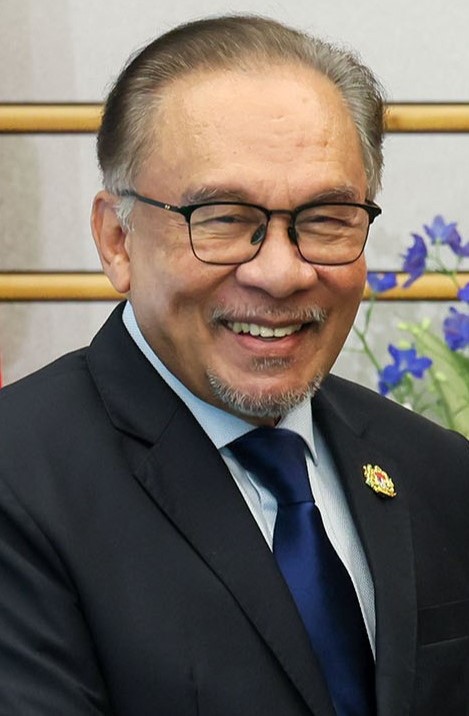
Muar member of parliament Syed Saddiq Syed Abdul Rahman has announced that he will dedicate RM115,000 derived from a recently undertaken part-time role directly toward initiatives benefiting his parliamentary constituency. The move signals the veteran politician's continued emphasis on channelling personal income streams back to grassroots constituencies, a practice that underscores the financial interdependence between individual lawmakers and their constituent bases in the Malaysian political system.
This decision follows an established pattern among senior Malaysian politicians who often supplement their parliamentary allowances with board positions, consultancy roles, or other professional engagements. The transparency of Syed Saddiq's declaration represents an attempt to address growing scrutiny regarding potential conflicts of interest and the adequacy of parliamentary compensation in Malaysia. By publicly committing a substantial sum to his constituency, the Muar MP appears to be demonstrating accountability to voters who increasingly question how their representatives balance personal financial interests with public duty.
The RM115,000 figure carries particular significance within the context of Muar's development landscape. As a constituency encompassing urban and rural areas within Johor, Muar typically faces resource allocation challenges that require continuous funding for infrastructure maintenance, community programmes, and grassroots engagement initiatives. The contribution from Syed Saddiq's additional income stream provides discretionary capital that can supplement formal federal and state allocations, potentially allowing for more flexible and responsive local development strategies.
Syed Saddiq's position within Malaysian politics has historically emphasised younger leadership approaches and forward-looking governance models. His willingness to publicise the channelling of supplementary income toward constituency welfare aligns with broader generational shifts in political communication where digital transparency and public accountability declarations have become more prevalent. This approach contrasts with older political conventions where such financial arrangements often remained opaque or undisclosed to constituents.
The commitment also reflects broader discussions within Malaysian politics regarding parliamentary remuneration structures. Current allowances for MPs, while substantial by regional standards, have not substantially increased in nominal terms for over a decade. Consequently, many legislators pursue parallel professional activities to maintain income levels consistent with their seniority and expertise. However, this dual engagement creates potential governance challenges, as time and attention devoted to external roles might theoretically detract from parliamentary responsibilities.
For Muar constituents, the pledge offers tangible benefits across multiple potential development areas. Discretionary funds of this magnitude can support educational scholarships for deserving students, emergency relief for affected communities, improvements to community centres and public facilities, or targeted assistance for small enterprises. The flexibility of non-budgeted funds allows for rapid response to constituent needs that might not align with formal annual budget cycles.
Within the context of Malaysian state politics, Muar occupies a strategically important position. The constituency has experienced demographic changes reflecting broader Malaysian urbanisation trends, with growing middle-class populations alongside persistent rural communities. Syed Saddiq's commitment to reinvest personal income demonstrates recognition of these diverse constituency needs and the requirement for continuous targeted investment to maintain political relevance across heterogeneous voter bases.
The declaration also carries implications for inter-party political competition within Johor. As rival political factions assess their approaches to constituency engagement and resource allocation, visible commitments like Syed Saddiq's create benchmarks against which competing candidates and parties measure their own offerings to voters. This dynamic encourages broader competition in terms of which political actors demonstrate stronger commitment to local development beyond baseline parliamentary duties.
Regarding Southeast Asian comparisons, Malaysia's approach to parliamentary supplementary income falls within regional norms. Indonesia, Thailand, and the Philippines similarly feature legislators engaged in parallel professional pursuits, though transparency standards vary considerably. Syed Saddiq's public declaration positions Malaysia somewhat more favourably within regional governance expectations, contributing to impressions of relatively stronger institutional transparency despite ongoing concerns about political financing more broadly.
The practical implementation of this commitment will likely involve consultation with constituency-level party structures and community organisations to identify priority projects. Such consultative processes can strengthen party organisational capacity and deepen grassroots engagement mechanisms, creating secondary political benefits beyond the immediate financial contribution. Community involvement in determining fund allocation also enhances legitimacy and ensures resources address actual constituent priorities rather than elite assumptions.
Looking forward, this commitment may establish precedent expectations for other parliamentary representatives regarding supplementary income transparency. As voters become increasingly sophisticated in assessing politician conduct and public finance management, similar declarations could become standard practice rather than exceptional. This normalisation of transparency would represent incremental but meaningful institutional evolution within Malaysian parliamentary culture.
Ultimately, Syed Saddiq's decision reflects contemporary tensions within global democracies regarding how legislators balance personal professional development with public service obligations. His explicit commitment to redirect external income toward constituency welfare represents one approach to addressing this tension, offering practical reassurance to voters that individual financial interests remain subordinate to representative responsibilities.