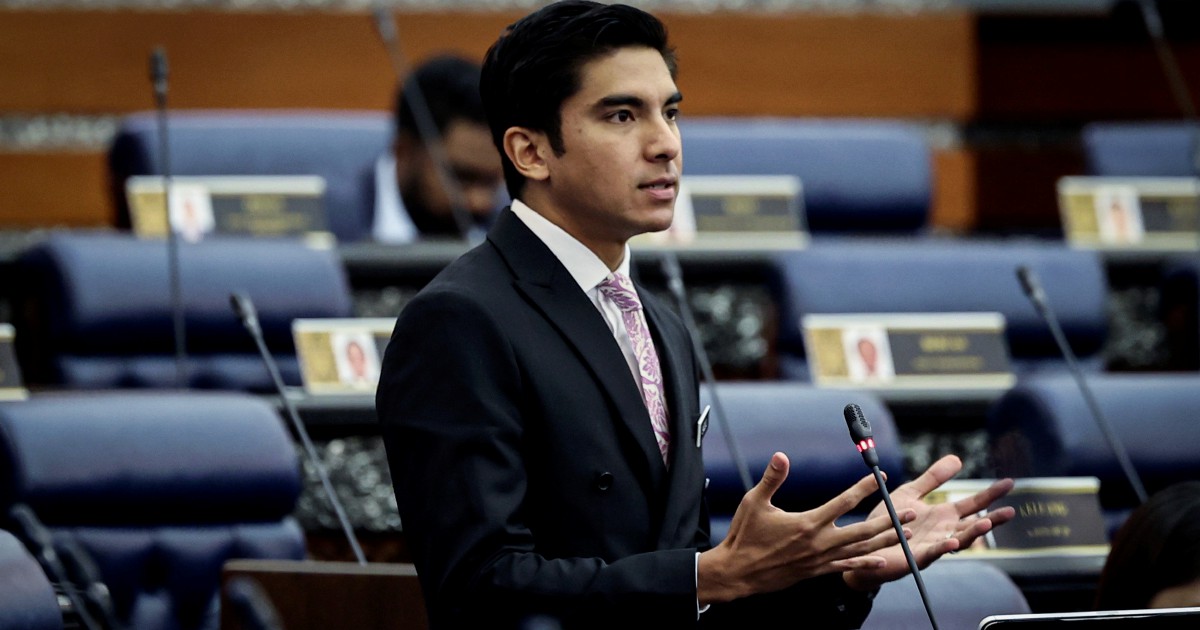
Kuala Lumpur lawmaker and Muda politician Syed Saddiq Syed Abdul Rahman delivered a sharp rebuke to opposition members who chose to absent themselves from parliamentary proceedings examining the Tabung Haji Royal Commission of Inquiry findings, contending that their decision represented a significant disservice to the nation's pilgrims and depositors. The boycott, according to his assessment, undermined the deliberative process at a critical moment when millions of Malaysians looked to elected representatives to scrutinize findings related to the country's pilgrimage savings institution.
Tabung Haji, formally known as the Pilgrimage Fund Board, holds deposits from approximately 10 million Malaysians who have entrusted their savings to prepare for the hajj pilgrimage to Mecca. These accounts represent not merely financial instruments but deeply personal commitments to religious observance, making the institution's governance and financial management matters of exceptional public importance. The scale of depositors affected by any institutional failures or misconduct justifies comprehensive parliamentary oversight and transparent deliberation about the findings and recommendations emerging from the royal commission process.
The Royal Commission of Inquiry was established to investigate concerns regarding Tabung Haji's operations, financial practices, and management decisions that had generated considerable public anxiety and media scrutiny. Such inquiries represent formal mechanisms through which the state examines institutional performance and identifies systemic weaknesses or lapses in governance. When parliament debates the outcomes of a royal commission, it creates an opportunity for elected representatives to hold the executive accountable and discuss policy measures to address identified problems.
Syed Saddiq's criticism highlights a fundamental tension in Malaysian parliamentary practice. Opposition parties occasionally employ boycotts as tactical responses to government conduct or parliamentary procedures they view as objectionable. However, such strategies carry consequences for substantive policy discussions, particularly when the matters under consideration directly affect the welfare of ordinary citizens. Depositors anticipating parliamentary scrutiny of the Tabung Haji report had legitimate expectations that their elected representatives, regardless of political affiliation, would participate in examining the royal commission's conclusions.
The impact of the opposition walkout extends beyond procedural concerns. Parliamentary debates serve multiple functions: they create a public record of institutional problems, enable elected members to pose challenging questions to government officials, facilitate the airing of different perspectives on proposed solutions, and ultimately contribute to policy formulation. When opposition members absent themselves from these discussions, they forfeit opportunities to represent their constituents' interests and advance alternative viewpoints on corrective measures. Depositors in constituencies represented by boycotting lawmakers lose parliamentary advocacy precisely when their issues demand sustained political attention.
Tabung Haji's complexity as an institution adds further weight to the need for comprehensive parliamentary engagement. The fund operates at the intersection of religious obligation, financial administration, and government policy. Historical performance issues, investment decisions, and management transparency all warrant rigorous examination by diverse legislative voices. Opposition participation would ordinarily strengthen parliamentary scrutiny by introducing alternative frameworks for evaluating institutional performance and proposing remedies. Their absence diminishes the robustness of legislative oversight.
From a Malaysian governance perspective, this incident reflects broader challenges facing the parliament's effectiveness. The institution's ability to function as a genuine forum for democratic deliberation depends partly on opposition willingness to engage substantively with government policy initiatives and institutional reviews. While boycotts constitute a legitimate protest mechanism in appropriate circumstances, their deployment in debates affecting millions of citizens raises questions about whether opposition parties properly balance tactical political considerations against constituent service obligations.
The Tabung Haji depositors represent a constituency spanning Malaysia's entire peninsula and East Malaysia. These individuals cut across ethnic, class, and regional lines, united primarily by their aspiration to fulfil religious obligations and their trust in government-administered financial stewardship. When parliament examines an institution holding their savings, the occasion transcends partisan boundaries. Legislators from all quarters should recognize that deliberative participation in such debates constitutes a core democratic responsibility.
Syed Saddiq's intervention, while politically pointed, raises substantive questions about opposition strategy and accountability. Malaysian voters elect representatives from both government and opposition blocs with expectations that they will engage seriously with matters affecting public welfare. Financial institutions entrusted with millions of deposits warrant comprehensive parliamentary scrutiny. The collective non-participation of opposition members in debating royal commission findings therefore warrants criticism not merely as a tactical misstep but as a failure of representative obligation.
Moving forward, the Tabung Haji situation underscores the necessity for political actors to recognize moments when institutional integrity and citizen protection demand that partisan considerations take secondary priority. The royal commission process, however thorough, achieves its full value only when parliament engages seriously with its findings. Depositors awaiting parliamentary accountability for their institution's governance ultimately depend on elected representatives treating such debates as non-negotiable components of their legislative duty rather than opportunities for political theatre.

