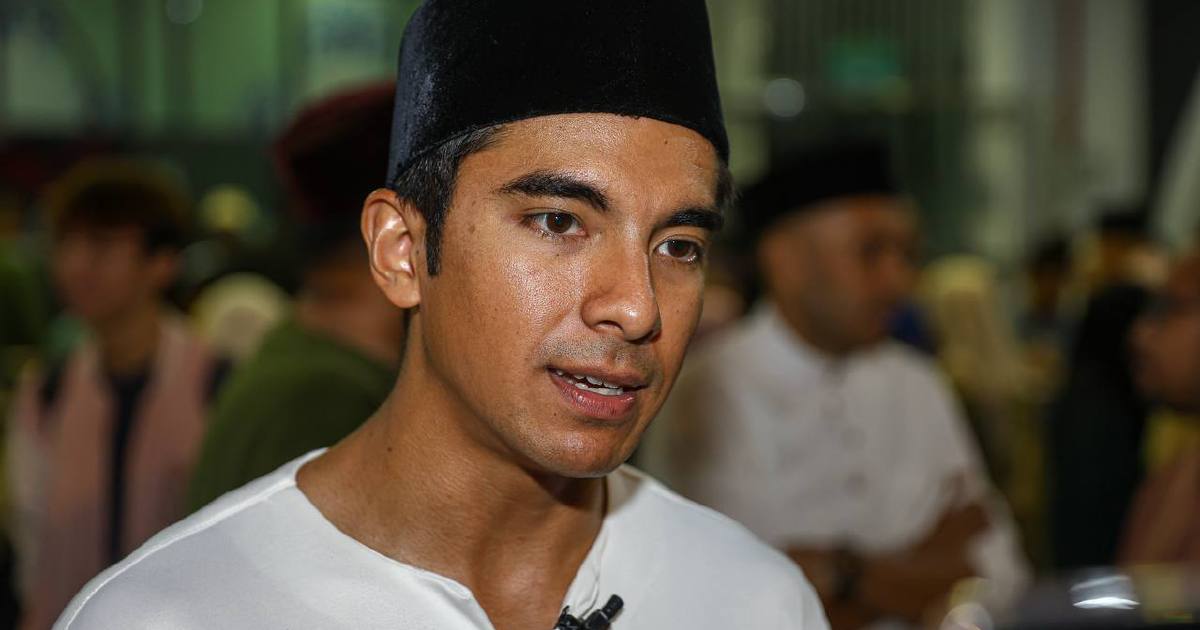
Youth and Sports Minister Syed Saddiq Albar has adopted a measured and philosophical approach as the Federal Court prepares to deliver its ruling in a case that has drawn significant political attention. Speaking ahead of the anticipated decision, Syed Saddiq indicated that he has come to terms with the uncertainty inherent in legal proceedings, choosing to entrust the outcome to divine guidance rather than preoccupying himself with speculation about the court's determination.
The statement reflects a broader pattern among Malaysian political figures facing high-stakes judicial decisions: the adoption of a composed public posture that emphasises acceptance and spiritual faith. For Syed Saddiq, who has maintained his position as minister despite the ongoing legal proceedings, the approach appears designed to project confidence while acknowledging the gravity of the situation. His remarks suggest that whatever the Federal Court decides, he intends to accept the verdict without public rancour or prolonged contestation.
Federal Court rulings carry considerable weight in Malaysia's legal hierarchy, representing the final arbiter in disputes that have traversed lower court systems. When cases reach this stage, they typically involve matters of constitutional importance or interpretation, making the court's deliberation process particularly significant. The approach Syed Saddiq has taken—one of quiet resignation to judicial determination—stands in contrast to some politicians who have openly criticised courts or signalled intent to challenge rulings through alternative means.
The context of legal cases involving ministers remains sensitive in Malaysia, where the intersection of politics and jurisprudence often attracts public scrutiny. Syed Saddiq's relative youth compared to many senior political figures, combined with his portfolio managing youth and sports affairs, means his personal standing carries implications for how younger Malaysians perceive both the political establishment and the judiciary. His demeanour during this period may influence perceptions about whether the legal system operates fairly regardless of political status.
For the ruling government and the Perikatan Nasional coalition of which Syed Saddiq's United Malays National Organisation forms part, the outcome carries indirect consequences. A favourable verdict might strengthen confidence in the administration's institutional integrity, while an adverse judgment could raise questions about ministerial accountability or governance standards. The neutrality of Syed Saddiq's public statements suggests political awareness of these dynamics without attempting to influence proceedings through partisan advocacy.
Malaysia's Federal Court has increasingly positioned itself as a guardian of constitutional principles in recent years, issuing several landmark rulings on matters ranging from religious jurisdiction to electoral boundaries. Each decision shapes the broader legal landscape in which future cases will be adjudicated. The impending ruling in Syed Saddiq's matter will become part of this jurisprudential record, potentially establishing precedents relevant to other cases or clarifying ambiguities in existing law.
The timing of such judicial determinations also influences political calculations within governing coalitions. Ministers facing legal challenges may experience shifting support from coalition partners depending on court outcomes, particularly in Malaysia's complex multi-party government structures. Syed Saddiq's expression of faith and acceptance may reflect confidence that his political allies will stand by him regardless of the verdict, or alternatively, a recognition that excessive advocacy on his behalf might appear inappropriate to judicial officers reviewing his case.
Public statements from figures in similar circumstances often balance several competing considerations: maintaining dignity and composure, acknowledging the rule of law, signalling respect for judicial processes, and preserving political capital for potential future challenges. Syed Saddiq's approach achieves most of these objectives by positioning himself as someone willing to accept judicial authority while maintaining his confidence in his own position. This stance has become increasingly common among Malaysian politicians as courts have taken more assertive roles in reviewing government decisions and actions.
For citizens and observers tracking Malaysian politics, the approaching ruling represents another data point in assessing how the country's institutions function under pressure. Whether the Federal Court upholds or rejects positions Syed Saddiq has advanced through lower proceedings will carry implications extending beyond the immediate parties involved. The decision may also influence how future cases involving political figures are structured, what legal arguments prove persuasive before Malaysia's highest court, and what standards of proof or interpretation the judiciary applies to matters involving officials in sensitive positions.
Syed Saddiq's invocation of faith and acceptance of divine will, while deeply personal, also communicates a message to the broader political establishment about the appropriate way to engage with judicial processes. In democracies where the rule of law depends on actors accepting court determinations even when unfavourable, such public displays of acceptance—however routine—reinforce important cultural norms. The minister's approach suggests that regardless of how Malaysian politics may sometimes appear contentious or confrontational, institutional actors continue to acknowledge, at least formally, the legitimacy of judicial authority in determining disputed questions.
As the Federal Court's announcement approaches, Syed Saddiq's current posture of equanimity will be tested. The actual outcome and his subsequent response—whether his acceptance of the ruling proves genuine or was merely performative—will shape how this episode is remembered within Malaysian political discourse. Whatever the decision, it will represent another chapter in the ongoing evolution of how Malaysia's political and judicial systems interact during moments of institutional stress and uncertainty.

