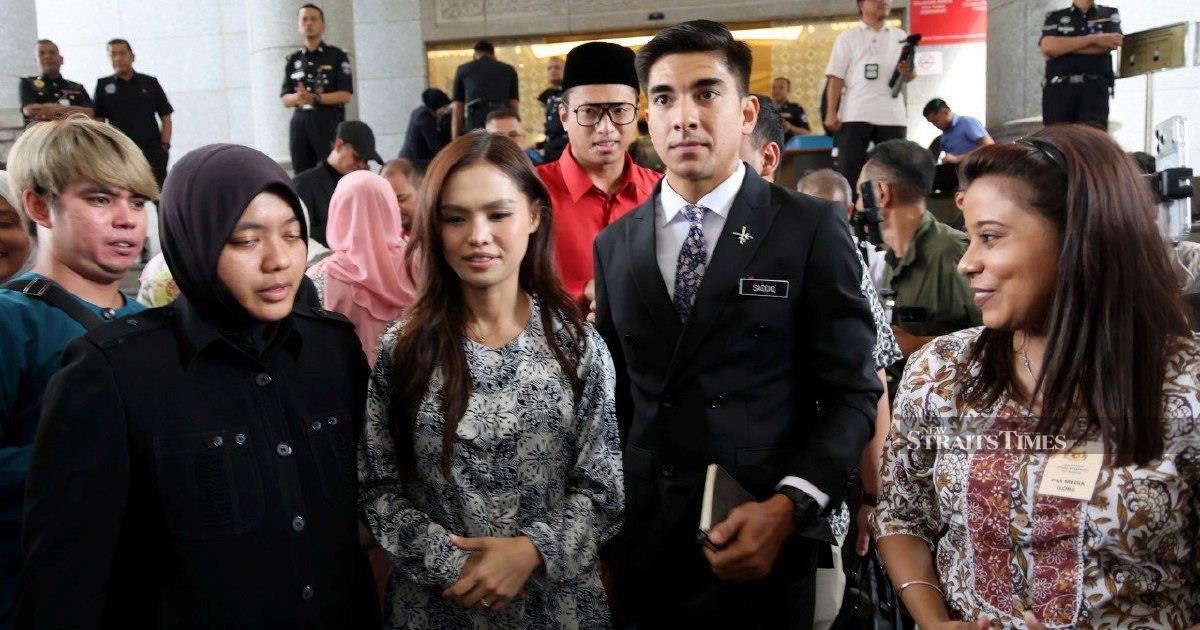
Muar member of parliament Syed Saddiq Syed Abdul Rahman has signalled that his personal life will take precedence over party politics in the coming months, having set aside any immediate consideration of reclaiming the leadership helm at Muda following his recent court acquittal. The decision reflects a calculated shift in priorities for the younger politician, whose legal vindication has nonetheless left open the question of his role within the reform-minded political outfit he helped establish.
Speaking at his constituency in Muar, the Johor-based legislator made plain that matrimonial arrangements occupy the foreground of his attention at present. The move to deprioritise the party leadership question signals pragmatism born of his recent legal battles, which consumed considerable time and resources over an extended period. His acquittal earlier this year cleared the way for potential reinstatement but has not automatically triggered a rush back into the upper echelons of party management.
The timing of this announcement carries significance within Malaysia's fractious political landscape, where young talent and generational renewal remain contested issues across the opposition bloc. Syed Saddiq's departure from Muda's leadership following his arrest and subsequent legal proceedings had left a governance vacuum that others have moved to fill. His decision to postpone rather than immediately pursue reinstatement suggests an acceptance that the party's immediate direction will proceed without his hands-on involvement.
Muda, which positions itself as a platform for youth engagement and institutional reform, has maintained operations under alternative leadership structures during the interim period. The party's stability during his legal proceedings indicates that the organisation has developed institutional capacity beyond any individual personality—a hallmark of political maturation that Muda's architects have long espoused. His measured approach to eventual return preserves optionality while avoiding the appearance of desperation to reclaim power.
For Malaysian observers tracking generational shifts within opposition politics, the episode underscores broader questions about the sustainability of personal political brands when confronted by legal complications. Syed Saddiq's decision to foreground personal life development over immediate political repositioning inverts the typical calculus of ambitious political operatives, who often accelerate their public profiles following legal vindication. His approach suggests either a genuine reconceptualisation of priorities or a sophisticated recognition that premature moves could invite renewed scrutiny.
The personal dimension of his choice—marriage—also situates his decision within normative Malaysian social expectations, where family milestones command considerable cultural weight and respectability. This framing may also serve to rehabilitate his public image following the controversational legal episode, presenting a narrative of stability and personal grounding that courts popular sympathy in a society that values familial responsibility.
From Muda's institutional perspective, the postponement preserves internal flexibility. The party leadership can continue consolidating its current direction whilst leaving the possibility of Syed Saddiq's eventual return as a potential destabilising or revitalising force depending on how internal dynamics evolve. This suspension of resolution allows competing factions within the party to avoid premature confrontation over succession and direction questions that might otherwise surface if he announced an immediate challenge.
The broader political context matters considerably here. Malaysia's reform movement remains fragmented across multiple formations—PKR, DAP, Amanah, and Muda among others—with overlapping ideological territory and competing claims on similar electoral constituencies. Any major personality returning to frontline political activity necessarily reshapes tactical calculations for other organisations and could trigger strategic repositioning across the opposition ecosystem.
Syed Saddiq's legal acquittal itself merits contextual examination. His case represented one of several instances where younger reform-minded politicians faced legal jeopardy, and his vindication contrasts sharply with ongoing complications affecting other figures. The court's decision potentially strengthens his political standing relative to those still embroiled in legal proceedings, though his measured response suggests he recognises that timing matters as much as vindication.
The decision also permits him to consolidate his Muar parliamentary representation without the additional demands of national party leadership responsibilities. As a constituency-focused member of parliament, he can dedicate attention to local concerns and constituent services—activities that build durable personal political capital that survives national-level political turbulence. This ground-level focus often generates the grassroots support necessary for sustainable political careers.
Moving forward, observers should note that Syed Saddiq's expressed postponement does not necessarily constitute permanent withdrawal from Muda's upper rungs. Rather, it signals that any eventual return will occur on terms he defines rather than in response to external pressure or legal crisis. This assertion of agency—deciding when rather than whether to return—itself carries symbolic importance for a politician whose recent experience involved considerable legal constraint.
The patience required by this approach reflects maturation within Malaysia's opposition political ecosystem, where youthful ambition increasingly confronts the realities of institutional building and long-term strategic positioning. Whether Muda ultimately benefits from his eventual return or whether his absence proves beneficial for organisational development remains uncertain, but his decision to prioritise personal consolidation over immediate political reclamation suggests a politician learning lessons from his recent experiences.

