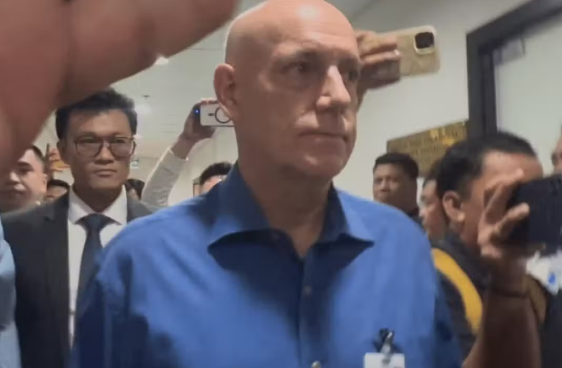
Tab Baldwin, the former head coach of Ateneo de Manila University's men's basketball team, presented himself at the National Bureau of Investigation's Homicide Division on Tuesday afternoon, June 23, marking his first appearance before the agency investigating the deaths of two student-athletes. Accompanied by his legal counsel Karl David, Baldwin arrived at approximately 1:45pm to address authorities in connection with the drowning incident that claimed the lives of Rene Baterbonia and Divine Adili during a team activity held in Dipaculao, Aurora, earlier in the month.
The appearance came after Baldwin had failed to honour two prior scheduled meetings with the NBI. His first absence on June 16 drew criticism, with his legal representative explaining at the time that the former coach was not in adequate condition to attend proceedings. The second missed appointment on June 19 occurred under different circumstances, as Baldwin had instead chosen to appear before the Philippine National Police-Criminal Investigation and Detection Group on that same day, complicating the investigation's timeline and raising questions about coordination between the two law enforcement agencies.
Parallel investigations by both the NBI and PNP have been underway since the drowning tragedy became public. The incident occurred during what was described as a team activity, raising questions about the circumstances, safety protocols, and supervision that were in place at the time. The involvement of two separate investigative bodies reflects the gravity of the incident and the need for thorough, independent examination of the facts surrounding the deaths of the two young athletes.
NBI Director Melvin Matibag outlined the agency's methodology, indicating that investigators would carefully cross-reference Baldwin's statement given to the NBI with the account he previously provided to the PNP-CIDG during his appearance the week before. This comparative analysis aims to identify any inconsistencies or discrepancies that might shed light on the circumstances leading to the deaths. Such scrutiny is standard practice in high-profile investigations, particularly those involving institutions and individuals of public prominence.
The case has attracted significant attention in Philippine sporting circles and beyond, given Baldwin's standing as a coach in the competitive collegiate basketball landscape. His previous role at Ateneo, one of the country's premier universities, placed him in a position of responsibility for the welfare of young athletes under his tutelage. The investigation consequently extends beyond mere procedural questioning to encompass broader considerations of duty of care, institutional accountability, and the safeguards expected during organised team activities.
The NBI indicated its intention to bring the investigation to a close by the end of that week, signalling that authorities were moving toward conclusions based on the evidence and testimonies gathered. The timeline for closure, however, would depend on the quality and completeness of information obtained during interviews with key figures such as Baldwin, as well as other witnesses and personnel connected to the incident.
For Malaysian and Southeast Asian observers, the case underscores important questions about institutional responsibility in youth sports programmes across the region. Universities and sports organisations throughout Asia often operate under varying standards of safety protocol, supervision, and liability frameworks. The investigation's outcome and any subsequent findings could have implications for how similar activities are managed in comparable institutional settings throughout the region.
The involvement of student-athletes from a prestigious university also highlights the broader context of elite youth sports development in Southeast Asia, where institutional programmes often operate under significant competitive pressure. The balance between athletic achievement and athlete welfare remains a critical consideration for administrators and coaches working in this space. The circumstances surrounding the Ateneo drowning incident serve as a sobering reminder of the potential consequences when safety protocols or supervision fall short of required standards.
Baldwin's eventual appearance, despite the earlier absences, demonstrates the investigative authorities' persistence in obtaining statements from all relevant parties. The legal process unfolding in the Philippines illustrates how drowning deaths involving young people in institutional settings trigger comprehensive official inquiries designed to establish facts, assign responsibility where appropriate, and potentially inform future policy adjustments.
As the NBI moves toward concluding its inquiry, the comparative analysis of Baldwin's statements to different agencies will prove crucial. Discrepancies could lead to further complications or additional lines of questioning, while consistency might facilitate closure. The investigation's conclusions will likely influence public discourse about sports safety standards and institutional accountability across Philippine universities and potentially throughout the broader Southeast Asian education sector.