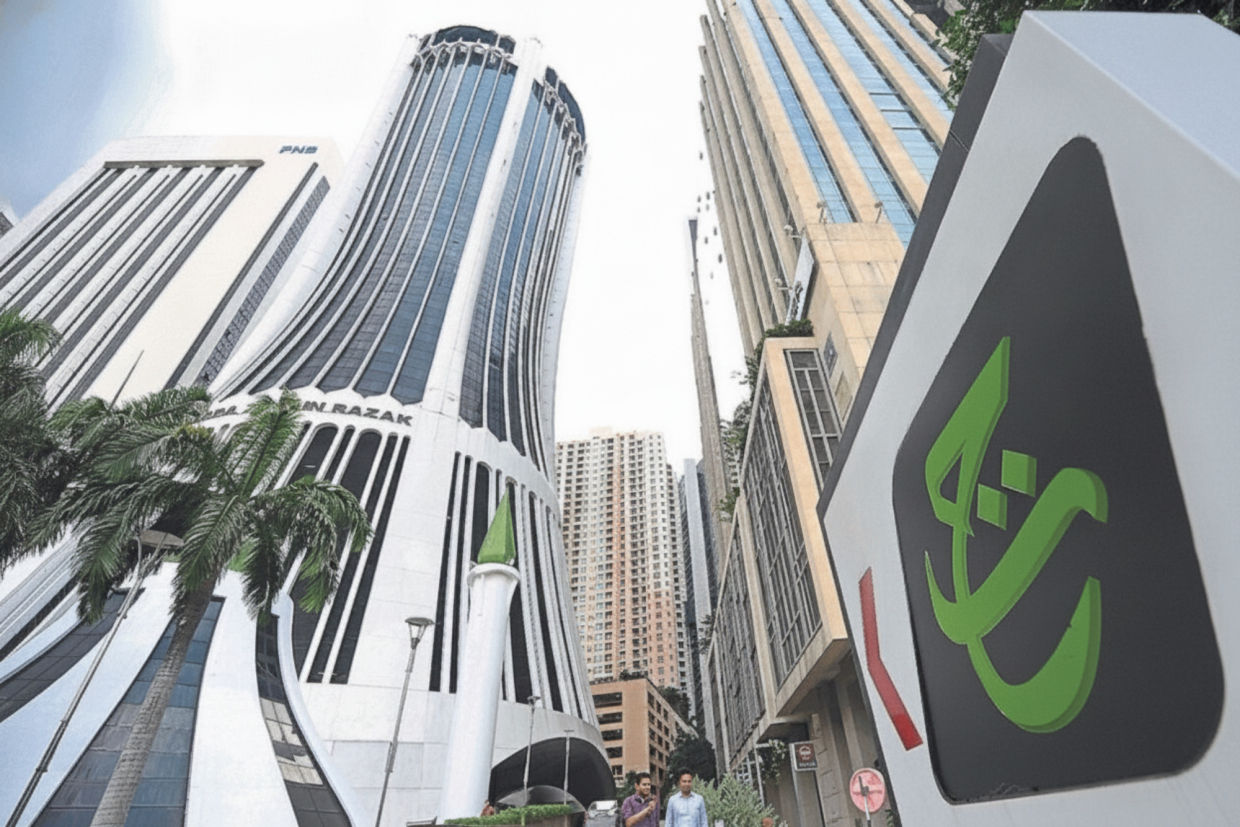
Tabung Haji's financial reporting for 2017 involved a series of accounting adjustments that obscured the true state of the institution's finances, according to findings laid out by Minister Dr Zulkifli Hasan during a parliamentary briefing on the Royal Commission of Inquiry report. Within the span of just 24 hours, the impairment policy governing the valuation of assets was revised twice—first from 70 per cent to 85 per cent, then again to 90 per cent—specifically to allow TH to demonstrate profitability when the underlying financial condition would have pointed to significant losses. This manipulation of accounting standards occurred despite regulatory requirements and the existence of standardised financial reporting frameworks designed to ensure institutional transparency and accuracy.
The core issue identified by the RCI centres on a fundamental divergence between how Tabung Haji valued its assets and what genuine accounting principles demanded. When investments declined significantly in value, TH's approach was to record impairment losses only when market values fell to extremely low levels. To illustrate the severity of this practice, Dr Zulkifli provided a concrete example: an original share investment valued at RM1,000 would only be written down when its market price collapsed to RM100. In practical terms, if TH had attempted to liquidate such holdings in the marketplace at that moment, it would have realised only RM100, yet the financial statements continued to list the position at RM1,000. This created a substantial gap between accounting reality and operational truth, misrepresenting the institution's asset base to depositors and stakeholders alike.
The accounting irregularities extended beyond asset valuation to the fundamental method by which profits were calculated and distributed. During 2017, TH shifted its profit distribution methodology from one based on average monthly deposit balances to an approach utilising the lowest annual balance figure. This change had significant consequences for how much profit could be declared and subsequently paid out to depositors. The alteration was not presented as a routine accounting adjustment; rather, it formed part of a broader strategy to engineer profitability where none genuinely existed. When depositors reacted negatively to the implications of these changes—particularly regarding the reduced distributions they would receive—TH responded by reversing course and reverting to the monthly lowest balance method, ultimately distributing an additional RM600 million to account holders at rates of 4.50 per cent plus 1.75 per cent.
According to evidence presented to the RCI, including a statutory declaration from a former chief financial officer, the motivation behind the accounting policy changes was explicitly acknowledged: to enable TH to maintain profit distributions in line with what depositors expected, rather than to ensure that asset valuations reflected fair market values as required under accepted accounting standards. This admission represents a critical acknowledgement that the adjustments were made with full awareness that they deviated from proper accounting practice. The rationale was fundamentally about managing depositor expectations and maintaining social harmony, at the expense of financial transparency and regulatory compliance. Such a prioritisation of outcomes over methodology undermines the credibility of financial reporting and creates systemic risks for an institution managing deposits held in trust.
The impact of these accounting distortions becomes starkly apparent when applied accounting standards are properly implemented. Had Tabung Haji followed Malaysian Financial Reporting Standards (MFRS) consistently and thoroughly during the 2017 financial year, the institution should have recorded a net loss of RM1.4 billion rather than reporting the announced profit of RM3.4 billion. This represents a swing of nearly RM2.8 billion between reported and actual financial performance—a discrepancy so substantial that it fundamentally misrepresents the institution's viability and financial health. The difference between a RM1.4 billion loss and a RM3.4 billion profit signals not merely accounting adjustments but a complete inversion of the financial narrative presented to the public and to policymakers.
The practices identified in the RCI report were not confined to the 2017 financial year but reflected a pattern extending across multiple years. Between 2014 and 2017, Tabung Haji employed a valuation methodology known as realisable asset value (RAV) to calculate profits and determine distributions. The RCI found this approach violated Section 22 of the Tabung Haji Act 1995, as RAV calculations do not comply with generally accepted accounting standards. The adoption of RAV had begun in 2014, a critical year when TH's liabilities exceeded its assets—creating what accountants recognise as technical insolvency. By employing RAV rather than proper accounting methodologies, the institution was able to justify making profit distributions despite failing to meet the legal and financial conditions that should have required suspension of such payments.
The institutional context for these accounting failures deserves examination within Malaysia's broader management landscape. Tabung Haji, established to serve the pilgrimage and religious needs of Muslim Malaysians, occupies a position of considerable public trust. The institution manages billions of ringgit in depositor funds intended for hajj purposes, making it fundamentally different from ordinary financial institutions. When accounting standards are deliberately circumvented in such an entity, the breach extends beyond technical violations to represent a betrayal of fiduciary responsibility. The RCI's findings suggest that institutional leadership prioritised short-term maintenance of depositor confidence over long-term financial sustainability and ethical governance, creating conditions where the institution's true problems could fester unchecked.
The regulatory and legal framework governing Tabung Haji should have prevented such accounting manipulations. The Statutory Bodies (Accounts and Annual Reports) Act 1980 explicitly requires the application of generally accepted and consistent accounting principles. Yet the RCI found that this legislative requirement was systematically bypassed, with each deviation apparently authorised by the minister in charge at the time. This suggests that accountability mechanisms may have been insufficiently robust, or that political considerations overrode compliance obligations. The involvement of ministerial approval in these accounting decisions raises questions about whether governance structures adequately separated financial reporting decisions from political influence.
The revelation of these accounting practices has significant implications for depositors and the broader Malaysian financial system. Individuals and families who entrusted their savings to Tabung Haji for hajj purposes were, in effect, receiving profit distributions funded partly by accounting fiction rather than genuine institutional profitability. This means some distributions may have been unsustainable, drawing down the institution's capital rather than distributing genuine earnings. For future depositors and policymakers, the findings underline the importance of robust independent auditing, transparent governance structures, and the consistent application of accounting standards regardless of political or social pressure.
The RCI report, released publicly on 29 July 2022 after submission to the King in August 2022, contained 25 specific recommendations designed to address the identified weaknesses and prevent future occurrences. By 30 July, Tabung Haji had reportedly implemented approximately 75 per cent of these recommendations, suggesting that corrective measures have begun. However, implementation of recommendations must be sustained and properly monitored to ensure genuine transformation rather than superficial compliance. The establishment of the RCI itself in 2021, with members appointed in January 2022, represented a belated but necessary institutional response to deteriorating public confidence in TH's management and financial reporting. The commission's work provides a detailed blueprint for restoring the institution's credibility and ensuring that future financial statements accurately reflect operational reality.

