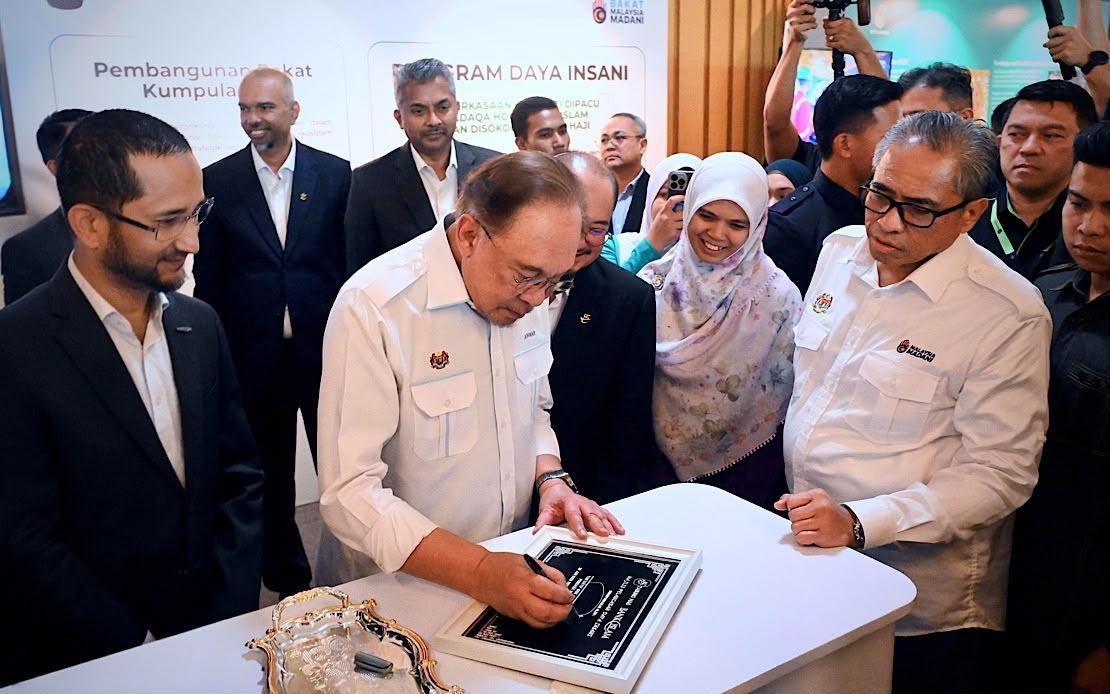
Lembaga Tabung Haji and Bank Islam Malaysia Berhad have unveiled a coordinated initiative targeting disadvantaged youth, committing RM1 million to the Asnaf Youth Development Programme for Inclusive and Sustainable Empowerment, known as DAYA INSANI. The programme, channelled through Bank Islam's social finance arm Sadaqa House, was formally launched on Monday at Prime Minister Datuk Seri Anwar Ibrahim's MADANI Talent initiative event in Sendayan, Negeri Sembilan, positioning it within the government's broader human capital development strategy.
The initiative reflects a deliberate collaboration between Malaysia's Islamic financial institutions and the corporate sector to create structured pathways for marginalised youth. Rather than merely providing financial assistance, DAYA INSANI integrates three complementary components: specialised technical and professional skills development, immersive industry exposure, and direct job placement with vetted strategic partners. This design acknowledges that sustainable economic mobility requires more than training alone—it demands integrated support that bridges the gap between classroom learning and actual employment.
The programme's architecture encompasses multiple professional tracks, each developed with specific industry partners. The Kulim Hi-Tech Park Skills Centre will focus on producing technically skilled workers equipped for Malaysia's advanced manufacturing and technology sectors. Meanwhile, partnerships with Kolej Universiti Bestari and Kumpulan Medic Iman Sdn Bhd target healthcare professionals, addressing a persistent shortage of nursing talent in Malaysia's medical ecosystem. The Malaysian Professional Accountancy Centre collaboration aims to develop certified accountants, while Showme Education engages in therapeutic professional training, reflecting the programme's breadth across high-demand sectors.
Emerging data from ongoing initiatives demonstrates tangible momentum. The nursing diploma programme, which commenced in 2024 with 19 enrolees, has already produced one graduate who successfully transitioned into employment. This early success validates the model's viability and provides evidence that asnaf youth, when provided appropriate support structures, can achieve professional credentials and secure meaningful work. The technical training cohort at Kulim Hi-Tech Park began operations in June with 13 participants, with organisers targeting expansion to 100 participants in the immediate term.
The decision to open DAYA INSANI contributions to the broader corporate, institutional, and philanthropic communities signals confidence in the programme's sustainability and scalability. Rather than relying solely on government or single-institution funding, the initiative invites matched investment from multiple sources, potentially amplifying available resources beyond the initial RM1 million allocation. This crowdfunding approach also distributes accountability across stakeholders and creates a shared investment in outcomes, potentially improving programme quality and participant support intensity.
TH Group Managing Director and Chief Executive Officer Mustakim Mohamad articulated the institutional rationale: the agency views human capital development among asnaf youth as the most consequential long-term investment in the Islamic community's future. This philosophy reframes support for disadvantaged young people not as charity or welfare expenditure but as strategic capital allocation with intergenerational returns. By equipping asnaf youth with competitive professional skills and employment opportunities, TH positions itself as advancing both social inclusion and broader economic productivity.
Bank Islam Group Chief Executive Officer Raja Datin Paduka Teh Maimunah Raja Abdul Aziz emphasised the bank's broader commitment to social finance approaches that generate measurable community impact. Within the Islamic finance taxonomy, social finance occupies a distinct niche—it employs financial instruments and mechanisms to achieve social objectives alongside financial returns. DAYA INSANI exemplifies this approach by using funds derived from Islamic banking operations to address systemic inequality and expand opportunity access for vulnerable populations.
The programme's alignment with the MADANI Talent initiative reflects government recognition that Malaysia's demographic and economic challenges require integrated talent development strategies. The MADANI framework prioritises inclusivity and sustainability, principles that DAYA INSANI operationalises through its explicit focus on asnaf youth and orphans—demographic cohorts facing compounded disadvantage in educational attainment, professional networks, and capital access. By channelling government talent development rhetoric into concrete institutional mechanisms, the programme translates policy aspiration into actionable support.
For Malaysian readers, the initiative carries implications beyond the immediate 100-plus beneficiaries. The programme demonstrates institutional experimentation with models that might address broader unemployment and underemployment among youth from disadvantaged backgrounds. As Malaysia navigates economic transition toward higher-value sectors, workforce development capacity becomes increasingly critical. Programmes like DAYA INSANI test whether public-private partnerships centred on Islamic finance institutions can scale effective interventions more rapidly than traditional government-led training systems.
Regional context matters here as well. Across Southeast Asia, Islamic finance institutions increasingly position themselves as agents of development alongside profit maximisation. Malaysia's experience with institutional partnerships around youth development potentially offers replicable models for other Muslim-majority economies grappling with similar talent development challenges. The specific emphasis on asnaf—the Islamic classification for those eligible for zakat distribution—reflects how Islamic financial frameworks can be leveraged to operationalise religious concepts of social obligation through contemporary institutional mechanisms.
The programme's emphasis on job placement rather than training alone addresses a persistent disconnect in Malaysian skills development. Many training initiatives successfully build competencies but fail to create sustainable employment transitions, leaving participants uncertain about application opportunities. DAYA INSANI's integration of identified industry partners and strategic placements attempts to close this gap, making skills credentials translatable into actual career advancement. Success in this dimension would validate a replicable model for future initiatives targeting other vulnerable populations.
Successfully scaling DAYA INSANI from pilot to substantial programme will require sustained institutional commitment and continued resource mobilisation from corporate contributors. The RM1 million initial investment likely covers foundational operations and early cohorts; achieving meaningful impact across significantly larger numbers of asnaf youth will require demonstrating measurable employment outcomes and programme quality that justifies ongoing partner investment. The initiative thus enters a critical phase where execution excellence directly determines whether it becomes a model for institutional collaboration or remains a limited experimental programme.
Looking forward, DAYA INSANI represents an institutional test of whether Malaysia's Islamic finance sector can effectively mobilise its resources and networks toward social inclusion objectives. As Malaysia continues navigating structural economic transformation and demographic shifts, programmes that successfully integrate marginalised populations into competitive, remunerative employment serve both social justice and economic resilience objectives. The coming years will reveal whether this initiative achieves sustainable scale and meaningful impact for asnaf youth.

