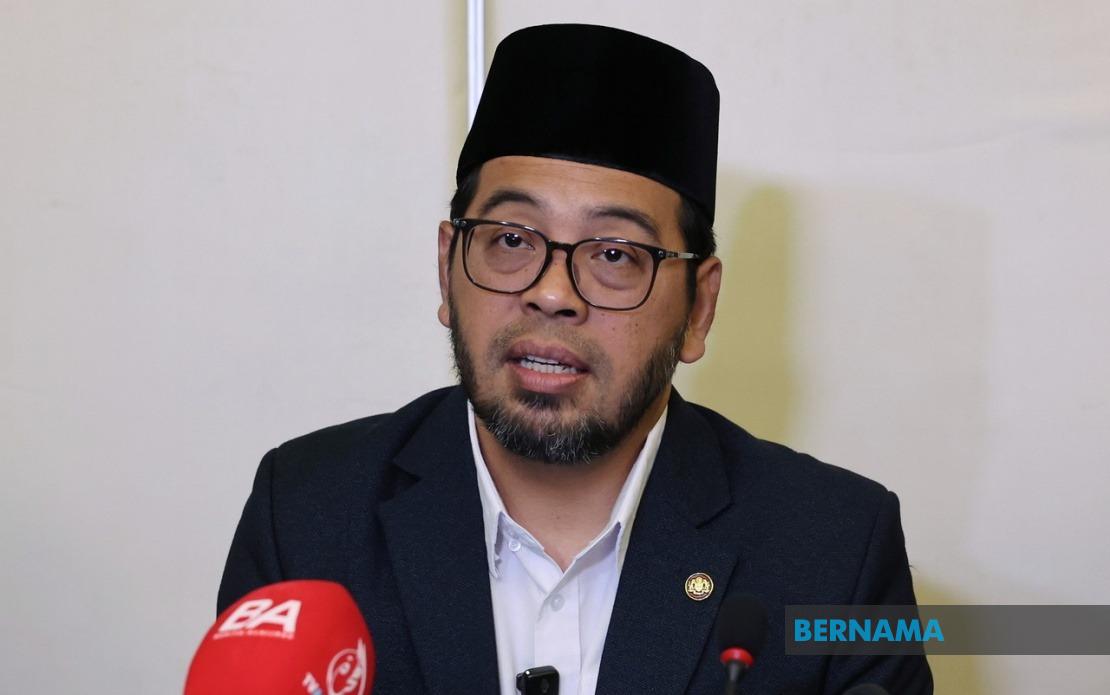
Tabung Haji has substantially recovered from the institutional challenges that plagued it when the current government assumed office in late 2022, according to Minister in the Prime Minister's Department (Religious Affairs) Dr Zulkifli Hasan. Speaking during a special parliamentary sitting focused on the Royal Commission of Inquiry report into the Islamic pilgrimage savings body, Zulkifli outlined how the institution has shifted from managing inherited problems to demonstrating renewed operational strength and international recognition.
When the MADANI Government began its tenure nearly two years ago, Tabung Haji was grappling with legacy difficulties accumulated since 2018—underperforming assets and structural weaknesses that had persisted through prior administrations. Rather than rush into external interventions, the government granted the institution space to undertake comprehensive internal reform, allowing new management to address root causes systematically. This measured approach appears to have yielded tangible results, with Zulkifli emphasising that the institution's current standing reflects successful restoration efforts across multiple dimensions of operation and governance.
The recovery narrative extends beyond domestic acknowledgement. Tabung Haji has garnered five World's Best Haj Management Awards across four consecutive years, a recognition that underscores the calibre of contemporary leadership steering the institution. These accolades suggest that the combination of competent administration, strong governance practices, and integrity-driven decision-making has positioned Tabung Haji favourably within the global Islamic finance ecosystem. For Malaysian Muslims considering the institution for their pilgrimage savings, such international validation carries weight, signalling that operational standards align with international best practices.
The government's decision to make the Royal Commission of Inquiry report public marks a significant transparency milestone. On July 29, the Cabinet unanimously approved releasing the 211-page document and staging the first-ever parliamentary debate on Tabung Haji findings. The RCI, chaired by former Chief Justice Tun Mohamed Raus Sharif and comprising five specialists in public administration, banking, finance, Syariah law and accounting, investigated institutional weaknesses spanning 2014 to 2020. Its 25 recommendations carry particular weight given the panel's expertise and the magnitude of the trust breach at issue.
Enforcement action has swiftly followed the report's release. The Malaysian Anti-Corruption Commission and police launched immediate investigations, detaining several individuals connected to alleged misappropriation outlined in the inquiry's findings. This decisive mobilisation sends a clear signal that the government and enforcement agencies regard any breach of trust involving pilgrims' sacred funds as inexcusable, regardless of the perpetrator's status or position. Zulkifli framed this action as consistent with His Majesty Sultan Ibrahim's directive that investigations proceed comprehensively and without compromise, a principle that resonates with public expectations of accountability in religious institutions.
The breach of trust at Tabung Haji carries profound implications beyond standard financial misconduct. The institution holds deposits from ordinary Malaysians—parents accumulating funds for children's future pilgrimage, teachers, small traders, retirees, farmers, fishermen, rubber tappers and taxi drivers. These are not speculative investors pursuing profit maximisation but faithful depositors motivated by spiritual aspiration. When such a trust is compromised, Zulkifli argued, the response cannot be confined to technical financial remediation. The institution's custodial responsibility over sacred funds intended for religious observance demands transparent acknowledgement, thorough investigation, and public accountability.
The RCI findings have already catalysed institutional reform. As of July 30, the government had implemented 75 per cent of the 25 recommendations, with remaining measures under active development. This implementation pace reflects serious commitment to preventing recurrence of the weaknesses identified. The recommendations, grounded in expert analysis of governance failures, likely address structural vulnerabilities in oversight mechanisms, asset management protocols, and decision-making processes. The relatively swift adoption of three-quarters of recommendations suggests that many reforms align with management's own strategic direction, indicating institutional buy-in rather than imposed external correction.
Zulkifli's emphasis on principles of trust and depositor confidence establishes the philosophical framework guiding Tabung Haji's future trajectory. Every decision affecting the institution must now be evaluated against whether it preserves and reinforces public confidence in governance. This standard is particularly stringent for religious institutions, where depositors' motivation transcends financial returns and enters the domain of faith and spiritual preparedness. Any breach or perceived weakness threatens not merely financial stability but the psychological contract between institution and community.
The timing of the report's release and parliamentary debate also carries political significance. By bringing the investigation into the light rather than allowing it to remain dormant, the government demonstrates accountability to the Muslim community and broader electorate. The RCI itself was originally announced by the previous government in 2021, with members appointed in January 2022 and the report presented to the King in August 2022. The current administration's decision to publicise and act on these findings, rather than shelve them, distinguishes its approach to institutional governance and suggests a commitment to transparency that extends beyond Tabung Haji itself.
For Malaysian depositors and pilgrimage seekers, the recovery narrative carries reassuring elements but also sobering reminders. The institutional strengthening and international recognition suggest Tabung Haji has moved beyond crisis management. Yet the ongoing investigations into misappropriation underscore that recent history involved genuine breaches of trust requiring legal redress. The path forward appears to hinge on whether the combination of improved governance, vigilant oversight, and enforcement accountability can permanently alter institutional culture and prevent future misconduct. This recovery, therefore, represents not merely financial restoration but a test of whether governance reform can root out the practices and attitudes that permitted prior abuses.

