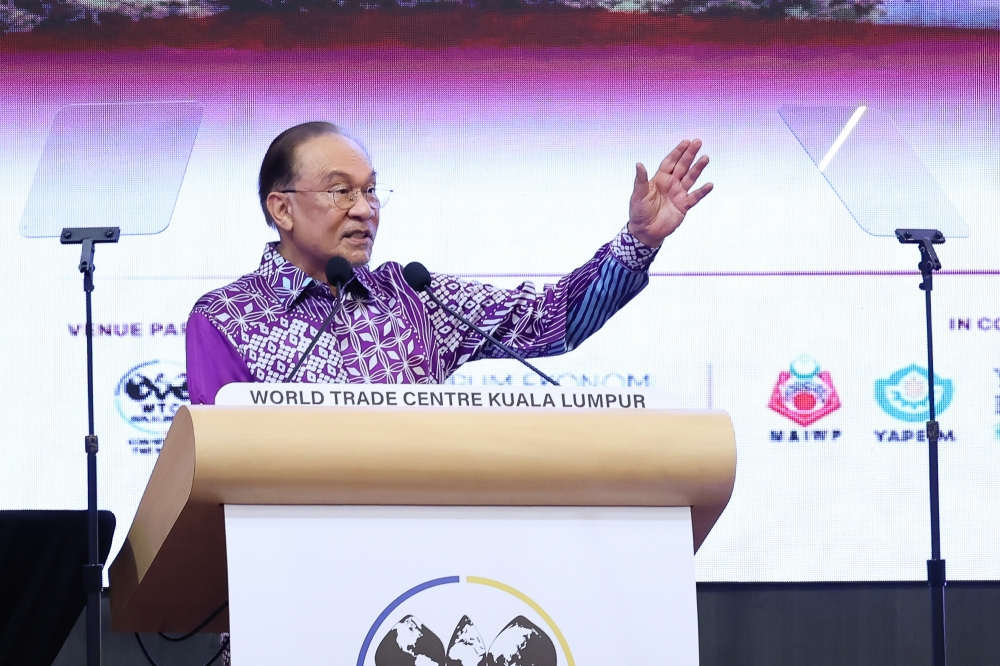
Prime Minister Datuk Seri Anwar Ibrahim declared that Tabung Haji has significantly bolstered its financial position through a series of remedial measures implemented over the past months. Speaking in Kuala Lumpur, he indicated that the government deliberately postponed certain decisions regarding Malaysia's premier pilgrimage fund until an independent investigation into its affairs could be completed and reviewed. This strategic delay reflected official concern to avoid any precipitous steps that might undermine the credibility of the institutional overhaul process.
The timing of Anwar's comments carries particular significance given the accumulating pressure on the administration to address public concerns about Tabung Haji's operations and financial management. The pilgrimage fund, which administers the savings of nearly three million Malaysian depositors preparing for the Hajj journey, faced mounting scrutiny following reports of investment losses and governance lapses. By framing recent improvements as evidence of systemic reform, the Prime Minister sought to reassure stakeholders and the broader Muslim community that corrective action has proven effective.
Anwar underscored that the forthcoming Royal Commission of Inquiry report would furnish the government with a comprehensive foundation for any additional reforms. This external assessment, conducted independently of political considerations, was designed to examine the institutional failures and identify structural weaknesses within Tabung Haji's administration. The Commission's deliberations have spanned several months, and its findings are expected to offer detailed recommendations on governance frameworks, investment oversight, and operational accountability.
The deferment strategy employed by the government reflects a sophisticated understanding of institutional reform. Rather than implementing piecemeal changes based on preliminary concerns, officials opted to await the RCI's holistic analysis before proceeding with major structural modifications. This approach aims to ensure that interventions address root causes rather than symptoms, thereby establishing lasting improvements that will withstand future scrutiny and perform effectively across market cycles.
Tabung Haji occupies a unique position within Malaysia's financial ecosystem. As a state-owned entity entrusted with the collective savings of millions of Muslims, its stability carries both religious and economic implications. For depositors, the fund represents not merely an investment vehicle but a sacred trust—a repository for wealth accumulated specifically for a profound spiritual obligation. Any loss of confidence in Tabung Haji therefore resonates beyond conventional banking concerns, affecting community faith in government institutions more broadly.
The specific reforms implemented thus far have reportedly strengthened internal controls and enhanced investment governance. These measures addressed vulnerabilities identified through both internal reviews and external audits, focusing on risk management systems, transparency protocols, and decision-making processes at senior levels. By tightening oversight mechanisms and establishing clearer accountability frameworks, the institution has moved towards aligning itself with best practices observed in comparable regional and international pilgrimage funds.
For Malaysian stakeholders following Tabung Haji developments, the RCI report represents a critical milestone. The inquiry was established partly to examine whether operational decisions were made in accordance with established guidelines and depositor interests, and to clarify the circumstances surrounding significant portfolio adjustments made in preceding years. Independent assessment of these matters carries weight that internal investigations or ministerial statements alone cannot provide, reinforcing public confidence through transparent, third-party verification.
The implications of Tabung Haji's stabilisation extend across Malaysia's financial and social landscape. A robust pilgrimage fund benefits not only its three million depositors but also the broader Muslim population, for whom the institution's health reflects governmental competence in stewardship of community assets. Furthermore, Tabung Haji's investment activities, encompassing both domestic and international portfolios, constitute a significant force in Malaysian capital markets and contribute to economic activity across multiple sectors.
Anwar's announcement that the RCI report would be released imminently signals the government's readiness to move beyond the investigative phase into implementation of recommendations. The transparency implied by public release of the Commission's findings demonstrates official commitment to accountability and suggests confidence that the report will validate the reform trajectory already underway. This sequential approach—investigation, public disclosure, implementation—follows international precedent for addressing institutional governance failures.
Looking ahead, the government's capacity to translate the RCI's recommendations into enforceable reforms will determine whether Tabung Haji achieves lasting institutional renewal. The strength of any reform agenda depends on sustained political will, adequate resource allocation, and genuine restructuring of decision-making processes rather than superficial administrative adjustments. For millions of Malaysian Muslims whose retirement and spiritual aspirations depend on Tabung Haji's performance, the coming months will prove decisive in establishing whether the institution can deliver both financial security and trustworthy stewardship.
The sequence of events—reform implementation, RCI inquiry completion, and forthcoming report release—reflects a government attempting to balance urgency with due diligence. By waiting for the Commission's findings before announcing comprehensive measures, officials avoid the appearance of predetermined outcomes or politically motivated interventions. This methodical approach, while sometimes frustrating to those seeking immediate action, builds a stronger foundation for changes that must command public and institutional legitimacy to succeed.

