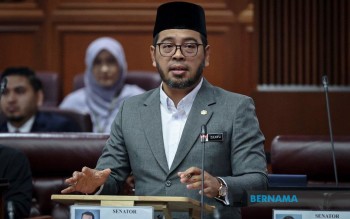
Tabung Haji (TH) is stepping up its pursuit of nearly 885 million Saudi riyal in unpaid arbitration funds from Saudi Arabia-based property developer and project management company Al-Rawda Real Estates Development & Project Management Co Ltd, with Minister in the Prime Minister's Department (Religious Affairs) Dr Zulkifli Hasan confirming that the pilgrim fund has enlisted specialist asset-tracing consultants to locate and recover the outstanding amount. The enforcement campaign intensified following Al-Rawda's failure to honour a settlement agreement signed in November 2024, under which the company was obligated to discharge its 899 million Saudi riyal arbitration debt but managed to remit only 14.9 million Saudi riyal—equivalent to approximately RM16.2 million at current exchange rates and representing just 1.7 per cent of the total obligation.
The debt stems from a series of controversial hotel lease arrangements that TH entered into between 2015 and 2017, agreements that the Royal Commission of Inquiry (RCI) investigating the fund's financial collapse has since identified as fundamentally misaligned with normal commercial practice. During this three-year period, TH committed approximately RM1.55 billion in upfront capital to secure 10 to 18-year leasing rights for four hotels located in Islam's two holiest cities—Makkah and Madinah—effectively mortgaging substantial resources to secure accommodation for Malaysian pilgrims. Beyond the upfront lease payments, TH also appointed Al-Rawda as the operator of these facilities under a Management and Operation Agreement that entitled the fund to receive rental income of 2.49 billion Saudi riyal, a figure that proved illusory when the payments ceased abruptly in March 2019.
The structural weakness embedded in these transactions became apparent only in hindsight. Rather than securing conventional lease documentation backed by conventional corporate guarantees, TH accepted a promissory note (PN) personally guaranteed solely by Al-Rawda's owner, Dr Mashhoor Ali Omar Almadoodi, a mechanism that proved inadequate when the company's financial position deteriorated. Dr Zulkifli characterised the arrangement as "extraordinary and not 'normal' transaction," a diplomatic but pointed critique suggesting that TH's negotiators had departed significantly from prudent investment protocols. The structure left TH exposed to both the stability of a single private individual and the operational viability of a single project management entity, precisely the type of concentrated risk that institutional fund managers are typically instructed to avoid.
When Al-Rawda defaulted on rental payments in March 2019, TH initiated enforcement proceedings through Saudi Arabia's legal system, a decision that would ultimately consume five years before yielding a legal victory. An arbitration proceeding launched by Al-Rawda against TH was eventually resolved by Final Award dated April 16, 2023, with the arbitration tribunal determining that TH had satisfied its obligations and that Al-Rawda bore full liability for the 899 million Saudi riyal debt. This legal success, however, proved hollow when translated into actual cash recovery. The company's apparent insolvency—described by Dr Zulkifli as a fundamental "lack of financial capacity to pay the amount"—meant that winning the arbitration award did not automatically translate into receipt of funds.
The November 2024 settlement agreement represented an attempt to recover at least a portion of the debt through negotiated terms that might prove more flexible than enforcing a rigid arbitration award against an insolvent entity. Yet even this compromise arrangement collapsed when Al-Rawda failed to progress beyond its initial payment of 14.9 million Saudi riyal. The decision to terminate this agreement and pivot toward asset-tracing operations suggests that TH has abandoned hopes of negotiated recovery and is instead pursuing a more aggressive investigation into Al-Rawda's financial holdings, ownership structures, and any identifiable assets that might be subject to seizure or liquidation.
The Al-Rawda situation exemplifies only one facet of TH's broader financial crisis, which prompted the government's establishment of the RCI in 2021. The investigation, conducted by appointed commissioners and formally presented to the Yang di-Pertuan Agong on August 30, 2022, identified Al-Rawda among 14 troubled TH investments that collectively generated billions of ringgit in losses. The July 29 public release of the 211-page RCI report revealed systemic weaknesses in TH's management and operational frameworks spanning the 2014 to 2020 period, a critical decade during which the fund's governance mechanisms failed to prevent or halt the serial acquisition of underperforming or toxic assets.
The RCI's final report contained 25 distinct recommendations aimed at preventing future institutional failures and strengthening TH's investment due diligence, risk management, and governance architecture. According to Dr Zulkifli's statement to Parliament, TH has implemented approximately 75 per cent of these recommendations as of July 30, suggesting that management has responded with considerable urgency to the commission's findings. However, the practical significance of these reforms remains contingent upon their capacity to prevent future Al-Rawda-style transactions—investments characterised by weak structural protections, inadequate collateralisation, and insufficient counterparty due diligence.
From a broader Southeast Asian and Islamic finance perspective, the TH case carries implications extending beyond Malaysia's borders. The fund manages pilgrim savings accumulated by hundreds of thousands of Malaysian Muslims who entrust their capital to state-backed institutions with expectations of prudent stewardship. The failure to recover rental income for five years before securing arbitration, followed by another year of failed settlement negotiations, illustrates the challenge facing Islamic financial institutions when investments span international jurisdictions with varying enforcement mechanisms. The reliance on personal guarantees from individual business owners, rather than corporate structures with dedicated reserve accounts or insurance mechanisms, has become a cautionary tale about the risks inherent in cross-border Hajj-related investments.
The asset-tracing initiative now underway represents TH's last substantial hope of recovering meaningful portions of the 884 million Saudi riyal shortfall. Specialist consultants tasked with investigating Al-Rawda's financial networks will examine corporate structures, property holdings, bank accounts, and other identifiable assets within accessible jurisdictions, potentially including Malaysian holdings if the company or its owner maintain any domestic exposure. Such investigations frequently prove time-consuming and generate modest returns, and success will depend partly on whether Al-Rawda or Dr Almadoodi have transferred assets to protective jurisdictions prior to enforcement action.
The broader lesson for Malaysian policymakers and institutional investors centres on the necessity of robust counterparty due diligence, diversified risk exposure, and structural protections that do not depend upon the personal creditworthiness of individual entrepreneurs operating in volatile international markets. While TH management has acknowledged these lessons through its reform agenda, the fund's creditors—Malaysian pilgrims whose savings supported these failed investments—have already borne the consequences of decisions made during the 2014 to 2020 period. The pursuit of Al-Rawda's remaining assets through asset-tracing represents not recovery of anticipated returns, but rather damage limitation for an institution struggling to restore the confidence of its beneficiaries.

