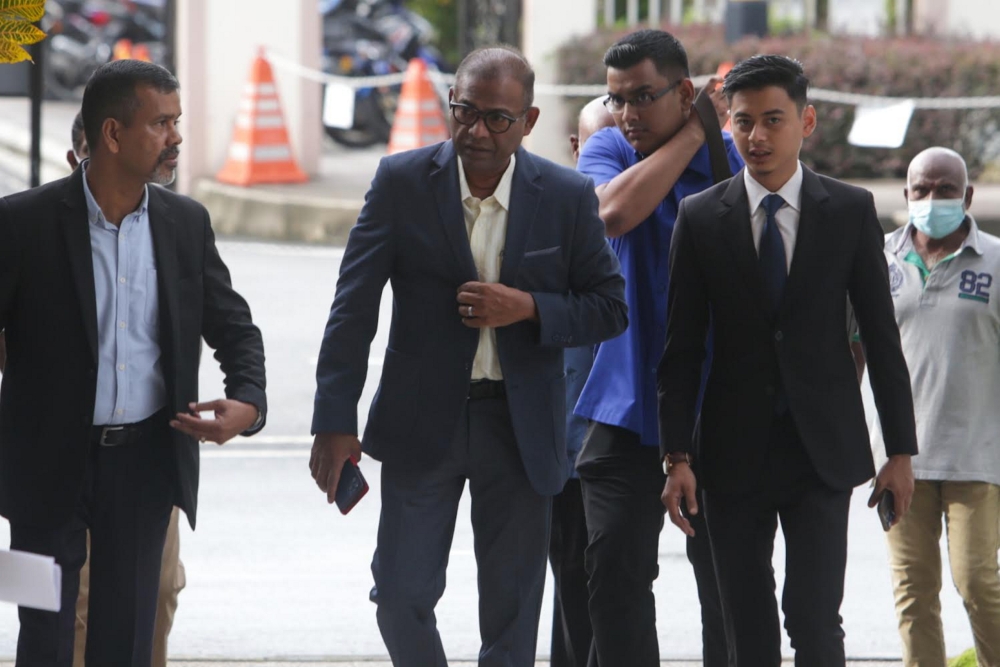
The family of Datuk Seri Abdul Azeez Abdul Rahim, the former Member of Parliament for Baling, has moved swiftly to quash circulating rumours that the veteran politician faces arrest by the Malaysian Anti-Corruption Commission in connection with the Tabung Haji Royal Commission of Inquiry. His son took to social media to categorically deny the claims, dismissing them as unfounded speculation without factual grounding.
Social media platforms have become increasingly active channels for spreading unverified claims regarding high-profile political and administrative matters in Malaysia. The recent flurry of posts suggesting imminent action against Azeez appeared to gain traction among certain online circles, demonstrating how quickly allegations can circulate without substantiation in the digital age. The family's decision to publicly address these claims reflects growing concern over misinformation campaigns that target public figures, particularly those involved in previous administrative roles.
The Tabung Haji Royal Commission of Inquiry represents a significant institutional review mechanism examining governance and management practices within the hajj savings fund. This probe has attracted considerable attention given the financial institution's prominence in Malaysian society and the substantial sums held in trust for millions of pilgrims. The RCI's mandate encompasses investigating various aspects of fund administration, procurement decisions, and stewardship of depositor resources over a defined period.
Datuk Seri Abdul Azeez held prominent positions within government structures, making him a logical subject of public speculation whenever major inquiries touch on areas within his former purview. His lengthy political career in Baling gave him significant influence in one of Peninsular Malaysia's most politically contested constituencies. However, speculation about administrative involvement differs substantially from formal investigation findings or evidence-based allegations warranting enforcement action.
The Malaysian Anti-Corruption Commission operates under strict procedural protocols and legal frameworks governing arrest authority. Any action against individuals must be preceded by substantive investigative findings and supported by credible evidence meeting prosecutorial thresholds. The commission's institutional reputation depends on demonstrating rigorous adherence to these standards, ensuring that enforcement actions rest on solid factual foundations rather than political convenience or public pressure. Public speculation divorced from investigative substance undermines the integrity of institutional processes.
Family representatives' decision to mount a direct public rebuttal underscores the reputational stakes involved when unfounded claims achieve digital circulation. In Malaysia's contemporary political landscape, where trust in institutions faces periodic challenges, the distinction between genuine investigations and rumour-mongering holds particular importance. Citizens and observers increasingly struggle to differentiate between credible reporting and inflammatory social media posts, particularly when allegations involve familiar political names.
The timing and pattern of such rumours warrant examination as well. Political figures often encounter waves of speculation during periods of institutional review or heightened anti-corruption activity. These cycles sometimes reflect legitimate public interest in accountability, but they can also indicate deliberate attempts to shape narratives or damage reputations through coordinated misinformation campaigns. Distinguishing between these scenarios requires careful attention to evidentiary standards and source credibility.
For Tabung Haji itself, such external rumours complicate the institution's efforts to restore public confidence and demonstrate commitment to governance improvements. The hajj savings fund has faced scrutiny over investment performance and administrative decisions, necessitating transparent institutional reform. Parallel rumour campaigns regarding potential enforcement actions can distract from substantive discussions about organisational restructuring and enhanced oversight mechanisms. This dynamic highlights how misinformation creates negative externalities beyond individual reputational damage.
The broader implications extend to public discourse standards in Malaysia's information environment. As social media platforms enable rapid information dissemination, distinguishing between verified reporting and unsubstantiated claims becomes increasingly challenging for average citizens. Responsible digital citizenship requires scepticism toward sensational allegations lacking official confirmation or credible sourcing. The Azeez family's public denial, while understandable, also illustrates how rumours force subjects into reactive defensive positions.
Going forward, this episode suggests need for clearer institutional communication channels regarding ongoing investigations. When rumours proliferate in information vacuums, official bodies bear partial responsibility for addressing public confusion through timely, factual updates. The Malaysian Anti-Corruption Commission and Tabung Haji administration should consider enhanced transparency measures that protect investigative integrity while reducing space for speculative narratives to flourish.
For ordinary Malaysians monitoring Tabung Haji developments and broader anti-corruption efforts, this incident reinforces the importance of seeking information from established journalistic sources rather than relying on social media posts. Responsible engagement with public affairs requires distinguishing between reputable reporting and uncorroborated claims. As institutions face legitimacy challenges, their ability to conduct investigations in the public interest depends partly on citizens maintaining appropriate scepticism toward unverified allegations while respecting genuine oversight mechanisms.

