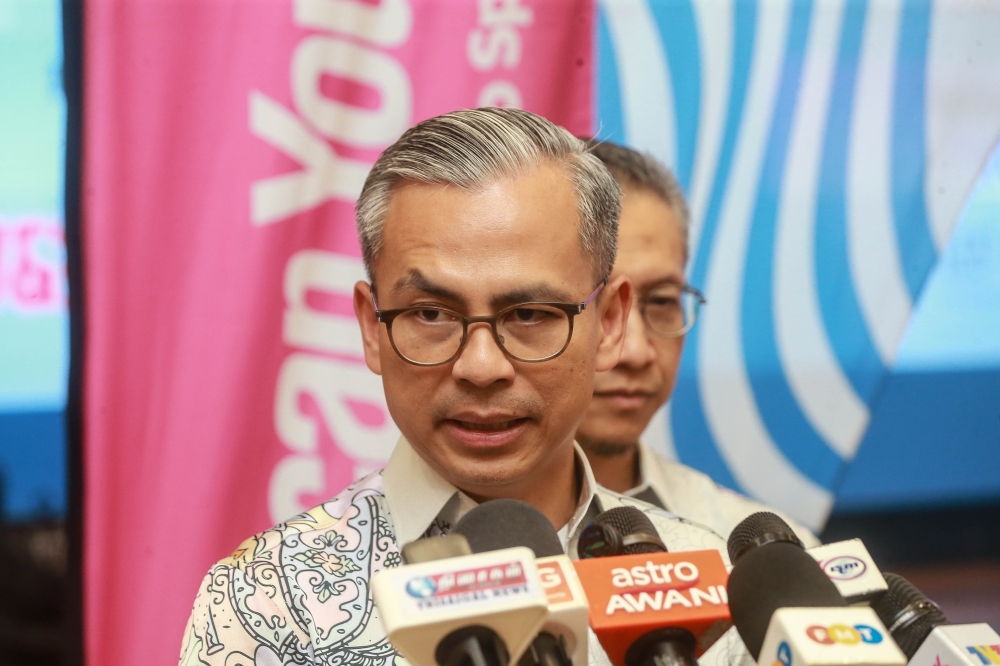
The Ministry of Communications has announced that findings from the Royal Commission of Inquiry examining Lembaga Tabung Haji will be handed to multiple federal authorities for comprehensive investigation. Communications Minister Fahmi Fadzil confirmed that the report has been channelled to the Royal Malaysian Police, the Malaysian Anti-Corruption Commission (MACC), Bank Negara Malaysia, and the Inland Revenue Board (IRB) to enable each agency to pursue matters within their respective jurisdictions.
This multi-agency referral signals the complexity and breadth of the RCI's findings regarding the hajj fund operator, which has faced mounting scrutiny over governance lapses, investment losses, and alleged mismanagement spanning several years. The decision to involve four different authorities underscores that the issues identified transcend a single domain of regulatory concern, requiring coordinated action across financial oversight, anti-corruption, tax compliance, and law enforcement frameworks.
Lembaga Tabung Haji, established to assist Malaysian Muslims in financing their pilgrimage to Mecca, manages billions of ringgit in deposits from millions of members. The fund has become a politically sensitive issue after it suffered substantial losses in equity investments, currency exposure, and alleged dubious real estate ventures. These mounting problems eventually compelled the government to initiate the RCI, signalling deep concerns about institutional stewardship and accountability.
The referral to Bank Negara is particularly significant, as Malaysia's central bank functions as the primary regulator overseeing financial institutions and market conduct. The IRB's involvement suggests potential findings related to tax treatment of transactions, undisclosed income streams, or improper financial arrangements. The police and MACC assignments indicate that the RCI likely uncovered evidence pointing toward criminal conduct or corruption allegations requiring formal investigation and possible prosecution.
For Malaysian pilgrims and their families, this development carries tangible implications. The comprehensive investigation may uncover the full extent of how fund mismanagement occurred and identify specific individuals or institutional failures responsible. This transparency is essential for restoring confidence in an organisation that holds the savings of millions of ordinary Muslims preparing for one of Islam's most important religious obligations. Many members have expressed anxiety about the security of their accumulated hajj deposits.
The timing and scope of this referral also reflect heightened government attention to institutional accountability following previous high-profile financial scandals. Malaysia has invested significantly in strengthening MACC capabilities and anti-corruption frameworks, and applying these mechanisms to Lembaga Tabung Haji demonstrates commitment to holding even strategically important religious organisations to contemporary standards of governance and probity.
From a regional perspective, Malaysia's handling of the Tabung Haji matter influences how other Southeast Asian nations approach regulation of pilgrim funds and Islamic financial institutions. Several countries in the region operate similar hajj savings schemes, and Malaysia's investigative response provides a reference point for governance standards in this specialised financial sector. Effective investigation and remediation could establish best practices for managing large pools of religiously-motivated savings across Muslim-majority economies.
The involvement of IRB alongside financial regulators suggests that the RCI may have identified transactions or arrangements with potential tax implications—either unreported income, improper deductions, or financial manoeuvres designed to obscure the movement of funds. Such findings would require tax authorities to review compliance and potentially recover unpaid obligations, adding another layer to the institutional reckoning ahead.
Bank Negara's participation ensures that the investigation encompasses market conduct standards, prudential norms, and potential breaches of banking regulations if intermediaries were involved in problematic transactions. The central bank can compel production of detailed financial records, internal communications, and transaction documentation that may not be available to other investigating agencies, providing crucial evidence for prosecutorial teams.
The police referral indicates preparedness to pursue criminal charges if evidence supports allegations of fraud, embezzlement, or conspiracy. Given the magnitude of funds involved and the number of affected members, any criminal investigation would likely represent a substantial inquiry with significant public interest dimensions. Prosecution outcomes could reshape governance practices across Malaysian religious and charitable institutions.
As these four agencies commence their investigations, the broader implications extend to institutional reform of Lembaga Tabung Haji itself. Rehabilitation of the organisation's governance structures, leadership accountability, investment oversight, and member protection mechanisms will be essential to restoring institutional legitimacy. The RCI report's findings will likely inform recommendations for legislative amendments and operational restructuring.
The coming months will be critical for determining whether investigations lead to meaningful accountability and institutional change. For millions of Malaysian pilgrims who depend on Tabung Haji, the rigorous examination now underway represents both a reckoning with past failures and an opportunity to establish more robust protections for their savings.

