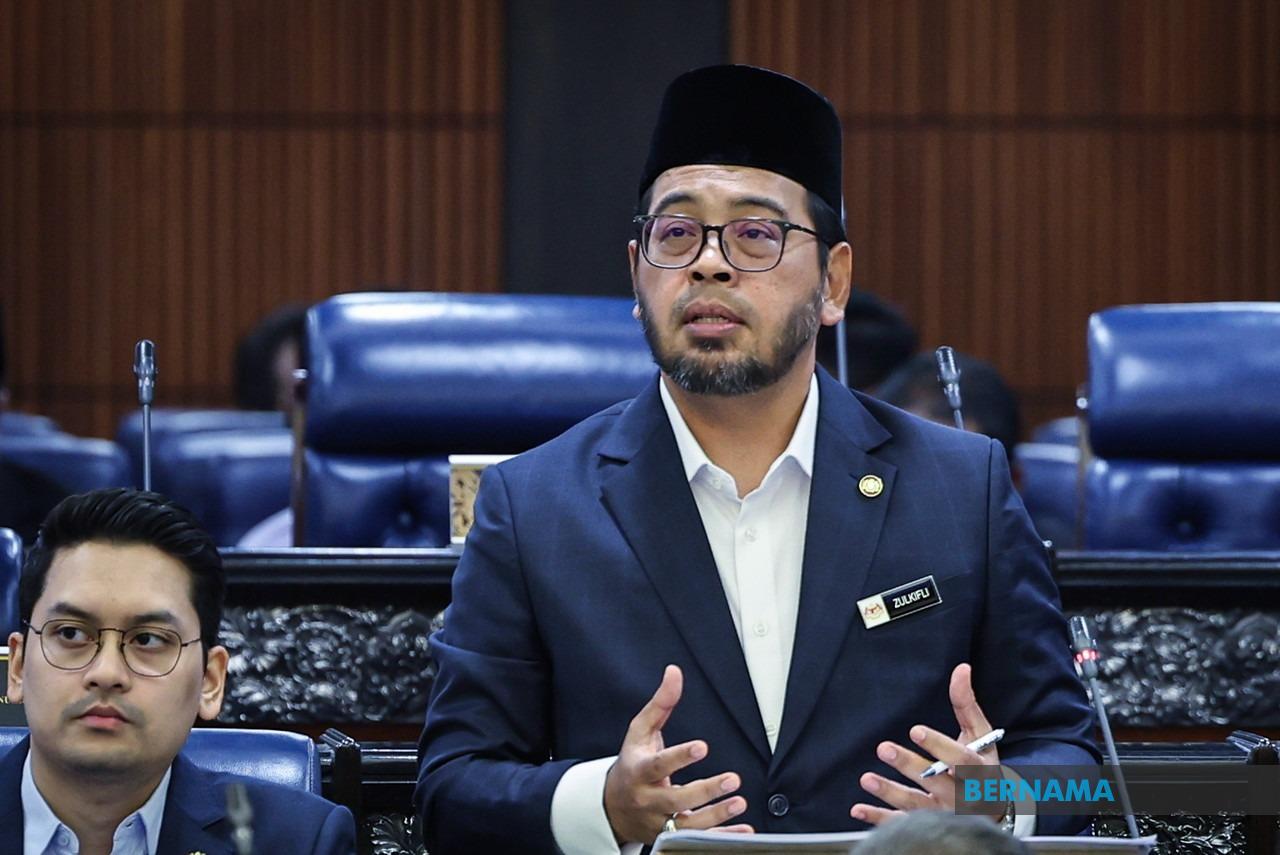
Malaysia's Lembaga Tabung Haji (TH) has achieved tangible improvements in its financial health and operational performance following a comprehensive reform agenda initiated six years ago, according to a ministerial briefing presented to Parliament. Minister in the Prime Minister's Department (Religious Affairs) Dr Zulkifli Hasan told lawmakers that the institution's restructuring of assets and liabilities has successfully restored its balance sheet, underpinning a broader institutional renaissance aimed at positioning TH as a modern, professionally managed Islamic institution capable of serving Muslim pilgrims for generations to come.
The reform framework rests on nine foundational pillars that address both the institution's immediate financial challenges and its long-term strategic positioning. These elements encompass stabilising TH's financial position, fortifying governance structures and accountability mechanisms, elevating investment quality to generate reliable returns for depositors, and ensuring that Muslims continue to access affordable haj services. Beyond these core objectives, the reform agenda incorporates measures to maintain competitive pricing for pilgrims, protect depositor interests, establish service delivery benchmarks aligned with international standards, nurture professional leadership insulated from political pressure, and cultivate an Islamic financial institution worthy of enduring public trust and confidence.
One of the most visible achievements of TH's restructuring has been the maintenance of haj costs despite a volatile macroeconomic environment. The institution has held the pilgrimage fee constant at RM33,300 for three consecutive seasons spanning 2024 through 2026, a remarkable feat when set against the backdrop of economy-wide inflationary pressures. Zulkifli noted that inflation has accumulated to roughly 250 per cent in the two decades since 2001, when TH first introduced financial assistance programmes for prospective pilgrims, yet the institution has absorbed these mounting cost pressures without passing them fully to users.
TH's ability to maintain affordability stems from strategic procurement initiatives that have delivered tangible savings without compromising service quality. The institution has negotiated long-term contracts with airlines to stabilise airfare costs, a critical component given that international travel represents a substantial portion of haj expenses. Simultaneously, TH has restructured its accommodation strategy, engaging in direct negotiations with hotel proprietors in the Holy Land rather than relying on intermediary agents. This approach has yielded superior facilities at competitive rates, enabling the institution to offer pilgrims newer, higher-quality lodging whilst simultaneously reducing its per-unit costs and improving the overall haj experience.
The improvements in TH's operational and service delivery standards have been independently validated through international recognition. The institution has received the prestigious Labaytum Diamond Award for two consecutive years, representing the fifth consecutive Labaytum recognition and positioning TH at the apex of performance in Islamic pilgrimage management globally. This honour underscores that TH's reform programme has transcended mere financial accounting, fundamentally transforming how the institution approaches service delivery, customer experience, and operational excellence. The awards reflect a qualitative shift in institutional culture and execution capability rather than incremental progress on existing trajectories.
A crucial dimension of TH's institutional renewal has been the establishment of professional, autonomous leadership insulated from political interference and capable of making strategic decisions based on technical merit and institutional interest. Zulkifli emphasised that the reforms have enabled management to operate with the independence and expertise necessary to implement complex financial restructuring, negotiate sophisticated international contracts, and execute long-term strategic planning without undue governmental pressure. This governance transformation represents a significant departure from TH's history, where political considerations sometimes superseded institutional imperatives, constraining management's ability to adopt unpopular but necessary reforms.
For Malaysian Muslims contemplating pilgrimage, the maintained affordability of haj services represents meaningful protection of a fundamental religious obligation. The fixed pricing through 2026 provides financial certainty and planning horizons that allow families of modest means to save and prepare. Given that haj represents one of Islam's five pillars and carries profound spiritual significance across Malaysia's Muslim population, TH's capacity to preserve accessibility constitutes a social achievement extending beyond conventional financial metrics. The cost stability also demonstrates that even in a competitive global pilgrimage services market, Malaysian Muslims need not compromise on domestic provision or sacrifice quality in pursuit of affordability.
The timing of these reforms and their articulation in Parliament carries particular significance given TH's institutional history. The organisation faced mounting financial pressures in preceding decades, with questions raised regarding governance practices, investment decisions, and depositor protection. A Royal Commission of Inquiry examined these concerns, prompting the systematic reform agenda that Zulkifli presented to lawmakers. The ministerial briefing in Parliament represents an accountability moment, establishing a public record of reform implementation and measurable outcomes against which future performance can be assessed.
For the broader Southeast Asian context, TH's experience offers instructive lessons regarding Islamic institutional governance and the compatibility of professional management with religious and social objectives. Many Muslim-majority nations across the region operate pilgrimage funds, zakat institutions, and Islamic development banks, all facing comparable pressures to balance accessibility, financial sustainability, and operational excellence. TH's documented approach to governance separation, strategic procurement, and service excellence provides a regional exemplar of how Islamic financial institutions can modernise whilst maintaining their foundational social missions.
The sustainability of these reforms ultimately depends on institutional consistency and protection from political cycles that characterise Malaysian governance. TH's success in insulating management from undue interference represents an ongoing challenge, particularly given the institution's political salience among Malaysia's Muslim electorate. Maintenance of the governance framework established during the reform programme, preservation of professional leadership autonomy, and continued strategic investment in operations and infrastructure will determine whether the current trajectory proves durable or susceptible to reversal. Zulkifli's parliamentary presentation establishes a baseline against which future administrations can be held accountable, creating incentives for institutional stability even as political leadership transitions occur.
Looking forward, TH faces the dual imperative of consolidating its current gains whilst positioning itself for evolving demographic and technological shifts within Malaysia's Muslim community. Younger generations of prospective pilgrims increasingly expect digital interfaces, transparent pricing, and service integration that extends beyond traditional haj logistics. The institution's demonstrated capacity for professional renewal and strategic adaptation suggests organisational resilience capable of meeting these emerging expectations. The reform programme's architecture, with its emphasis on professional leadership and operational excellence, provides a foundation upon which further modernisation can be constructed without abandoning TH's core mission of enabling Malaysian Muslims to fulfil their religious obligations with dignity and affordability.

