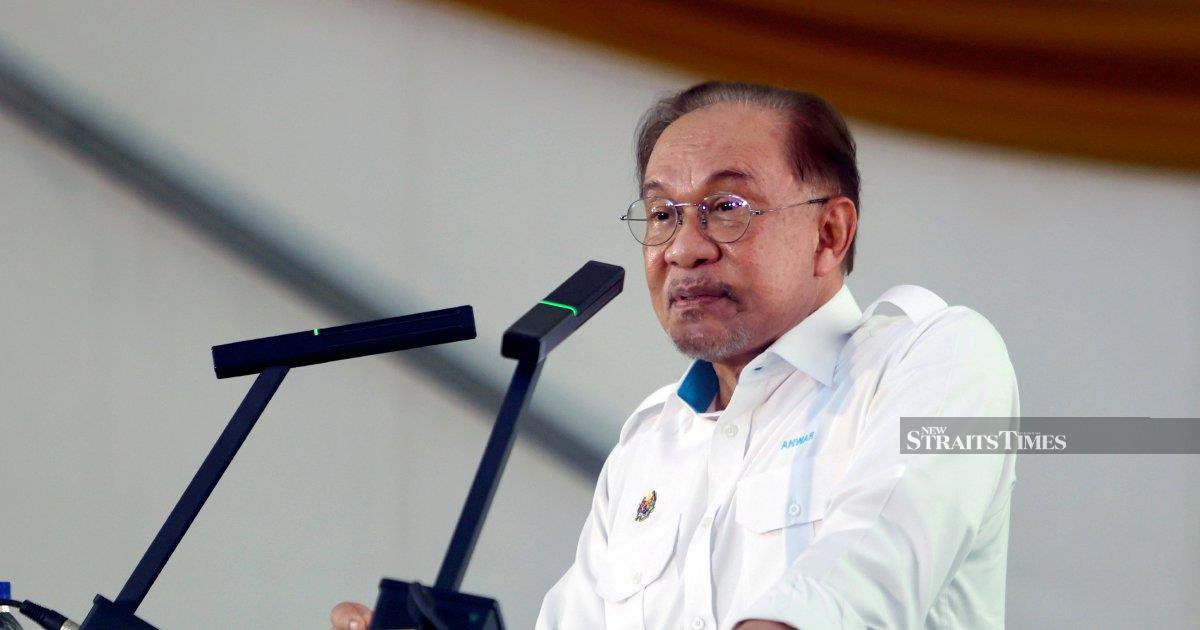
The Taiwan Chamber of Commerce & Industry in Malaysia has expressed serious worry over Prime Minister Datuk Seri Anwar Ibrahim's recent comments characterizing Taiwan as part of China, signalling potential consequences for the technology and semiconductor industries that represent significant sources of foreign direct investment into Malaysia.
The chamber's public statement underscores a delicate diplomatic reality facing Malaysia as it attempts to balance commercial relationships with multiple regional powers. Taiwan remains a substantial player in global semiconductor manufacturing and technology exports, with Taiwanese firms operating manufacturing facilities and research centres across Southeast Asia. Malaysia has historically attracted considerable investment from Taiwanese technology companies seeking to establish regional production and innovation hubs outside their home island.
Anwar's characterization, made in his capacity as Prime Minister, touches on one of the most sensitive geopolitical questions in Asia. The People's Republic of China views Taiwan as a breakaway province that must ultimately unify with the mainland, while Taiwan's democratically-elected government maintains a distinct political and economic system. Most countries, including Malaysia, maintain official diplomatic relations with Beijing while pursuing pragmatic economic ties with Taiwan through various unofficial channels and business organizations.
The concern raised by the chamber reflects how political rhetoric, even when aligned with Malaysia's official "One China" policy, can reverberate through investment decision-making processes at multinational corporations. Taiwanese business leaders and policymakers monitor how foreign governments publicly articulate their positions on cross-strait relations, interpreting such statements as indicators of political sentiment and potential future policy directions that could affect commercial operations.
Malaysia's semiconductor and technology sectors have benefited substantially from Taiwanese investment. Companies from Taiwan have established themselves as significant employers and technology innovators within the country, contributing to manufacturing capabilities, engineering expertise, and export revenues. Any perception of political hostility toward Taiwan, regardless of Malaysia's formal diplomatic alignment with the People's Republic of China, could prompt investment reviews at major Taiwanese corporations considering new projects or expansion plans.
The timing of the chamber's statement reflects broader anxieties within Taiwan's business community about regional investment climate. As geopolitical tensions in the Taiwan Strait have intensified in recent years, Taiwanese firms have become increasingly strategic about where they locate facilities and expand operations. Southeast Asian nations compete actively to attract these investment flows, and political messaging around Taiwan's status has emerged as an unexpected variable in this competition.
For Malaysia specifically, the situation presents a complex diplomatic balancing act. The government maintains formal recognition of the People's Republic of China and accepts the "One China" principle as part of its official foreign policy framework. Simultaneously, Malaysia benefits economically from Taiwanese private sector engagement and has mutual interests with Taiwan in regional trade, investment, and stability. Senior government officials must navigate statements on cross-strait politics carefully to avoid triggering investment concerns while maintaining consistency with stated diplomatic positions.
The chamber's warning also reflects how commercial organizations in Malaysia have become more vocal about political-economic linkages. As a country heavily dependent on foreign direct investment for employment and technology transfer, Malaysia's business community recognizes that global investors make location decisions based not only on tax incentives and infrastructure, but also on perceptions of political stability and government attitudes toward their home country or region.
Taiwan's semiconductor industry occupies a uniquely important position in global supply chains, particularly following disruptions revealed by the COVID-19 pandemic and increased geopolitical scrutiny of chip manufacturing concentration. Malaysia competes with other Southeast Asian nations including Thailand, Vietnam, and the Philippines to attract expanded Taiwanese semiconductor investment. Political statements that could be interpreted as unsympathetic to Taiwan risk undermining Malaysia's competitive positioning in this crucial sector.
The broader implication of the chamber's concerns extends to how Malaysia manages its role as a regional hub for technology manufacturing and investment. The country has positioned itself as an attractive alternative location for companies seeking geographic and political diversification of their supply chains. Maintaining this attractiveness requires not only competitive infrastructure and skilled workforce, but also political environments that major international investors perceive as welcoming and stable.
The incident highlights enduring tensions between Malaysia's formal diplomatic commitments and its economic interdependencies in an increasingly multipolar Asian landscape. As regional geopolitical competition intensifies, the ability of Malaysian policymakers to craft nuanced messaging that respects official diplomatic positions while maintaining strong commercial relationships across the region will become increasingly consequential for the country's continued prosperity and standing as an investment destination in Southeast Asia.

