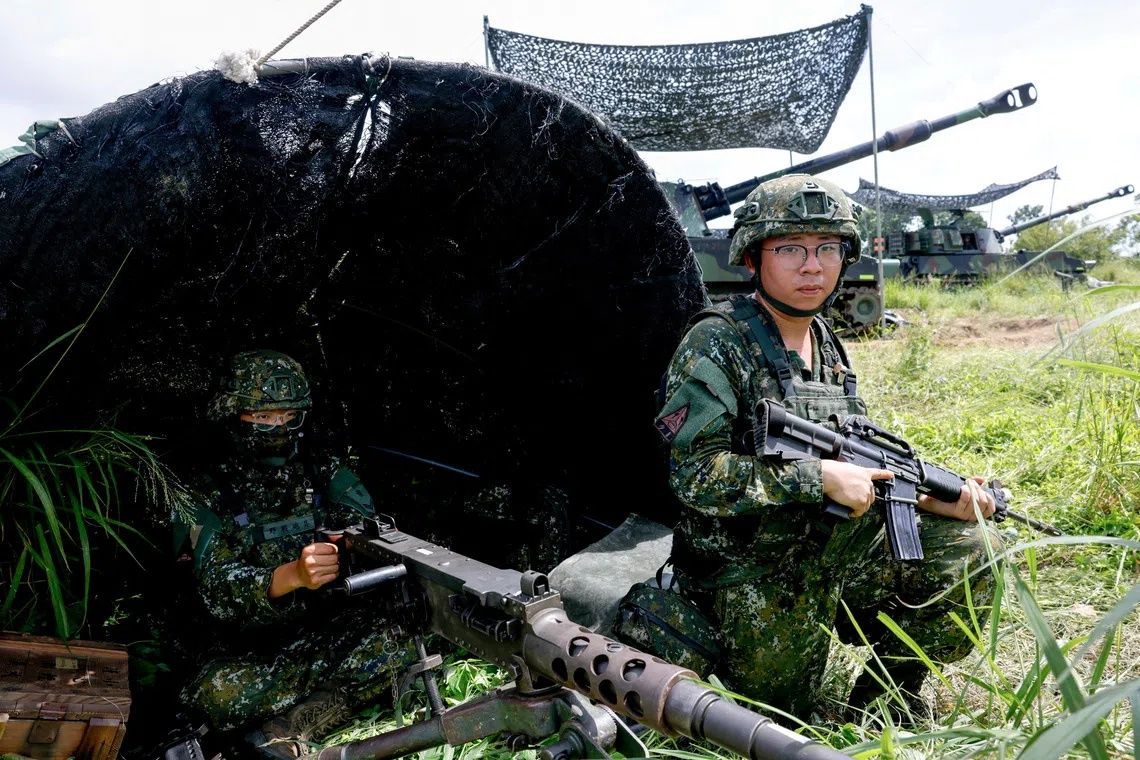
Taiwan has commenced its most ambitious military exercises in years, rolling out a series of operational tests designed to evaluate how its armed forces would adapt to rapidly changing combat conditions and unexpected enemy tactics. The Han Kuang drills, which began on Wednesday and will run through August 14, represent a significant shift towards more realistic and pressure-tested training scenarios that go beyond the conventional, choreographed exercises of previous years. Defence officials emphasise that these 10-day manoeuvres mark a departure from laboratory-style simulations, pushing commanders and troops into field conditions that mirror genuine wartime uncertainties.
The scope of this year's exercises is substantial, mobilising more than 20,000 military personnel alongside approximately 5,000 reservists spread across the island's defence infrastructure. From an underground command centre in Taipei, senior military leadership issued drill orders that triggered a cascade of combat-readiness protocols, including the dispersal of fighter jets to secondary airfields and the emergency deployment of naval assets. This initial activation phase set the tone for the comprehensive testing that would follow, with each component of Taiwan's defence establishment expected to respond to unscripted developments that challenge their pre-established plans and assumptions.
A notable innovation for 2024 involves adopting what military strategists call the "backbrief" methodology, a practice long embedded within United States military doctrine. Under this approach, junior-ranking officers who receive operational orders must restate the mission parameters and strategic intent back to their commanding officers before execution. The mechanism serves a critical function: it ensures that all levels of the command hierarchy share a unified understanding of objectives, reduces the risk of miscommunication, and creates accountability throughout the decision chain. Taiwan's defence officials stress that this synchronisation between commanders and subordinates represents an essential element of effective wartime operations, where ambiguity or misalignment can result in tactical failures with strategic consequences.
Within the spectrum of wartime threats that Taiwan anticipates, disruption of command and control infrastructure ranks among the most severe concerns. Chinese military doctrine, as assessed by Taiwan's strategic community, prioritises the early paralysis of key nodes including command centres, naval facilities, logistics hubs, and defence industrial sites. This exercise cycle therefore dedicates substantial attention to testing Taiwan's ability to maintain operational continuity despite the loss or degradation of critical installations. The drills will include the simulated relocation of a major military arsenal, demonstrating whether personnel and systems can function effectively from alternative locations, and will exercise protocols for mobilising civilian manufacturing capacity to sustain military operations during prolonged conflict.
For the first time, Taiwan's defence establishment has incorporated deliberate internet throttling into its civilian population testing framework. Telecommunications regulators will artificially reduce mobile internet speeds across designated zones, simulating the bandwidth scarcity that would characterise wartime conditions when communication networks face either enemy jamming or systemic overload. This innovation reflects a hard-won recognition that modern conflict encompasses not merely military combat but the entire population's capacity to function under degraded conditions. By testing how civilians navigate communication constraints in advance, authorities hope to develop contingency protocols and public awareness that would translate into greater societal resilience should such scenarios materialise.
Taiwan's concern regarding the integrity of its Pacific supply lines has intensified markedly as Chinese military capabilities expand across the region. The drills will include dedicated escort exercises conducted off Taiwan's eastern coast, specifically designed to practise protecting commercial and military vessels that might transit toward allied partners, particularly the United States and Japan. Beijing's expanding naval presence and enhanced air force reach have created a strategic environment in which Taiwan cannot assume uninterrupted access to external resupply. These escort drills therefore represent Taiwan's attempt to develop operational competence in a contested maritime domain where Chinese military forces might attempt to impose a partial or complete blockade.
A third significant development involves the introduction of an "embedded reporter" mechanism to evaluate how Taiwan's military would manage battlefield communications and counter adversarial disinformation during active conflict. This represents an acknowledgment that information warfare and narrative control constitute integral dimensions of modern warfare. By incorporating journalists into the exercise framework, Taiwan's defence establishment aims to refine procedures for timely, accurate public communication while simultaneously identifying vulnerabilities to Chinese propaganda efforts. The integration of information operations into military drills signals Taiwan's understanding that civilian morale and international perception of the conflict's progress would substantially influence both the military's effectiveness and political sustainability of a protracted defence.
Defence officials have explicitly framed these exercises as a fundamental departure from the highly staged, predictable drills that characterised previous years, when scripted scenarios and predetermined outcomes reduced the value of training. The new emphasis centres on confronting field commanders with genuinely unexpected developments that require rapid reassessment and adaptive decision-making. As one senior official articulated, the critical question facing commanders becomes: when battlefield conditions diverge from anticipated enemy behaviour, how quickly can leaders reformulate their strategy, adjust resource allocation, and issue revised orders to subordinate units? This focus on improvisation and flexibility under uncertainty reflects lessons learned from observing modern conflicts, where rigid adherence to predetermined plans frequently proves catastrophic.
Taiwan's broader effort to enhance exercise realism extends beyond purely military dimensions to encompass civilian government and societal resilience. Previous training cycles have included scenarios testing how local officials would maintain essential governance functions during cascading crises ranging from natural disasters to direct military invasion. This holistic approach recognises that wartime survival depends not only on military capability but on the population's collective ability to function, support essential services, and maintain social cohesion despite severe disruption. The emphasis, as defence officials stress, must encompass the entire population's psychological and practical preparation for potential conflict, transforming Taiwan's self-defence from a narrow military concern into a comprehensive national endeavour.
The timing of these exercises carries particular significance given the intensifying military pressure emanating from Beijing. China's defence ministry declined to comment on the drills, maintaining its longstanding posture of neither confirming nor denying specific military objectives. However, Taiwan's strategic assessment suggests that China continues developing the military capability to impose its political will on the island, whether through coercive measures short of outright invasion or through decisive military action should political circumstances align. Within this context, Taiwan's escalating exercise ambition represents an implicit signal to both Beijing and its democratic allies that Taiwan is systematically hardening its defences and improving its capacity to sustain military operations despite the asymmetrical challenges it faces.
For Southeast Asian nations observing Taiwan's military preparations, the significance extends beyond the island itself. Taiwan's security directly affects regional stability, commercial navigation through vital shipping lanes, and the broader strategic balance between democratic and authoritarian powers in the Indo-Pacific. Taiwan's demonstrated commitment to realistic, adaptive military training suggests an intention to raise the costs of any military adventure Beijing might contemplate, thereby potentially reinforcing deterrence. The exercises also implicitly communicate to Taiwan's population that their government takes the military threat seriously and is investing substantial resources in preparation, which could influence both political support for defence spending and public readiness should crisis emerge.

