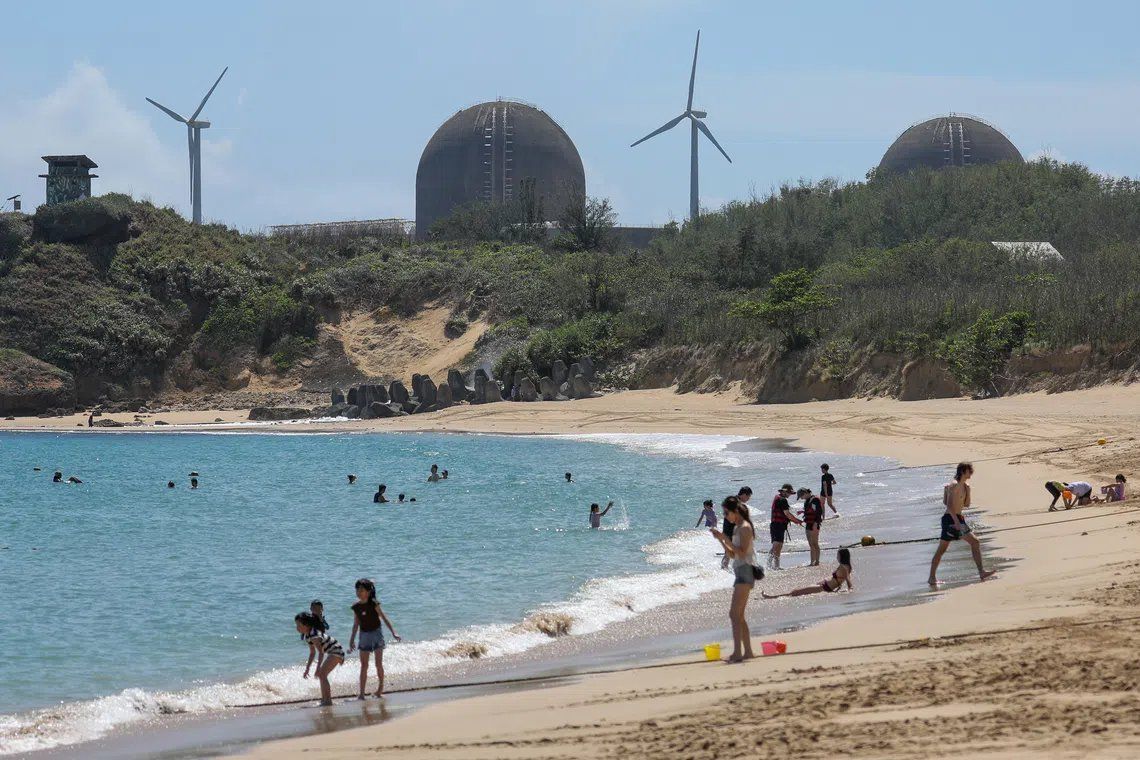
Taiwan's electorate will face a fourth referendum on nuclear energy policy in just eight years when it goes to the polls on November 28 for "nine-in-one" local elections that will determine county magistrates and other officials across the island. The timing and frequency of these referendums have sparked serious debate about whether direct democracy mechanisms have become merely another battleground for partisan competition rather than a genuine tool for seeking public guidance on major policy questions.
The nuclear referendum poses a specific question: whether the government should abandon its "Nuclear-Free Homeland" policy to safeguard public health, guarantee reliable and affordable electricity, bolster national defence capabilities, and support artificial intelligence industry development. While such concerns about energy security and technological advancement carry legitimate weight—particularly given recent disruptions to global oil supplies through the Strait of Hormuz closure and surging power demands from the artificial intelligence sector—scholars increasingly view the referendum's placement alongside elections as strategically motivated by opposition parties rather than reflecting genuine policy uncertainty.
Of three referendum proposals submitted to Taiwan's Central Election Commission this year, only the nuclear energy measure received approval. The commission rejected a proposal to legalise caning as punishment for serious crimes, citing violations of human rights standards. A second rejected referendum would have redirected all traffic fine revenues toward road safety improvements and public transport subsidies. This selective approval process itself raises questions about consistency in evaluating referendum proposals, though the rejection of the caning proposal does suggest some institutional resistance to using referendums for socially divisive measures.
The opposition Kuomintang and Taiwan People's Party appear to recognise that highly charged issues such as public safety and energy policy can energise their voter base, which tends to hold more conservative positions on these matters. Political analysts point to 2018 as a crucial precedent: when Taiwan held ten national referendums alongside that year's local elections, the KMT achieved exceptionally strong results. Qi Dongtao, senior research fellow at Singapore's National University of Singapore East Asian Institute, argues that this electoral calculation deserves consideration as important as the policy merits of the referendums themselves. The opposition strategy appears to rely on generating turnout among conservative-leaning voters who might otherwise skip local elections, potentially deciding competitive races for magistracies and other regional offices.
Political scientist Chong Ja Ian from NUS identifies another dimension to this strategy: opposition parties seek to establish issues around which they can consolidate voter support before November. The KMT's embrace of tougher crime policies, for instance, allows the party to position itself as advocating law-and-order measures similar to Singapore's approach—a system many Taiwanese view as exemplifying both public security and economic prosperity. By framing themselves as unable to implement these policies due to Democratic Progressive Party obstruction and existing legal constraints, the opposition attempts to mobilise voters around the message that only they can deliver the governance model Taiwan's conservative voters admire.
The explosive growth in referendum frequency has drawn criticism from constitutional scholars who question whether Taiwan's system has become unwieldy. Associate professor Lin Jia-he from National Chengchi University's College of Law notes that few democracies conduct national referendums with such rapidity. Switzerland, often cited as the gold standard for direct democracy, allows three to five years between initial proposal and final vote, providing ample opportunity for governmental bodies and citizens to deliberate thoroughly and develop genuine understanding of complex issues. Taiwan's current framework compressed the 2026 nuclear referendum from announcement to vote within merely three months—scarcely sufficient time for rigorous discussion of energy policy combinations and their implications.
This acceleration reflects a fundamental institutional shift. Before 2017, referendums required minimum 50 per cent voter turnout to take effect, a requirement that previously doomed former president Chen Shui-bian's cross-strait relations referendums in 2004 despite overwhelming voter support. The revised system passed in 2017 requires only that "Yes" votes exceed "No" votes and that affirmative votes constitute at least 25 per cent of the total electorate—a dramatically lower bar that has incentivised referendum proliferation. Analysts worry that this structural change has transformed referendums from instruments for resolving major constitutional questions into routine partisan weapons, with opposition parties calculating which issues might attract their supporters to polling stations.
Qi emphasises that the central problem transcends technical procedure: once political parties recognise referendums as mechanisms for mobilising partisan supporters, direct democracy risks becoming corrupted into "another arena of partisan competition" rather than a means of seeking genuine popular authorisation on fundamental questions. This dynamic particularly worries scholars because it privileges emotional, divisive issues over substantive policy deliberation. When parties weaponise referendums strategically, they incentivise selecting questions designed to trigger strong emotional responses and differentiate partisan bases rather than addressing genuine policy consensus or seeking authoritative public direction on genuinely ambiguous matters.
Public sentiment increasingly reflects this erosion of confidence in the referendum mechanism. Sean Chang, a 39-year-old public relations professional from Taipei, exemplifies growing voter scepticism. Though he initially viewed referendums as well-intentioned democratic tools, he now perceives them as "a tool for each political party to manipulate public opinion." The psychological toll manifests as citizens feeling compelled to evaluate every issue through multiple perspectives, eventually abandoning engagement altogether rather than navigating endless politicised referendums. This alienation suggests that excessive referendum use may ultimately undermine direct democracy rather than strengthen it.
The November elections represent more than local contests for 11,051 public officials across Taiwan's jurisdictions. These results will function as a crucial bellwether for national elections scheduled by 2028, making the referendum dynamics particularly consequential for Taiwan's broader political trajectory. How voters respond to the nuclear energy question—whether they vote according to genuine energy policy preferences or according to partisan mobilisation patterns—will reveal whether Taiwan's direct democracy mechanisms retain legitimacy as tools for substantive public guidance or have become primarily vehicles for electoral calculation. The pattern established in November will likely shape expectations for future referendums and inform discussion about whether Taiwan's direct democracy framework requires further recalibration to preserve its integrity.

