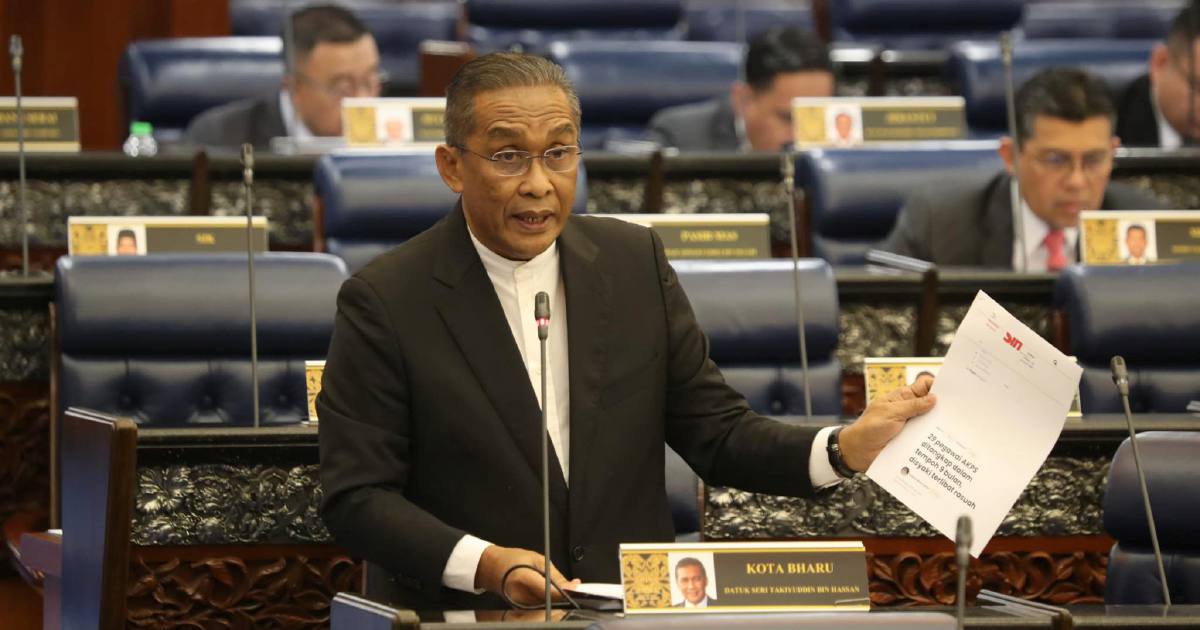
Datuk Seri Takiyuddin Hassan, the opposition's chief whip in the Dewan Rakyat, has formally called for a delay in the scheduled parliamentary sitting intended to deliberate on findings from the Royal Commission of Inquiry examining Tabung Haji. The request hinges on the current absence of Prime Minister Datuk Seri Anwar Ibrahim from Parliament, suggesting that a substantive debate on such a significant governance matter requires the presence of the nation's chief executive.
The timing of Takiyuddin's intervention carries procedural weight in the lower house. As chief whip for the opposition, his position affords him considerable influence over parliamentary scheduling and the sequencing of business on the legislative agenda. His call reflects a broader parliamentary convention that matters of national consequence—particularly those touching on institutional accountability—warrant the direct participation of senior government leadership.
Tabung Haji, the pilgrimage management authority that administers funds for Malaysian Muslims undertaking the Hajj, has faced persistent scrutiny over its financial management and operational transparency. The establishment of the RCI underscores longstanding public concerns about governance within the institution, which holds the accumulated savings of hundreds of thousands of Malaysians. The inquiry's findings are therefore not merely technical administrative matters but touch on the financial security of a significant portion of the Muslim populace.
The Prime Minister's extended absence from Parliament during this period creates a substantive gap in executive accountability. Parliamentary sittings serve as the formal mechanism through which the government answers to the legislature and, by extension, to the public. A deliberation on findings critical to a major Islamic financial institution arguably demands that the head of government be positioned to address concerns, clarify positions, and outline remedial actions—functions that cannot easily be delegated to junior ministerial representatives without appearing to diminish the seriousness of the matter.
Takiyuddin's intervention also reflects broader political dynamics within Malaysia's parliamentary landscape. The opposition's willingness to request postponement rather than proceed with debate—particularly on a matter that might ordinarily provide opportunity for criticism—suggests a calculus that the absence of the PM weakens rather than strengthens their tactical position. A debate lacking the Prime Minister's immediate presence risks appearing as performative rather than consequential, potentially blunting the political impact of scrutinising institutional failures.
From a governance perspective, the timing issue underscores persistent challenges in Malaysian parliamentary practice. Regular and reliable attendance by the Prime Minister during legislative sessions remains inconsistently enforced, and absences—whether due to international commitments, health considerations, or scheduling conflicts—periodically create vacuums in executive accountability. This structural fragility becomes particularly acute when Parliament must examine detailed, technical findings from institutions responsible for substantial public assets.
The Tabung Haji RCI itself represents a significant accountability exercise. Royal Commissions of Inquiry carry formal investigative authority and their reports carry weight in shaping subsequent policy and administrative reform. The body's examination of the pilgrimage fund would have examined matters ranging from investment practices to administrative controls, potentially identifying systemic vulnerabilities or instances of mismanagement. A parliamentary sitting devoted to these findings serves as a crucial juncture where accountability transitions from investigative process to legislative scrutiny and potential remedial action.
For Malaysian Muslims holding balances in Tabung Haji, the parliamentary debate and its outcomes carry material significance. The funds represent savings accumulated over years or decades, often through consistent contributions, and their security directly affects household financial planning particularly among middle and lower-income Malaysians. Any institutional reform flowing from the RCI examination could affect accessibility, returns, or operational reliability of the scheme.
Regionally, Malaysia's approach to investigating and publicly addressing governance failures within Islamic financial institutions also carries symbolic weight. Other Southeast Asian nations with substantial Muslim populations similarly operate pilgrimage funds and Islamic financial bodies, and Malaysia's handling of the Tabung Haji matter may establish precedents or models relevant to broader regional governance conversations. Transparent parliamentary examination, conducted with proper solemnity and appropriate attendance, reinforces institutional legitimacy.
The resolution of Takiyuddin's postponement request rests with the parliamentary leadership, including the Speaker of the Dewan Rakyat and government scheduling officers. The decision will likely reflect calculations about when the Prime Minister is expected to resume full parliamentary duties, the flexibility of the legislative calendar, and political assessments about whether delaying the debate serves broader parliamentary efficiency or represents unnecessary deferral of public accountability.
If the postponement proceeds, it will again highlight the tension between parliamentary procedure and executive scheduling—a perennial challenge in Westminster-derived systems where the legislature and executive remain entwined. Meanwhile, holders of Tabung Haji savings will observe whether parliamentary attention to the RCI findings translates into tangible assurances regarding their accumulated resources, or whether the examination remains largely procedural.

