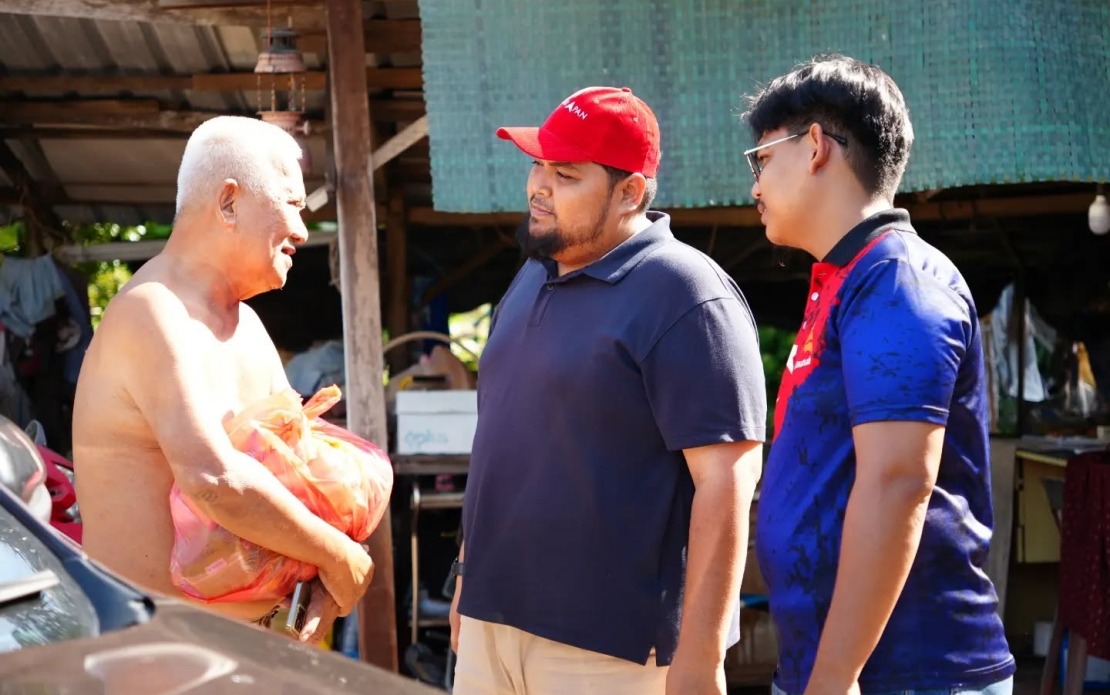
As Johor's 16th state election draws closer, Pakatan Harapan's Muhammad Taqiuddin Cheman is recalibrating his campaign pitch to resonate with younger electors in the Maharani constituency, concentrating on bread-and-butter concerns including job creation, business opportunities and workforce development. The former Pulai Sebatang assemblyman, widely known as Taqi, intends to maximise the final days before voters head to the polls on July 11 by conducting extensive outreach programmes across youth organisations in the Muar district, seeking to build a comprehensive picture of the obstacles confronting this demographic.
Taqi's engagement with young constituents has revealed a consistent thread running through their concerns: the scarcity of viable employment and entrepreneurial pathways that would enable them to establish themselves professionally within the district itself. Recent interactions with young business operators at District 84 illustrated this challenge starkly. The traders, numbering around 70, currently operate under severe spatial constraints that force them into a roster system rather than allowing simultaneous trading activity. Though many have independently scouted alternative commercial locations across Muar, they lack the institutional backing and administrative muscle to secure these sites. Taqi is positioning himself as the advocate who can bridge this gap, connecting aspiring entrepreneurs with available premises and navigating the bureaucratic machinery required for site allocation.
The broader context shaping Maharani's economic landscape underscores why Taqi's messaging strikes a chord. The constituency has acquired an informal reputation as a retirement destination, primarily because successive cohorts of working-age residents have departed in search of employment elsewhere, with many gravitating towards the semiconductor manufacturing sector that dominates neighbouring regions. This pattern of outmigration represents both an economic drain and a demographic concern for local administrators. Reversing this trend requires tangible interventions that create employment anchors capable of persuading younger people to remain or return to Muar.
Pakatan Harapan's election platform, branded as "Johor For All," promises a financial commitment that could address these aspirations. The manifesto earmarks RM500 million specifically for assisting young entrepreneurs to scale up their operations, a sum that potentially covers everything from microfinance support to business mentorship programmes. This financial pledge, assuming PH secures state government control, would provide material backing for the kind of grassroots entrepreneurial activity that Taqi is championing on the campaign trail. For young business operators currently squeezed into inadequate market stalls, such a commitment carries concrete weight.
The anticipated completion of the Maharani Energy Gateway project represents another dimension of Taqi's economic development narrative. This infrastructure undertaking is expected to catalyse fresh commercial activity in the surrounding area, potentially diversifying Muar's economic base beyond its traditional reliance on agriculture, manufacturing, and retail. The project's completion timeline and actual impact on job creation will likely feature prominently in campaign discussions as the election date approaches. Should PH win the seat, delivering on promises related to MEG's development would become a critical test of accountability to voters.
Taqi has also advocated for establishing quality Technical and Vocational Education and Training facilities within the Maharani constituency itself. Such institutions would directly address a supply-side constraint in the local labour market: the shortage of workers equipped with industry-relevant skills. By producing graduates who match employer requirements across various sectors, TVET centres could simultaneously reduce youth unemployment while strengthening the local economy's competitive position. This proposal reflects a longer-term, structural approach to the employment challenge rather than relying solely on immediate job creation.
Beyond conventional business sectors, Taqi has identified opportunities for second-generation fishermen and those dependent on maritime activities. The livelihoods of these communities are currently hampered by physical infrastructure deficiencies, particularly the shallow mouth of the Parit Raja Laut river, which restricts the movement of fishing vessels. Addressing this bottleneck through dredging or other hydraulic interventions could unlock productivity gains for maritime-dependent populations, a constituency often overlooked in urban-centric development discussions. Additionally, substandard drainage systems affecting oil palm plantations point to agricultural communities that require infrastructural attention and investment.
Taqi's candidacy unfolds within a competitive arena. He faces three other contenders: Mohamad Anuar Hayan representing Perikatan Nasional, Datuk Ashari Md Sarip flying the Barisan Nasional colours, and Muhammad Amir Fiqri from the newer Parti Ikatan Demokratik Malaysia. This four-way contest fragments the vote and makes traditional swing-voter calculations more complex. Each candidate is presumably tailoring appeals to distinct voter segments, whether rural traditionalists, urban professionals, or issue-focused constituencies. Taqi's emphasis on youth and economic dynamism appears designed to capture the reform-minded, future-focused electorate.
The Maharani race reflects broader patterns evident across the Johor state election. As Malaysian constituencies have become more demographically diverse and economically differentiated, candidates have increasingly adopted targeted messaging rather than broad platforms. Young voters, in particular, represent a growing proportion of the electorate in many constituencies and have demonstrated willingness to vote against incumbent patterns when convinced that alternative visions better serve their interests. The emphasis on employment, skills, and entrepreneurial opportunity reflects recognition that this demographic prioritises tangible economic outcomes over traditional appeals to communal identity or historical political allegiances.
For Taqi specifically, translating campaign promises into legislative outcomes will prove essential. Should he prevail on July 11, constituents will expect measurable progress on the initiatives he has championed: business locations materialising for young entrepreneurs, TVET facilities breaking ground, and infrastructural improvements to drainage and maritime access advancing. The political capital gained through appealing to younger voters will require follow-through, particularly given that this demographic tends to scrutinise delivery records closely. His previous tenure as Pulai Sebatang assemblyman from 2018 to 2022 provides voters with a reference point for evaluating his track record and capacity to execute on commitments.

