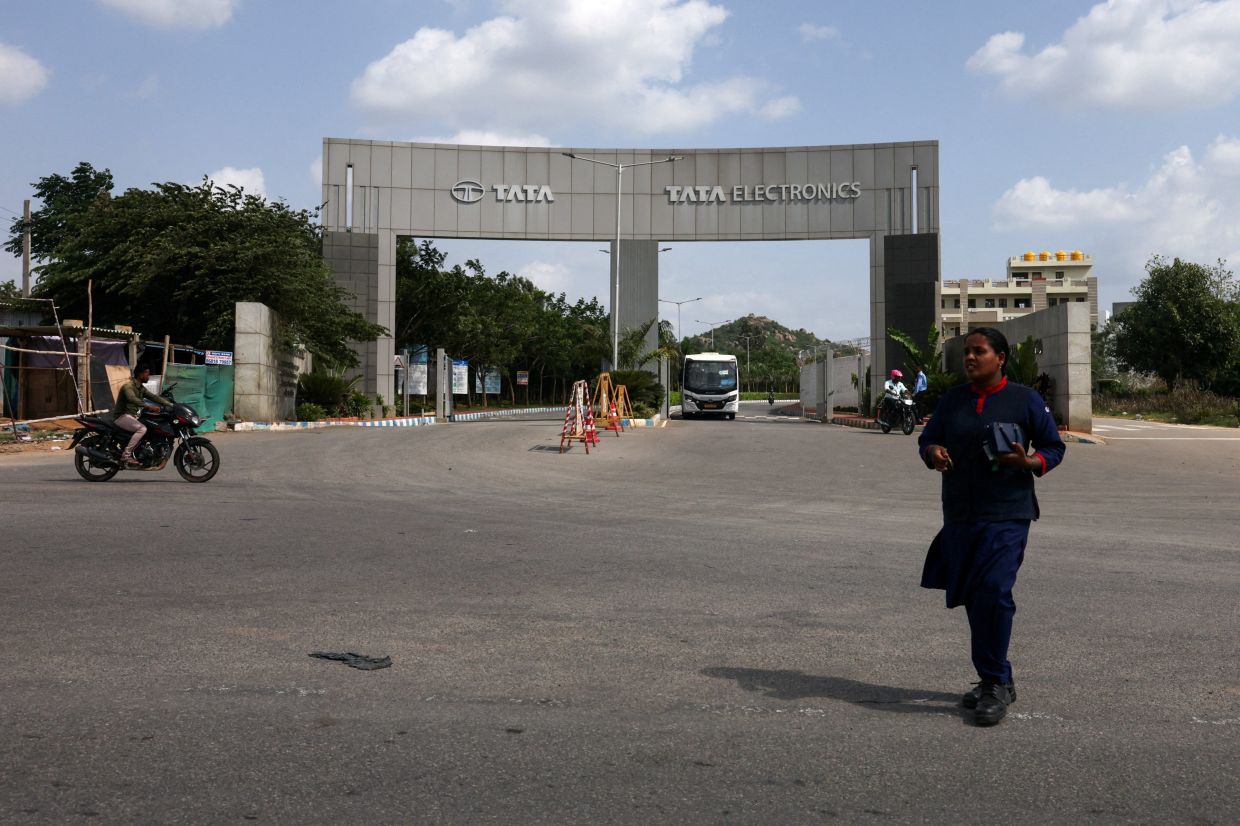
Tata Electronics acknowledged on Monday that it had fallen victim to a significant cybersecurity incident, prompting swift investigation by both the Indian conglomerate and its high-profile clients after hackers publicly claimed to have stolen and published proprietary information belonging to Apple and Tesla. The breach represents a critical vulnerability in the supply chains of two of the world's most valuable technology companies, both of which depend heavily on Tata's manufacturing capabilities in India.
The ransomware group World Leaks has made public its claim that it has obtained and released more than 200,000 files totalling over 630 gigabytes of data from Tata Electronics' systems, according to information provided to Reuters by security researchers who examined the alleged data dump. The files, which World Leaks posted on the dark web, purportedly contain component design specifications, manufacturing documents, and confidential trade secret materials from both Apple and Tesla operations. Tata Electronics stated that it detected the intrusion weeks before the public disclosure and immediately activated its incident response protocols, asserting that the breach had not disrupted any of its operational divisions.
Apple launched a comprehensive investigation into the incident following confirmation of the breach, with sources close to the matter indicating that Tata Electronics had received a formal ransom demand connected to the stolen data. Neither Apple nor Tesla provided public statements when approached for comment, though internal teams at both companies are understood to be assessing the scope and sensitivity of the exposed materials. Tata declined to elaborate on the ransom demand or provide details about which systems had been compromised during the attack.
This incident represents the latest in a series of operational challenges facing Apple's manufacturing expansion in India, a strategy that forms a cornerstone of Prime Minister Narendra Modi's broader initiative to establish India as a global electronics manufacturing hub. The breach emerges amid separate scrutiny of Tata operations, with environmental concerns raised regarding alleged farmland contamination near one of the company's iPhone production facilities. Tata's own history with cybersecurity failures compounds concerns: the conglomerate's British luxury automotive subsidiary Jaguar Land Rover experienced a destructive cyberattack in the previous year that forced a six-week production shutdown, demonstrating the company's vulnerability to organised cyber threats.
Analysis of the data posted by World Leaks by independent cybersecurity researcher Rajshekhar Rajaharia revealed disturbing breadth in the stolen materials. A search of the database for Apple-related files returned 181 results, including what appeared to be quality assurance documentation for iPhone circuit board components bearing Apple's proprietary markings. Additionally, 33 files and folders were tagged with references to Hosur, the location of Tata's primary iPhone assembly plant in Tamil Nadu state, suggesting targeted extraction of manufacturing and operational data tied to Apple's production there. Email communications, system event logs spanning multiple years, and copies of employee passports, including those of foreign nationals, were also discovered within the leaked dataset.
The materials purportedly belonging to Tesla reveal similarly sensitive intellectual property. Researchers identified folders labelled with references to advanced vehicle components, including documents referring to NV36 Chargeport Controller systems designed for Tesla's North American market, particularly for enhanced versions of the Model Y SUV. Additional materials bore internal codenames and project designations, including documentation labelled as proprietary trade secrets pertaining to Tesla's Project Highland, the company's public codename for a substantially redesigned iteration of its Model 3 sedan. Some files carried metadata suggesting they were created as recently as May 2025, indicating either extremely current data or potential predating of documents.
The World Leaks group, which previously claimed responsibility for a breach affecting the Nike corporation, maintains an online presence exclusively on the dark web, where its operations remain beyond the reach of conventional search engines and public internet access. Security researchers confirmed that the Tata Electronics data had been accessible within the dark web ecosystem since at least June 10, providing a window of exposure before public disclosure. The group's methodology aligns with contemporary ransomware operations that combine theft with publication as pressure tactics, a pattern that has become increasingly common across industrial and technology sectors globally.
Industry sources confirmed that Tata manufactures components for both technology giants, with Apple relying on the Indian manufacturer for a substantial portion of its iPhone production strategy. Tata currently accounts for approximately one-third of Apple's total iPhone manufacturing in India, while Foxconn manages the remaining capacity. This dependency structure underscores why the breach poses particular concern to Apple's supply chain resilience, as the relationship represents a calculated diversification away from China-dominated manufacturing. Tata had informed employees working within its iPhone assembly operations of the data breach in recent weeks, according to sources familiar with internal communications.
The incident underscores broader vulnerabilities within global manufacturing networks as companies pursue geographic diversification away from traditional production hubs. The sophistication and scale of ransomware operations targeting multinational corporations have escalated markedly, with criminal groups now capable of extracting hundreds of gigabytes of confidential data while simultaneously launching extortion campaigns. For manufacturers like Tata that serve as critical nodes in global supply chains, security failures create cascading risks that extend far beyond the breached company itself.
India's Computer Emergency Response Team, a unit operating under the country's Information Technology Ministry responsible for coordinating responses to cyber incidents, did not provide immediate comment when contacted regarding the breach. The incident reflects a concerning pattern in which India's emerging role as a manufacturing alternative to China simultaneously exposes companies and international clients to cybersecurity risks that may not yet be fully addressed through regulatory frameworks or security infrastructure maturity. As India aspires to become a dominant force in global electronics manufacturing, strengthening cyber resilience across the sector has become an urgent priority for both industry and government agencies.