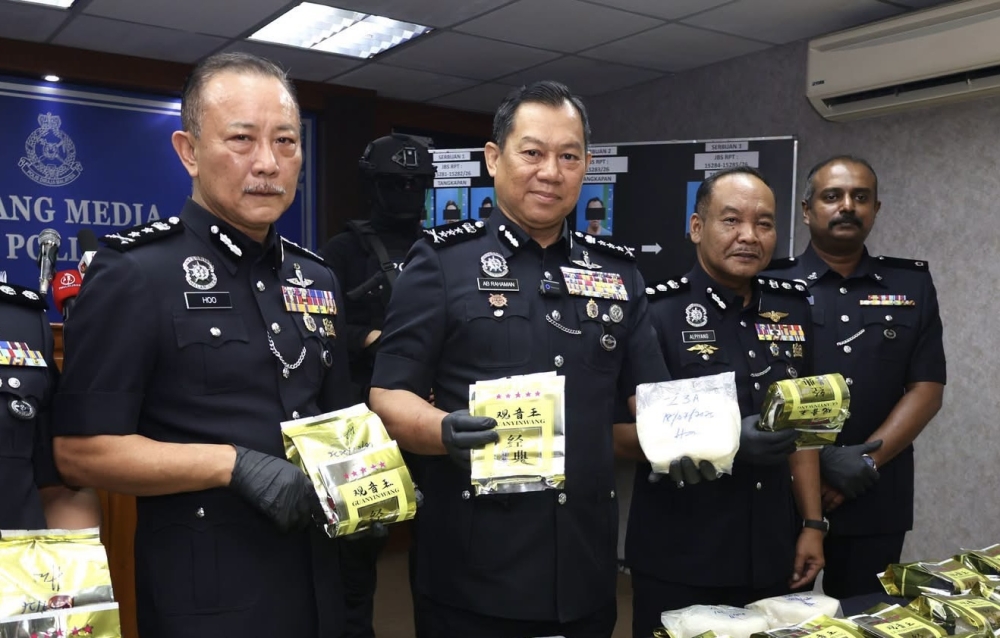
Law enforcement authorities in Johor Bahru have successfully dismantled what investigators describe as a coordinated synthetic drug operation following a series of raids that resulted in eight arrests spanning multiple age groups and backgrounds. The youngest person apprehended was a 16-year-old, marking a concerning trend in drug enforcement across Malaysia's southern corridor where youth involvement in narcotics trafficking has drawn increasing attention from state authorities.
The investigation, which culminated in July 22 police actions across the city, exposed a distribution network that relied on unconventional methods to move product to street-level buyers. Among the most notable operational details was the use of an elderly man's motor vehicle as a mobile drug depot, a practice that law enforcement agencies say reflects evolving tactics by criminal organisations attempting to evade detection. The grandfather's car, conscripted into this illicit enterprise, represents a vulnerability exploited by trafficking networks targeting family members as unwitting or coerced participants in their operations.
This particular case illustrates a troubling pattern observed across Malaysia, where syndicate members deliberately involve minors and elderly citizens to obscure supply chain responsibility and complicate prosecution pathways. Younger operatives often face lighter sentences under juvenile justice provisions, making them attractive recruitment targets for experienced traffickers seeking to insulate higher-ranking members from lengthy incarceration. The multigenerational composition of the arrested group underscores how these networks penetrate family structures, creating domestic conflict and exposing relatives to legal liability.
The synthetic drug production and distribution landscape in Johor Bahru has evolved considerably over recent years, transforming from warehouse-based manufacturing into increasingly distributed operations. By fragmenting their supply chains across multiple vehicles and individuals, syndicates reduce the impact of any single enforcement action and maintain supply continuity despite police interventions. This operational model has proved resilient even as authorities improve surveillance capabilities and intelligence-sharing protocols.
Detailed examination of the arrests reveals the importance of community vigilance alongside police investigation efforts. Tip-offs from neighbours, family members, and business operators remain critical to identifying suspicious activity that precedes larger enforcement operations. Johor Bahru's position as a major population centre with substantial cross-border connectivity to Singapore and other regions makes it a natural strategic location for synthetic drug operations targeting both local consumption and broader peninsular distribution networks.
The seized materials and intelligence gathered during these raids provide investigators with important leads regarding supplier relationships and downstream distribution networks. Understanding how products move from this particular node in the supply chain helps authorities map larger organisational structures and identify other vulnerable points where future interventions might prove most effective. Each dismantled operation yields operational intelligence that informs subsequent enforcement strategies.
For Malaysian society at large, the involvement of a 16-year-old in this syndicate raises urgent questions about prevention and rehabilitation frameworks. Youth engagement with synthetic drugs increasingly reflects not merely individual susceptibility to addiction but systematic recruitment by criminal organisations exploiting economic pressures and social vulnerability. Schools, community centres, and family support services require strengthened capacity to identify at-risk young people before traffickers establish operational relationships with them.
The use of a private vehicle belonging to an elderly citizen also highlights vulnerabilities within family units where coercion or financial desperation may compel participation. Awareness campaigns targeting seniors about protecting their identities, vehicles, and financial information from exploitation represent an underdeveloped component of Malaysia's current drug prevention strategy. Greater public education addressing how family members become unwittingly or reluctantly involved could reduce the operational effectiveness of such schemes.
Johor Bahru police have indicated that investigations into the syndicate's broader network remain ongoing. Authorities are pursuing leads regarding where synthetic drugs were sourced, how profits were distributed, and whether connections exist to larger transnational trafficking organisations. Such investigations typically require weeks or months of careful evidence-building to establish prosecutorial cases sufficient for court proceedings. The initial eight arrests represent what enforcement officials characterise as the operational tier rather than organisational leadership.
The synthetic drug problem across Malaysia, and particularly within urban centres like Johor Bahru, demands integrated responses combining enforcement action, public health intervention, and social rehabilitation programming. While police operations address immediate supply disruption, addressing underlying factors driving youth recruitment and family vulnerability requires sustained investment from multiple government agencies and community organisations. The effectiveness of this particular bust will ultimately be measured not only by immediate arrests but by how comprehensively authorities can leverage intelligence to dismantle upstream production and trafficking networks feeding this particular distribution operation.

