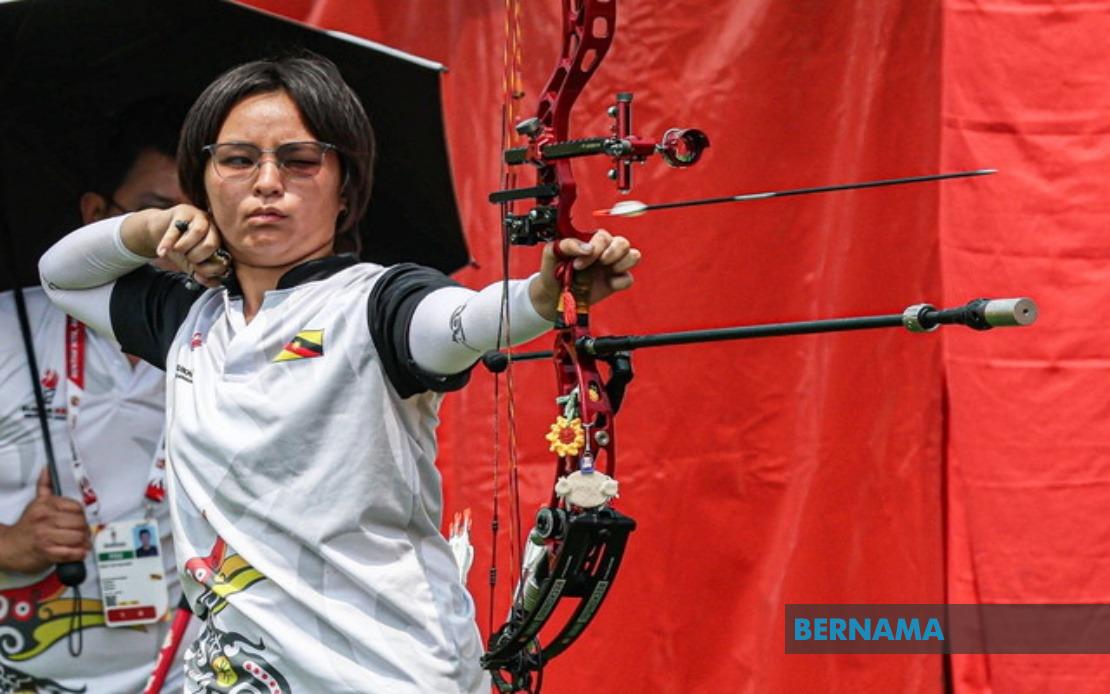
Seventeen-year-old Wee Yee Qi delivered a commanding performance at the SUKMA 2026 Games in Bangi, claiming two gold medals in her inaugural Games appearance for Sarawak. The achievement marks a significant breakthrough for the young archer, who made a strategic shift to compound archery just months earlier after finding limited success in the recurve discipline.
Yee Qi's first triumph came in the mixed team competition, where she partnered with Eason Lau Hui Wan to overcome Kedah's pairing of Muhammad Zaim Ahmad and Ili Nabihan Shafizan in a tight contest that finished 151-150. The razor-thin margin underscored the competitive intensity of archery at Malaysia's biennial multi-sport championship, where technical precision and mental fortitude determine outcomes. Kedah's loss represented a missed opportunity for the northern state to secure representation in this particular category, highlighting how individual performances can shift medal distributions across event categories.
The Miri-born archer extended her personal medal haul moments later by anchoring Sarawak's women's team to another gold medal finish. Alongside teammates Aira Nadirah Aizuddin and Nur Zara Aisyah Khairul Fadly, Yee Qi helped Sarawak overtake Terengganu in a dramatic final encounter that concluded 217-213. The victory carried added significance as it demonstrated the depth of Sarawak's emerging archery talent pool and the state's capacity to compete across multiple team categories simultaneously. The turnaround proved particularly noteworthy given that Sarawak trailed throughout the first three ends before regrouping and executing a decisive performance in the closing stages against Terengganu's trio of Airazalia Azrai, Nur Shafiena Mohd Shuhamri, and Putri Aqiera Issandra Ismayuddin.
When reflecting on her achievements immediately after the competition at the National Institute of Valuation Stadium, Yee Qi attributed her success to the guidance and mentorship she received from her coaching staff. She credited her instructors with orchestrating her participation in various competitions, opportunities that accumulated into the competitive experience that translated to gold medal performances. This emphasis on coaching support underscores a broader reality in Malaysian sports development: individual talent alone insufficient without institutional structures and experienced mentorship to refine technique and build psychological resilience.
Yee Qi traced her archery journey back six years, revealing that her initial entry into the sport occurred through talent identification mechanisms operating at the school level. What began as an incidental discovery of aptitude evolved into genuine passion, a trajectory that mirrors successful athletic development pathways. Crucially, her family's consistent backing provided the emotional and logistical foundation necessary for sustained progression, illustrating how sporting success at the national level depends upon ecosystem support extending beyond coaches and facilities into household-level encouragement and resource allocation.
The transition from recurve to compound represents a calculated decision that reflects pragmatic self-assessment rather than limitation. Yee Qi acknowledged that recurve archery had not yielded the competitive returns she sought, prompting a disciplinary switch that proved immediately fruitful. For aspiring athletes across Southeast Asia navigating similar crossroads, her experience demonstrates that recognizing and acting upon performance signals promptly can accelerate progress. Compound archery, characterized by mechanical advantage through pulley systems, suits different biomechanical profiles and potentially offered Yee Qi greater technical alignment with her physical capabilities.
Looking immediately ahead, Yee Qi faces a temporary reallocation of her time and mental energy toward her Sijil Pelajaran Malaysia examinations scheduled for November. This academic obligation temporarily constrains her ability to pursue archery training with total commitment, a reality that reflects Malaysia's insistence upon balancing athletic pursuits with educational attainment. Upon completing these national-level examinations, she intends to return archery to her primary focus.
The long-term ambition articulated by the teenager extends beyond medal accumulation at domestic competitions: she aspires ultimately to compete under the Malaysian flag in international sporting forums. This aspiration demonstrates psychological maturity and understanding of hierarchical progression within elite sport. For Sarawak and Malaysian archery more broadly, nurturing athletes with such forward-thinking orientation creates potential pathways for international representation and medal success at regional and continental championships.
Selangor secured the bronze medal in the mixed team event through the partnership of Muhammad A'rif A'fiq Suhaimi and Nur Alyaa Nazurah Fadzil Fairuz, who edged Sabah's Hiew Ichin and Catherine Looi Mei Qi Abdullah 154-152 in a similarly tightly contested encounter. The Selangor women's team of Amira Batrisyia Mohamad Azizul Rahman, Nur Alya Sofrina Mohd Sarif, and Nur Alyaa Nazurah Fadzil Fairuz supplemented the bronze showing by winning their respective women's team bronze medal competition, defeating their opponents 219-212. These results indicate that Selangor maintains competitive archery infrastructure capable of fielding respectable performances, though Sarawak's dominance across both team categories suggests a potential geographical shift in Malaysia's archery talent distribution.
Yee Qi's emergence as a dual gold medalist at her SUKMA debut carries implications extending beyond immediate competition results. Her success validates Sarawak's investment in identifying and developing young archers and establishes her as a talent to monitor in subsequent Games cycles. For Malaysian archery federations contemplating resource allocation and athlete recruitment strategies, the performance suggests that compound archery disciplines warrant particular attention in talent development programming. As the nation prepares for subsequent international competitions, athletes of Yee Qi's caliber and trajectory warrant inclusion in longer-term capability planning aimed at enhancing Malaysia's standing in archery across global sporting stages.

