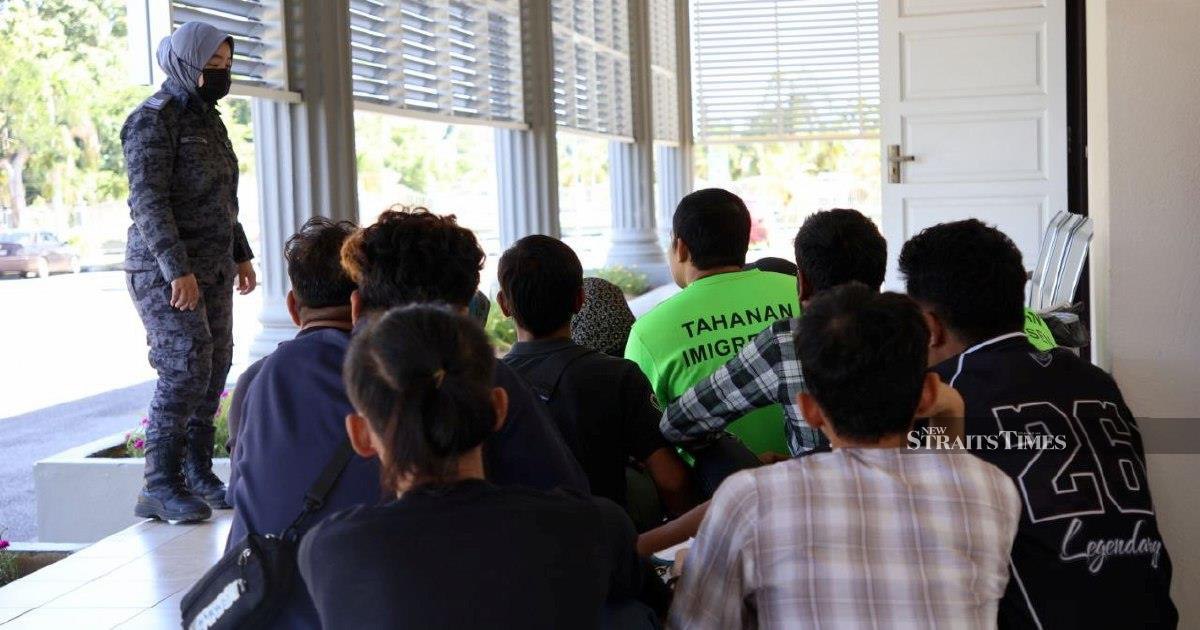
A group of ten undocumented migrants made court appearances in Pasir Mas Sessions Court, with authorities bringing charges relating to their unlawful presence in Malaysia. Among those charged were three foreign women, reflecting the diverse composition of irregular migration flows into the country. The charges encompassed multiple immigration violations including extended stays beyond permitted periods, misuse of social visit pass documentation, and unauthorised entry across Malaysian borders.
The prosecution of these individuals underscores Malaysia's ongoing enforcement efforts against irregular migration, a persistent challenge that authorities across the country continue to address. Immigration violations represent a significant concern for enforcement agencies, which must balance detecting and processing undocumented migrants with managing resources. The Pasir Mas court proceedings demonstrate how local judicial bodies handle cases that originate from immigration enforcement operations.
Overstaying remains one of the most common immigration offences in Malaysia, affecting individuals from various nationalities who fail to depart before their authorised stay expires. Social visit passes, designed to facilitate temporary tourism and business visits, are sometimes misused for employment or extended residence purposes. Such misapplication of permit conditions creates complications for immigration authorities attempting to maintain accurate records of foreign nationals within the country.
Illegal entry charges carry particular significance within Malaysia's immigration framework, as they address the violation of border control procedures at official and unofficial crossing points. The detection and prosecution of such cases typically results from joint operations between immigration enforcement, police, and border security units. These collaborative efforts have intensified in recent years, particularly across states like Kelantan where Pasir Mas is located, given geographic proximity to land borders and maritime entry points.
The involvement of three women among the ten accused highlights that immigration irregularities affect both male and female migrants. Women undocumented migrants often face compounded vulnerabilities, ranging from trafficking risks to exploitation in informal employment sectors. Migration patterns involving women frequently reveal complex circumstances including family separation, economic desperation, and limited awareness of legal requirements.
Malaysia's approach to immigration enforcement has evolved to combine prosecution with rehabilitation and deportation procedures. Court cases establish formal documentation of violations, enabling immigration authorities to maintain records that facilitate future border management decisions. Conviction records assist agencies in identifying repeat offenders and patterns of irregular movement.
The Kelantan region, where Pasir Mas sits, experiences particular pressure from irregular migration due to land borders with Thailand and proximity to coastal routes. This geographic reality means local courts frequently process immigration cases, with Sessions Court having jurisdiction over more serious immigration offences. The volume of such cases reflects broader regional migration dynamics affecting Southeast Asia.
Behind each case lie individual narratives of economic motivation, family circumstances, and sometimes desperation. While enforcement remains necessary for border security and labour market regulation, understanding the push factors driving irregular migration provides context for policy discussions. Poverty, conflict, and limited opportunities in origin countries drive many migrants to risk illegal entry despite known penalties.
The charges filed against these individuals carry potential consequences including fines, imprisonment, and mandatory deportation upon sentence completion. Immigration courts have discretion in sentencing, considering factors such as length of overstay, cooperation with authorities, and previous violations. Deportation arrangements typically involve processing through detention centres and coordination with origin country authorities.
For Malaysia's immigration system, these prosecutions form part of a continuous enforcement cycle addressing an estimated millions of irregular migrants within the country. Official statistics periodically reveal the scale of undocumented populations, though precise figures remain difficult to establish. The gap between detected and undetected irregular migrants suggests enforcement actions address only a fraction of the broader issue.
Regional cooperation on migration management remains underdeveloped despite shared challenges. ASEAN member states, including Malaysia, grapple with similar irregular migration patterns yet coordinate limited information-sharing or enforcement efforts. Enhanced regional frameworks could improve detection and discourage smuggling networks operating across borders.
These court proceedings also reflect broader employment market dynamics, as many undocumented migrants enter Malaysia seeking work in construction, plantation agriculture, domestic service, and manufacturing sectors. Labour demand in these industries often creates conditions enabling irregular employment relationships that persist despite legal prohibitions. Addressing root causes requires coordinated labour market regulation alongside immigration enforcement.

