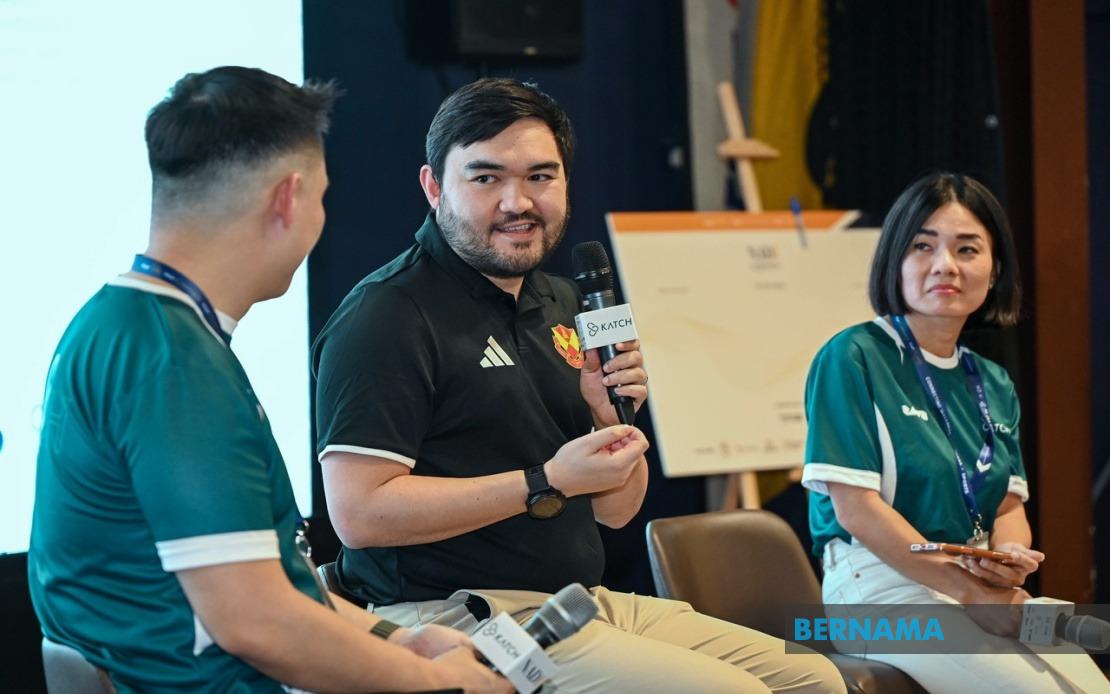
Selangor's dominant performance as host of the Malaysia Games 2026 has prompted the Raja Muda of Selangor, Tengku Amir Shah Sultan Sharafuddin Idris Shah, to advocate for a substantial expansion of grassroots-level sports competitions. Rather than allowing the momentum of the state's success to dissipate, he argues that consistent competitive opportunities for youth athletes represent the essential infrastructure upon which sustainable sports development must be built. The state's comprehensive medal haul of 101 gold, 73 silver and 71 bronze medals provides a powerful demonstration of what focused investment and systematic talent cultivation can achieve across multiple sporting disciplines.
During remarks made at the NADI Connecting Wellness, Fitness and Sports With RMS event in Petaling Jaya, Tengku Amir Shah articulated a clear strategic vision for youth athletics. The fundamental insight driving his advocacy is deceptively straightforward yet profound: young athletes require regular weekend competitions to sustain engagement and maintain training discipline throughout the week. Without structured competitive outlets, even talented youngsters lack concrete targets around which to organize their preparation. The psychological dimension matters equally with the physical—a competitive framework cultivates the mindset necessary not merely to perform at higher levels but to embrace setbacks as learning opportunities rather than discouragements.
The Raja Muda's personal trajectory in sports administration underscores the credibility of his observations. His earlier involvement with the Selangor Youth Community and subsequent deeper engagement with football has provided direct exposure to grassroots dynamics. This experience informs his conviction that competition-driven development yields superior outcomes compared to conventional training models that emphasise instruction without regular testing. He illustrated this principle through his role in establishing the Selangor Champions League, which functions as a proving ground where community-level football teams compete on unified standards, thereby identifying emerging talent while simultaneously driving competitive excellence upward through the competitive hierarchy.
The extension of this competitive framework to sports beyond football carries particular resonance for Southeast Asian regional context. Tengku Amir Shah specifically highlighted pickleball and chess as examples of disciplines where structured grassroots leagues could replicate the success demonstrated in football. These sports, gaining considerable traction throughout Malaysia's urban and increasingly suburban populations, possess established but often fragmented local communities. Formalizing competition platforms would consolidate participation, establish development pathways, and create the visibility necessary to attract sponsorship and sustained institutional support.
The strategic rationale underlying this position reflects broader patterns in sports development internationally. Nations that have sustained competitive advantage across multiple athletic disciplines typically invest heavily in accessible competition infrastructure serving youth populations. Regular competitive opportunities serve multiple functions simultaneously: they maintain physical conditioning, instil discipline and goal orientation, expose emerging talent to evaluators, and sustain participant motivation across extended development cycles. Without such scaffolding, even genetically gifted young athletes frequently abandon competitive pursuit during the demanding intermediate years between recreational engagement and elite performance.
Selangor's SUKMA 2026 triumph itself validates this developmental philosophy by demonstrating what coordinated state-level investment can achieve. The selection of diverse sporting disciplines for Selangor's contingent reflected deliberate portfolio expansion rather than concentration within traditional strengths. This approach created opportunities for young athletes across multiple sports to represent the state, thereby widening the competitive base and distributing recognition beyond established athletic programs. The resulting medal distribution across disciplines suggests that this inclusive competitive structure generated momentum across the entire sports ecosystem rather than merely concentrating success among established powerhouses.
The implications for Malaysian sports policy warrant careful consideration by relevant federal and state authorities. The traditional model of national competition organized around occasional major tournaments creates extended periods of competitive inactivity for youth athletes. Tengku Amir Shah's advocacy for weekend competitions essentially proposes restructuring this calendar to ensure continuous competitive opportunity. Such restructuring would require coordination among state sporting bodies, local clubs, and educational institutions to establish sustainable scheduling and administrative frameworks.
The financial dimension also merits attention. Regular grassroots competitions require funding for venue access, officiating, coordination, and often modest prize incentives. While individual weekend events carry modest cost implications, aggregate expenditure across a full season across multiple sports demands sustained budgetary commitment. However, the developmental returns—earlier talent identification, stronger skill foundation among broader participant cohorts, enhanced retention rates among young athletes—typically justify investment through reduced costs at elite development stages where training and competition expenses escalate dramatically.
Tengku Amir Shah's remarks at today's gathering, which assembled 50 sectoral leaders within wellness, fitness and sports portfolios, indicate broader institutional receptivity to grassroots development philosophy. The convening itself represented effort to align voices and generate coordinated direction across fragmented stakeholder communities. This consensus-building function may ultimately prove as significant as the specific advocacy for expanded competitions, as coordinated action across government agencies, sporting bodies, and private sector participants remains prerequisite for systemic reform.
The broader Southeast Asian context amplifies the relevance of this grassroots emphasis. Regional competitors including Thailand, Vietnam and Philippines have progressively strengthened youth development infrastructure as strategy for elevating overall competitive performance at regional championships. Malaysia's capacity to sustain and enhance international competitive standing depends substantially upon maintaining robust pipeline of developed young athletes across diverse disciplines. The SUKMA 2026 success, while significant achievement, represents single event outcome dependent upon sustained investment and favorable performance among current generation of athletes.
Moving forward, the critical question centers on implementation. Tengku Amir Shah has articulated compelling rationale and provided illustrative models through Selangor Champions League experience. Translation of this philosophy into coordinated action across multiple sports and broader geographic base requires engagement with logistical realities of competition organization, funding mechanisms, and institutional accountability. Preliminary indicators suggest receptivity among gathered sectoral leaders, though commitment to regular weekend competitions across expanding range of sports would represent substantial departure from current fragmented grassroots landscape.

