Tengku Puteri Seri Kemala Tengku Datuk Seri Aishah, the elder sister of Pahang Sultan Al-Sultan Abdullah Ri'ayatuddin Al-Mustafa Billah Shah, was laid to rest at the Royal Mausoleum in Pekan on August 27 after a period of mourning marked by official ceremonies and family presence. The royal family matriarch, who was 69, passed away at 9:25 pm the previous evening at a hospital in Kuala Lumpur following what officials described as a period of declining health. Her death marks a significant moment for the Pahang royal household and the broader Malaysian royal establishment, which mourned the loss of a senior female member of the sultanate.
The funeral proceedings began in the nation's capital, where the Khalid bin Al-Walid Mosque in Jalan Padang Tembak hosted funeral prayers attended by close family members and senior state officials. Following the initial religious observances, the deceased's remains were transferred by aircraft from Subang Air Base back to Pahang, underscoring the importance accorded to the burial arrangements. The journey back to her native state concluded with arrival at the Sultan Ahmad 1 Mosque in Pekan at 1:25 pm, where additional prayers were performed after the zuhur congregation, allowing the broader royal circle and official representatives to pay their final respects.
Sultan Al-Sultan Abdullah's presence throughout the proceedings reflected the significance of the occasion within the royal household. Accompanying him were Tengku Ampuan of Pahang Tunku Azizah Aminah Maimunah Iskandariah and Tengku Mahkota of Pahang Tengku Hassanal Ibrahim Alam Shah, representing the immediate and succeeding generations of the Pahang sultanate. This multi-generational attendance demonstrated the continuity of royal leadership and the family's united stance during the period of bereavement, a particularly important gesture in Malaysian royal protocol.
The burial ceremony itself was conducted with full state honours, a distinction reserved for senior members of the royal families. Following the completion of congregational prayers at the mosque, the cortege proceeded to the adjacent Royal Mausoleum, where religious protocols were meticulously observed. Pahang Mufti Datuk Dr Asmadi Mohamed Naim oversaw the recitation of Yasin, the Qur'anic chapter traditionally performed during Islamic funeral rites, followed by tahlil—the Islamic declaration of God's oneness recited during mourning periods—and supplementary prayers that honoured the deceased's status and spiritual journey.
Among the government figures present to render their respects were Melaka Yang Dipertua Negeri Tun Mohd Ali Rustam and Pahang Menteri Besar Datuk Seri Wan Rosdy Wan Ismail, both representatives of their respective state administrations. Their attendance served to underscore the significance of the event beyond merely family considerations, reflecting the formal recognition extended to departed members of the royal establishment by the broader governmental hierarchy. Such attendance at royal funerals carries symbolic weight in Malaysian political culture, signalling respect for monarchical institutions and their representatives.
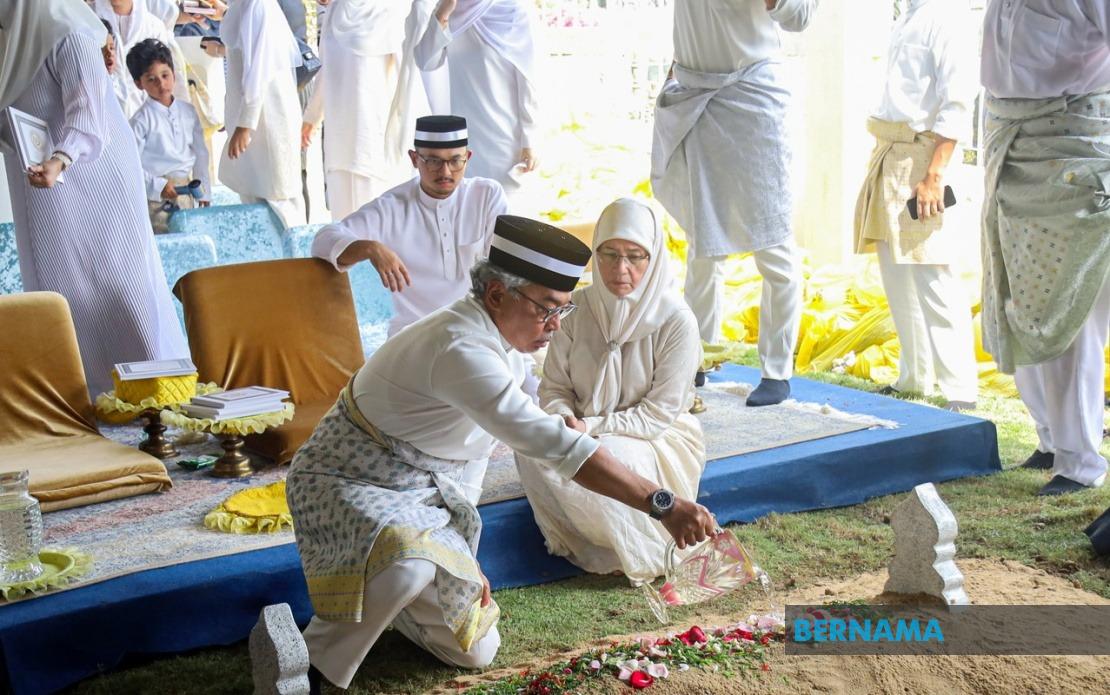
The personal moments following the completion of burial arrangements added a tender dimension to the formal proceedings. Sultan Al-Sultan Abdullah and Tengku Azizah then performed the traditional gesture of sprinkling rose water and scattering flowers upon the grave, a practice deeply rooted in Islamic burial customs that allows family members to express their devotion and bid final farewell. These moments, though fleeting, encapsulate the intersection of formal state ceremony and intimate family mourning that characterises royal funerals in Malaysia.
Tengku Puteri Seri Kemala's passing represents the conclusion of a significant chapter in the Pahang royal narrative. As an elder member of the sultanate, she would have witnessed decades of institutional changes, familial developments, and the evolution of Malaysia's constitutional monarchy. Her role within the royal household, though largely conducted away from public scrutiny, would have encompassed responsibilities relating to family welfare and the preservation of royal traditions and protocols.
The ceremonies conducted throughout August 27 reflected the established protocols governing royal funerals in Malaysia, where religious observance, governmental recognition, and family unity converge. The timing and logistics of the burial—from Kuala Lumpur to Pekan, involving both federal and state-level administrative coordination—demonstrate the intricate machinery that supports royal institutions and their public-facing functions. For Malaysian readers, such events serve as reminders of the institutional frameworks that govern monarchical life and the ceremonial dimensions that mark transitions within these historically significant families.
For the state of Pahang specifically, the funeral proceedings underscore the continuity of leadership and the stability of the sultanate amid generational transitions. Sultan Al-Sultan Abdullah's active involvement in the funeral arrangements, flanked by his consort and heir apparent, signals the unbroken succession of authority and responsibility within the state's royal structure. As Malaysia's constituent states navigate complex governance arrangements within the federal framework, the orderly conduct of such ceremonial occasions reinforces public confidence in institutional stability and the respect afforded to royal prerogatives across the nation's diverse political landscape.

