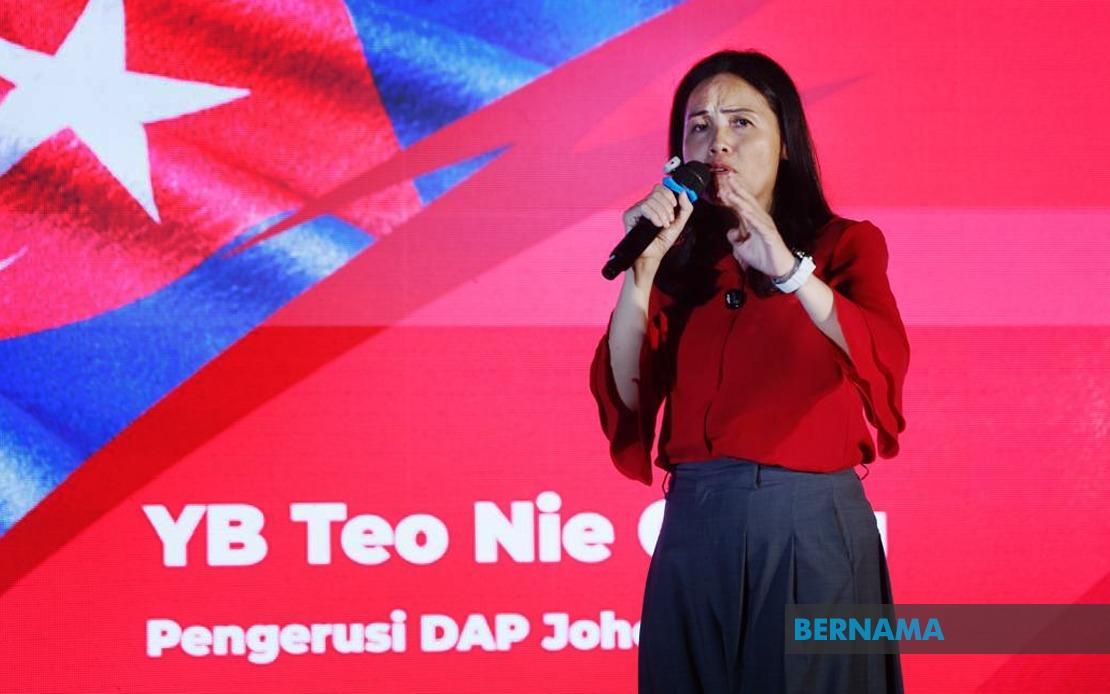
Johor DAP chairman Teo Nie Ching has raised serious questions about the state government's decision to establish appointed positions for state assemblymen, suggesting the move lacks clarity on its true intentions and could compromise democratic principles. Speaking at a Pakatan Harapan rally in Paloh on July 9, Teo, who also holds the position of National DAP Wanita chairman, expressed concern that appointing individuals without subjecting them to electoral scrutiny represents a deviation from transparent governance.
The creation of appointed assemblymen represents a structural change that warrants closer public examination. When the Johor State Legislative Assembly passed amendments to its enactment on May 7, the bill authorised the appointment of up to five assemblymen ostensibly to strengthen the assembly's function and composition. However, Teo's challenge suggests that without clear public criteria and transparent processes, such appointments risk appearing arbitrary or politically motivated, particularly when questions arise about which individuals might receive these positions.
Teo pressed the state government to offer detailed explanations for the mechanism, emphasising that accountability and public trust depend on citizens understanding the reasoning behind institutional changes. She specifically questioned whether appointed assemblymen would represent constituencies that had voted against certain parties, or whether they would serve different purposes entirely. The uncertainty itself has become problematic, suggesting the government has not adequately communicated its intentions to the electorate.
Her comments carried particular weight given recent electoral dynamics in Johor. Teo highlighted that the state government had received substantial support from PAS in the current election, raising the implicit question of whether appointments might be used to consolidate political gains or reward coalition partners. Such questions, whether substantiated or not, indicate that the public lacks sufficient clarity about the appointment process and criteria, creating space for suspicion and eroding confidence in the measure.
Despite her criticism of the appointed positions, Teo defended the broader record of the Unity Government, framing ongoing reforms as evidence of the administration's commitment to meaningful systemic change. She acknowledged that the MADANI Government remains imperfect and has much room for improvement, but argued that incremental progress across multiple policy areas demonstrates genuine effort to benefit ordinary Malaysians. This distinction between tactical concerns about specific mechanisms and strategic support for the government's overall direction reflects DAP's complex positioning within the federal coalition.
Education has emerged as a flagship area for the Unity Government's reforms. Teo highlighted the guarantee of matriculation placement for all SPM students achieving 10A or better, irrespective of socioeconomic background, as a significant equaliser. Additionally, the government has expanded educational access for Unified Examination Certificate holders, addressing a longstanding concern among Chinese-educated communities. These changes represent substantive policy shifts from previous administrations that had restricted such pathways.
Budgetary commitments to Chinese independent schools further underscore the government's stated commitment to educational inclusion. The allocation of RM20.16 million this year represents a substantial increase from the RM12 million provided in 2019, reflecting a deliberate reorientation of resources. For Malaysian communities concerned about educational access and equity, such funding changes carry tangible meaning and suggest the government has prioritised these concerns within its fiscal allocations.
Teo framed these reforms within a longer historical timeline, suggesting that meaningful democratic change occurs incrementally rather than overnight. By comparing democracy to a long-distance race, she positioned the current administration's achievements as foundational work that will benefit future generations through stronger institutional systems. This argument appeals to voters willing to extend credit to the government based on demonstrated progress rather than demand immediate perfection.
The broader context of Saturday's polls adds urgency to these arguments. Approximately 2.7 million voters will determine the composition of the 56 state seats in Johor, Malaysia's second-largest state. The election serves as a referendum not only on Johor's state government but also on public confidence in the Unity Government's federal agenda. Performance in major state elections influences momentum for federal politics, particularly as the country approaches 2026 and subsequent electoral cycles.
Teo's positioning of the appointed assemblymen issue within this electoral context suggests DAP recognises growing public concern about democratic safeguards even among its support base. By acknowledging the problem directly rather than dismissing criticism, Teo attempted to maintain credibility with voters who value transparency and democratic accountability. Simultaneously, her defence of other Unity Government achievements sought to prevent the appointed assemblymen controversy from overshadowing what she characterises as genuine policy successes.
The tension between defending institutional innovations and questioning their implementation reveals deeper concerns about the nature of coalition governance in Malaysia. The Unity Government comprises parties with distinct constituencies and priorities, creating inevitable compromises that satisfy no single group completely. Teo's approach suggests DAP will continue advocating for stronger democratic safeguards while remaining pragmatic about the need for coalition stability and policy implementation.
As voters prepare for Saturday's ballots, the debate over appointed assemblymen exemplifies the nuanced choices facing Malaysian electorates. The issue transcends simple partisan messaging, touching on fundamental questions about how democracies balance representative principles with institutional flexibility. Teo's challenge to the state government signals that even coalition partners expect clear justifications for departures from established democratic norms.

