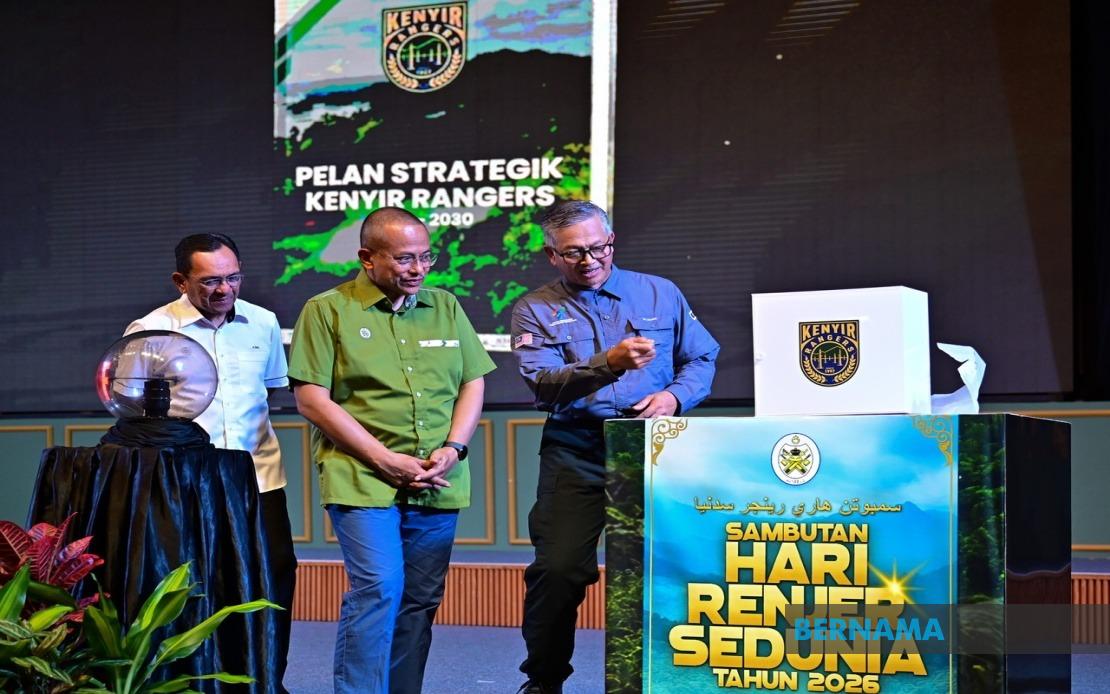
Terengganu Menteri Besar Datuk Seri Dr Ahmad Samsuri Mokhtar has underscored the urgent need for strengthened collaboration among multiple stakeholders to address the growing menace of human-wildlife conflict in the state, particularly concerning elephant encounters along major transport corridors. Speaking during the state-level World Ranger Day 2026 celebration at Wisma Darul Iman, the menteri besar emphasised that resolving this complex challenge requires coordinated action spanning the Wildlife and National Parks Department, the Malaysian Highway Authority, and local authorities.
The remarks come in the wake of an alarming incident on August 5, when a Toyota Estima carrying a married couple collided with a herd of elephants at Kilometre 274.6 of the East Coast Expressway 2, shortly after the Cheneh Toll Plaza heading towards Kuala Terengganu. Both occupants sustained injuries in what the menteri besar characterised as a tragedy that underscores the dual risks posed to wildlife populations and road users navigating the extensive highway network.
Acknowledging the scale and complexity of the problem, Dr Ahmad Samsuri outlined several practical interventions that authorities are considering to mitigate future incidents. Enhanced patrol operations at known hotspots where wildlife frequently crosses transport routes would represent one layer of protection, whilst electric fencing installed strategically near wildlife habitats and established animal migration corridors could serve as a deterrent. The menteri besar recognised, however, that comprehensive electric fencing along the entire length of the highway system would be economically prohibitive, necessitating a more targeted and strategic approach to infrastructure improvements.
The state leader acknowledged that climatic patterns directly influence wildlife behaviour and movement patterns, with increased animal displacement occurring during the rainy season when creatures leave their natural habitats seeking shelter and alternative food sources. Highway patrol operations must therefore be calibrated and intensified during these periods to detect and respond rapidly to potential conflict situations before catastrophic incidents occur. This seasonal dimension of the problem requires not only reactive measures but also predictive management based on meteorological conditions and historical incident data.
Technology emerges as a promising frontier in preventing future tragedies, according to the menteri besar's vision for long-term conflict reduction. Advanced warning systems capable of detecting wildlife movements and alerting drivers to imminent dangers represent a transformative approach that could protect both animal and human lives. Such technological solutions might include motion sensors, thermal imaging, or data-driven algorithms that leverage existing wildlife tracking information to predict corridor usage and provide real-time alerts to highway authorities and motorists.
The menteri besar's comments reflect broader recognition within Malaysia's conservation and transport sectors that the expansion of highway infrastructure, whilst economically beneficial, has fragmented traditional wildlife habitats and forced animals into closer proximity with human activity. The East Coast Expressway 2, serving as a critical economic artery for the east coast region, has become an increasingly hazardous zone for megafauna such as elephants, whose population recovery efforts in Peninsular Malaysia have been undermined by habitat loss and human-wildlife interface risks.
Terengganu's experience mirrors challenges facing other states along key transport corridors, where development pressures have squeezed wildlife into ever-smaller territory whilst human traffic intensifies. The state's proactive stance on this issue carries implications for transportation planning and environmental management across Southeast Asia, where similar conflicts are escalating as economic growth accelerates infrastructure development through biodiverse regions.
The menteri besar's emphasis on empathy towards both human and animal casualties signals an integrated conservation philosophy that acknowledges the legitimate concerns of motorists and affected communities whilst recognising the vulnerability of elephant populations already under severe pressure from habitat fragmentation. This balanced perspective may serve as a model for other jurisdictions grappling with comparable dilemmas where economic imperatives must be reconciled with environmental stewardship.
Moving forward, successful implementation of Dr Ahmad Samsuri's cooperative framework will depend on sustained funding, institutional commitment, and genuine inter-agency coordination that transcends bureaucratic silos. The Wildlife and National Parks Department must work seamlessly with highway authorities to share intelligence on wildlife movements, whilst investment in patrol personnel, fencing infrastructure, and monitoring technology requires budgetary commitment extending across multiple fiscal years. Without such sustained effort, the East Coast Expressway 2 and similar corridors may continue to witness tragic encounters that claim both animal and human lives.

