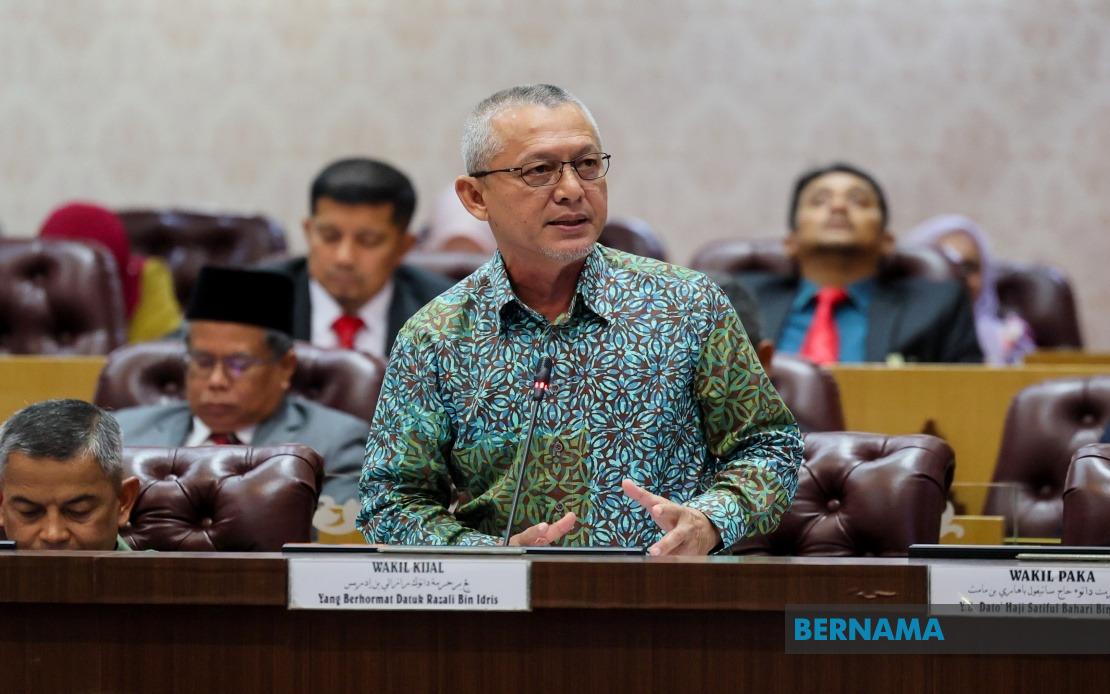
Terengganu's state government has committed RM3.78 million over the current budgetary cycle to accelerate development initiatives at Kenyir Geopark, signalling serious intent to position the expansive natural reserve as a premier geotourism destination in Southeast Asia. The funding decision, channelled through the Hulu Terengganu District Office, reflects the state administration's confidence in the geopark's potential and broader recognition of geological tourism as an emerging economic pillar for the region.
The investment strategy articulated by Datuk Razali Idris, chairman of the state's Tourism, Culture, Environment and Climate Change Committee, extends beyond immediate infrastructure improvements. The comprehensive approach encompasses the preservation of geologically significant sites, the creation of new geotourism experiences, enhancement of visitor facilities, and education programmes designed to build community engagement and capacity in sustainable tourism management. This multi-faceted framework suggests policymakers understand that successful geopark development requires coordination across conservation, economic development, and social engagement—a lesson increasingly valued across Malaysia's tourism sector.
Crucially, the state government has explicitly positioned Kenyir Geopark's National Geopark status as a stepping stone toward achieving United Nations Educational, Scientific and Cultural Organisation designation. UNESCO Global Geopark recognition carries substantial international prestige and can unlock access to global networks, technical expertise, and tourism markets. For Terengganu, a state seeking to diversify revenue streams beyond traditional manufacturing and maritime sectors, this aspiration reflects pragmatic economic thinking aligned with global tourism trends favouring authentic, education-oriented experiences over mass-market development.
The geopark encompasses approximately 244,900 hectares of Hulu Terengganu's landscape, a conservation footprint that positions it among Malaysia's most significant protected geological areas. Within this vast territory, administrators have catalogued 15 designated geosites representing diverse geological formations and processes, 10 biosites documenting significant biodiversity concentrations, 11 cultural heritage sites reflecting human settlement patterns and traditions, and one geo-archaeological site linking geological and human history. This inventory demonstrates that Kenyir's value extends far beyond geology alone, encompassing interconnected ecological, cultural, and historical dimensions that appeal to increasingly sophisticated international visitors seeking meaningful engagement with natural environments.
Specific conservation priorities reveal strategic thinking about heritage preservation. The state government has prioritised detailed management of sites including Gua Bewah and Gua Taat—both archaeologically and geologically significant cave systems—alongside Batu Bersurat, a landmark combining geological and cultural importance. These targeted conservation efforts suggest that Terengganu's officials recognise UNESCO criteria reward integrated approaches that demonstrate how geological heritage connects with human history and cultural expression. Such holistic management contrasts with narrower interpretations of geopark development that risk marginalising local communities or overlooking non-geological heritage.
Visitor statistics provide the most compelling evidence of momentum. Kenyir Geopark attracted 454,765 visitors during 2024, representing a remarkable 108.5 per cent increase from 218,157 arrivals in 2023. This doubling of visitor numbers within a single year suggests either major improvements in promotional effectiveness and accessibility, significant changes in travel patterns, or both. For Malaysian context, such growth rates typically indicate that attractions are transitioning from niche destinations into mainstream tourism itineraries, a trajectory that necessitates careful management to prevent overtourism while capturing economic benefits.
The visitor surge carries implications across multiple stakeholder groups. For local communities in Hulu Terengganu, increased tourism creates employment and business opportunities but also risks cultural disruption and environmental pressure if unmanaged. For the state government, surging visitation justifies continued investment but demands parallel infrastructure development—transport networks, accommodation, food services, and waste management—to prevent visitor experience degradation. For Malaysia's broader tourism narrative, Kenyir's trajectory demonstrates that geotourism represents genuine market demand, validating policy decisions across Southeast Asia to develop geological heritage tourism.
The RM3.78 million allocation, while substantial in absolute terms, requires context within broader Malaysian tourism investment patterns. For a site serving nearly half a million annual visitors, this investment covers facility upgrades, staff training, interpretive materials, and conservation work across an area exceeding 244,000 hectares. This suggests either a targeted, phased approach or reliance on private sector partnerships to supplement public funding. The sustainability of geopark development may ultimately depend on generating sufficient tourism revenue to fund ongoing operations and community benefit-sharing arrangements that secure long-term local support.
Terengganu's geopark initiative intersects with Malaysia's positioning within regional tourism competition. Thailand, Indonesia, and the Philippines have collectively developed substantial geotourism offerings, and Philippine sites including Ilocos Norte already possess UNESCO Global Geopark status. By systematically developing Kenyir toward international recognition, Terengganu competes for discerning international visitors and educational tourism groups, market segments typically willing to pay premium prices and stay longer than mass-market tourists. This positioning aligns with Malaysia's broader pivot toward higher-value tourism experiences.
Looking forward, the geopark's development trajectory will depend on whether the state maintains consistent funding, successfully involves local communities in decision-making, manages visitor growth without degrading geological sites, and effectively communicates Kenyir's unique heritage to international audiences. The 108.5 per cent visitor increase demonstrates market receptivity, but converting current momentum into sustainable, community-benefiting tourism requires sophisticated management extending well beyond the current budgetary allocation. For Malaysian policymakers monitoring geotourism development, Terengganu's investment and results offer instructive lessons about combining conservation objectives with economic development—a balance increasingly central to Southeast Asian tourism policy.

