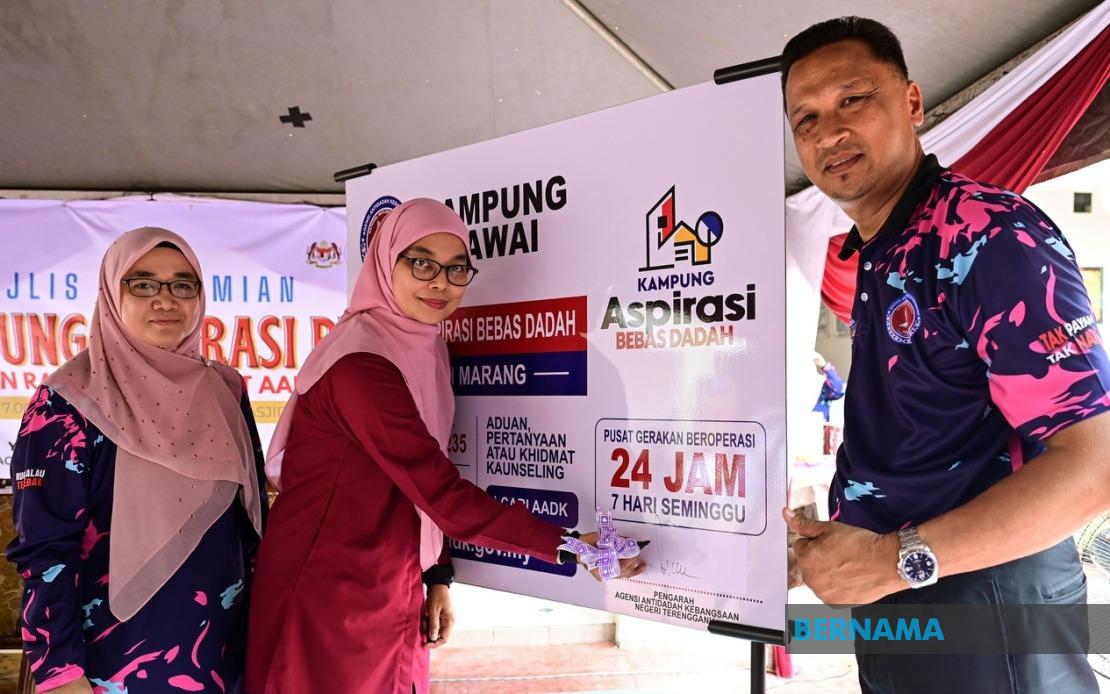
Terengganu's National Anti-Drug Agency (AADK) has achieved a notable rehabilitation success rate, with nearly 6,000 individuals completing treatment programmes between 2010 and July 2024. The 94 per cent completion figure represents a significant outcome in the state's ongoing efforts to combat drug dependence and substance abuse, reflecting the effectiveness of tailored intervention strategies deployed across multiple communities. The achievement was highlighted during the launch of the Kampung Aspirasi Bebas Dadah (KABD) 2026 programme in Kampung Rawai, where officials outlined the agency's approach to addiction recovery and community engagement.
The success of Terengganu AADK's rehabilitation initiatives rests on a flexible, pragmatic framework that recognises the diverse circumstances of individuals struggling with addiction. Rather than employing a one-size-fits-all approach, the agency implements varied treatment methodologies adapted to individual needs and circumstances. Community-based recovery remains central to this model, enabling participants to receive professional intervention while maintaining their regular responsibilities. This approach contrasts with more rigid institutional models, instead allowing individuals to continue working, pursuing education, and engaging in family life whilst undergoing structured treatment. Such flexibility acknowledges a fundamental reality: sustainable recovery often depends on individuals remaining integrated within their communities and maintaining sources of stability.
Ruzlin Hafinaz Redzuan, assistant director of Treatment and Rehabilitation at Terengganu AADK, explained that programme duration and intensity vary considerably depending on clinical factors. The agency's data reveals that most people seeking treatment fall within the 35 to 50 age bracket, suggesting that many individuals are seeking help during their working years rather than waiting until advanced stages of addiction. The severity of dependency and the specific substances involved determine the length of required intervention. Clients subjected to court-ordered supervision typically spend two to three years under community monitoring, ensuring consistent oversight and reducing the risk of relapse. Voluntary participants, by contrast, commit to a minimum six-month engagement period without facing legal consequences, though the agency encourages longer-term support where clinically indicated.
The distinction between court-ordered and voluntary pathways reflects a nuanced understanding of how individuals engage with treatment services. Those entering the system through court orders face legal accountability for compliance, which can serve as a powerful motivational factor in maintaining treatment adherence. However, voluntary participants represent a distinct group with different incentive structures. The removal of legal penalties for voluntary clients creates space for engagement based on personal motivation and genuine desire for change. Both groups follow structured treatment schedules with regular attendance requirements, yet the voluntary pathway's lighter legal touch encourages individuals to self-select into treatment, potentially resulting in better engagement quality. AADK officers maintain active follow-up protocols to track attendance and re-engage clients who miss sessions, demonstrating institutional commitment to programme continuity.
Kampung Rawai's selection for the KABD 2026 programme underscores how community commitment influences drug prevention outcomes. The village, home to approximately 3,600 residents, represents the second location in Terengganu chosen for intensive intervention this year. The selection process prioritised communities demonstrating strong commitment from both residents and local leaders to maintaining drug-free environments. Such grassroots engagement proves crucial because addiction and substance abuse thrive in environments lacking social cohesion and collective resistance. When community members actively invest in preventing drug problems, rather than viewing addiction as purely an individual or law-enforcement matter, the foundation for sustained change strengthens considerably. Kampung Rawai's selection signals recognition of its organised response and demonstrates how institutional resources concentrate on communities most likely to leverage them effectively.
The KABD framework itself represents a shift toward preventive community development rather than purely reactive drug enforcement. By targeting entire villages rather than just individuals in crisis, the programme aims to build resilience against addiction at the population level. This strategy involves mobilising multiple stakeholder groups including residents, non-governmental organisations, and volunteer networks to address drug issues comprehensively. The underlying rationale acknowledges that drug problems emerge from and perpetuate within particular social contexts, making community-wide intervention logical. By empowering local actors—rather than relying exclusively on government agencies—the framework distributes responsibility and builds local capacity for sustained action. Kampung Rawai is positioned as a model village that can demonstrate these principles in practice and provide guidance to other communities facing similar challenges.
The implications of Terengganu AADK's rehabilitation success extend beyond individual recovery statistics. A 94 per cent completion rate among 6,000 participants suggests that thousands of individuals have stabilised their substance use, reduced their engagement with illegal drugs, and potentially enhanced their economic productivity and family stability. Each successful case represents not only personal transformation but also reduced burden on healthcare and criminal justice systems. Families affected by addiction gain opportunities to rebuild relationships. Communities benefit from reduced drug-related crime and antisocial behaviour. Economic activity increases when individuals regain employment capacity. These downstream effects, though difficult to quantify precisely, likely exceed the nominal rehabilitation figures.
For other Malaysian states considering drug policy strategies, Terengganu's experience offers practical lessons about programme design and implementation. The emphasis on community integration rather than institutionalisation, the flexibility to accommodate both court-ordered and voluntary clients, and the investment in grassroots community engagement represent evidence-based approaches gaining international recognition. Countries across Southeast Asia face rising substance abuse challenges amid globalised drug trafficking, making shared learning particularly valuable. Terengganu's willingness to deploy resources toward prevention and community strengthening, rather than solely criminal enforcement, reflects evolving thinking about how societies can address addiction effectively.
The commitment to expand the KABD model beyond Kampung Rawai suggests institutional momentum building around this community-centred philosophy. As additional villages participate in the programme, accumulated experience should yield refined implementation practices and increasingly sophisticated understanding of local factors enabling or hindering success. The stated aspiration for close cooperation between government agencies, community organisations, and residents articulates an ideal that remains challenging to achieve but essential for durable impact. Drug-free societies cannot be imposed through enforcement alone; they emerge when communities develop collective commitment to prevention, support systems for those struggling with addiction, and economic opportunities enabling people to build stable lives. Terengganu AADK's 13-year track record suggests that when institutional resources align with community commitment, meaningful progress against addiction becomes achievable.

