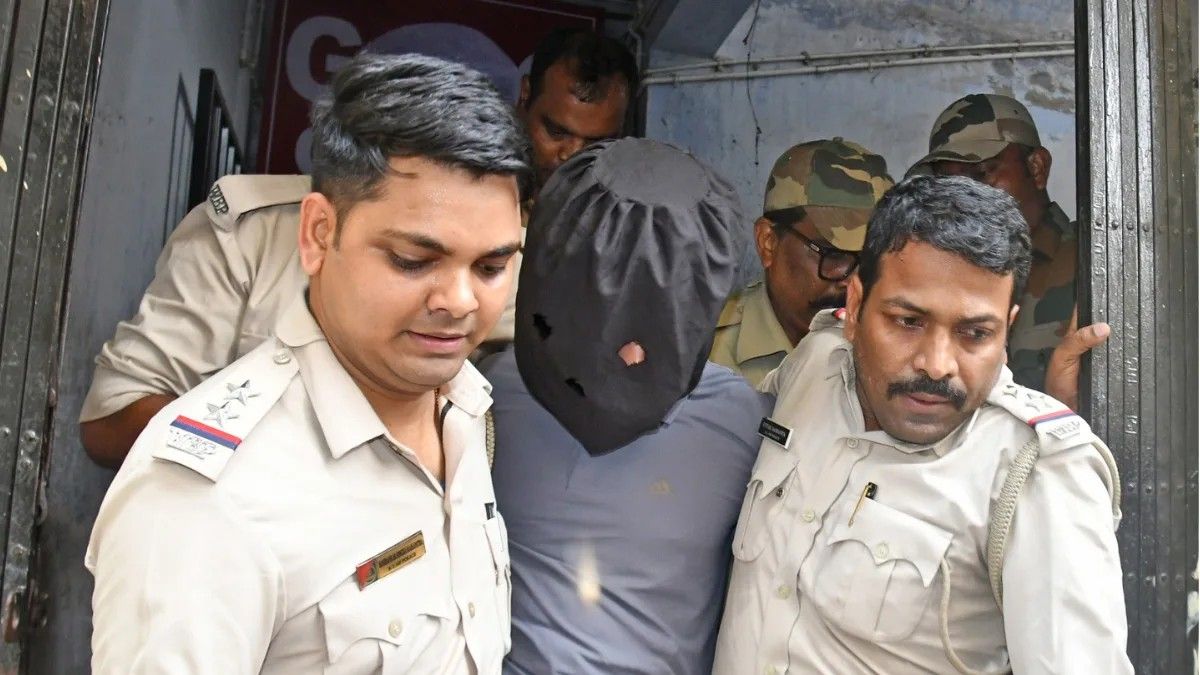
Bardhaman in West Bengal has once again become the focal point of a major counterterrorism investigation, this time ensnaring a young man suspected of connections to cross-border militant networks. The arrest of Hamim Mondal on Friday marks a significant security operation in a district that witnessed a pivotal 2012 bombing that exposed a dormant cell of Jamaat-ul-Mujahidin extremists. The latest development underscores how terrorist recruitment and operational planning continue to pose persistent threats across eastern India, particularly in border-adjacent regions vulnerable to infiltration from Pakistan-based groups.
Mondal, aged 24, stands accused of establishing contact with the Jaish-e-Mohammed terror outfit and operating as part of a module led by Sajjad Bhat. According to the Special Task Force investigation, the suspect had been engaged in a sophisticated scheme that extended beyond mere ideological alignment. Law enforcement officials revealed that Mondal had purchased uniforms matching those of the Central Reserve Police Force, suggesting investigators believe he may have been preparing to pose as a security personnel in order to gain proximity to the state's chief minister during official movements. This mode of operation reflects an escalation in tactical sophistication compared to previous recruitment patterns documented in the region.
The investigation uncovered the conspiracy through digital forensics that proved instrumental in establishing culpability. Authorities recovered Mondal's mobile phone and laptop from his residential premises, which contained encrypted communications allegedly exchanged with contacts associated with Pakistan's Inter-Services Intelligence agency. These encrypted messages, investigators contend, point to direct coordination with foreign handlers orchestrating recruitment and operational direction from across the border. The digital trail became critical evidence linking the suspect to a broader espionage network functioning under ISI supervision, with activities allegedly encompassing intelligence collection, infiltration operations, and targeted elimination plots.
The arrest itself occurred during a gymnasium session at Renaissance Township in the western outskirts of Bardhaman town, where Mondal had established a routine presence. Officers from the Special Task Force, coordinated with local police from the Burdwan station, conducted a methodical operation that also included simultaneous searches of his rented accommodation at Rohini Tower in the same township. The flat, which Mondal had leased merely three months prior under false pretenses—claiming it was needed for his younger siblings—revealed additional incriminating documents alongside digital devices. The rental arrangement itself demonstrated operational tradecraft, with the suspect having used a local grocer's father's identity documentation to circumvent residential verification protocols.
Mondal's background provides little outward indication of radicalization trajectories typically associated with militant recruitment. He hails from Dignagar village in Manteswar block of East Burdwan, roughly 25 kilometres north of Bardhaman town proper, and had been raised at his grandmother's residence in Bankra, Howrah. Following his graduation, he launched what appeared to be a legitimate commercial venture, establishing a label printing business in Pilkhana, Howrah, while his father maintained employment at a private enterprise in Kolkata. Neighbors, including a schoolteacher residing at his rented premises, described him as unassuming and soft-spoken, characteristics that underscore how contemporary militant recruitment operates through seemingly ordinary individuals capable of maintaining dual personas.
Investigators identified the suspect through a telephone threat directed at Minister of State Umesh Rai, traced through contact details belonging to a young woman from Birbhum district. This evidentiary thread ultimately led security personnel to Mondal and precipitated exposure of his alleged underground activities conducted under the guise of student status. The intelligence gathering methodology demonstrates how security agencies leverage communication metadata and cross-referencing techniques to identify otherwise concealed operatives. The threat call itself, though seemingly a minor incident initially, became a crucial investigative breakthrough that unraveled an extensive network of alleged conspiracies.
The operational scope attributed to Mondal encompasses activities extending well beyond simple recruitment. Police allegations encompass criminal conspiracy, collusion with foreign hostile elements, membership in a transnational espionage apparatus, recruitment of local operatives, weapons procurement, intelligence gathering regarding prominent individuals, honey-trapping operations targeting dignitaries, kidnapping conspiracies, and assassination planning. These charges collectively paint a portrait of systematic infiltration operations designed to destabilize state security apparatus through targeted violence against senior political leadership. The specificity of allegations regarding potential assassination plots and the acquisition of CRPF uniforms suggest law enforcement possessed substantive intelligence concerning imminent operational planning.
The legal proceedings moved with dispatch following the early morning raid operations. Mondal was produced before the Chief Judicial Magistrate's Court in Bardhaman and remanded to police custody for 14 days, subsequently transferred to Kolkata for intensive interrogation by the Special Task Force. Formal charges invoked Sections 61 and 152 of the Bharatiya Nyaya Sanhita, 2023—India's newly codified criminal law framework—alongside pertinent provisions of the Information Technology Act and Immigration Act. The utilization of the updated criminal code reflects the judicial system's adaptation to prosecuting contemporary terrorism cases within modernized statutory frameworks.
Family members have mounted categorical denials regarding Mondal's alleged involvement in militant activities. His grandfather, Nasiruddin Mondal, a farmer, and uncle Suman Mondal contended that accusations represent grave mischaracterizations based upon allegedly erroneous police information. Nasiruddin emphasized the suspect's youth as inconsistent with participation in such sophisticated operations, suggesting that law enforcement may have been deceived by false leads. These protestations, while understandable from familial perspective, contrast sharply with the material evidence reportedly secured during investigation, including digital communications and procurement documentation.
The arrest reverberates across eastern India's security landscape at a particularly sensitive moment. West Bengal's geographical proximity to Bangladesh and direct border with Pakistan creates persistent vulnerabilities to transnational militant networks seeking operational footprints in Indian territory. The 2012 Khagragarh bombing, which first exposed JMB presence in the region, established that sleeper cells can remain dormant for extended periods before activation. The current JeM investigation suggests that such dormancy remains an ongoing concern, with operatives potentially positioned across multiple districts awaiting activation signals from external handlers. For Malaysia and broader Southeast Asia, the incident underscores how South Asian terror networks maintain connectivity with Pakistan-based coordinating entities and maintain recruitment pipelines feeding into regional extremism threats.
The case demonstrates evolving recruitment methodologies that exploit digital platforms and financial connectivity while maintaining operational security through encryption and compartmentalization. Mondal's apparent establishment of a commercial venture served dual purposes—generating income and providing cover for suspicious movements and communications. His rented accommodation, acquired under false identity, created infrastructure for clandestine meetings and secure communications away from family oversight. These operational techniques, widely documented across international terror investigations, enable recruitment and planning while preserving plausible deniability regarding activist status. For regional security establishments, the case reinforces necessity for enhanced digital surveillance capabilities, improved inter-agency intelligence sharing, and community awareness programs identifying radicalization warning signs among seemingly ordinary citizens.

