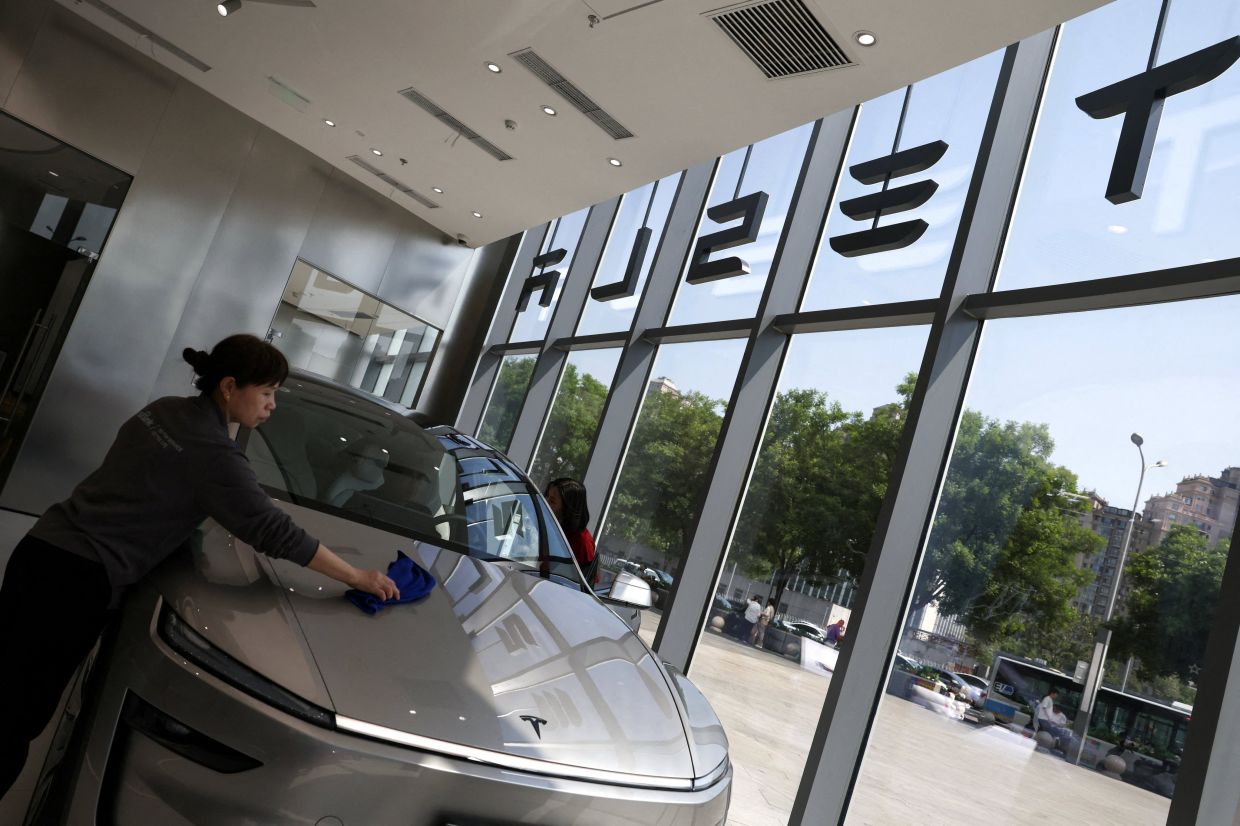
Tesla has announced the largest product recall ever recorded in mainland China's electric vehicle sector, addressing safety defects in approximately 2.98 million vehicles. The recall underscores mounting regulatory pressure on carmakers to enhance vehicle safety standards, particularly regarding door-handle mechanisms that have become a focal point for Chinese authorities and consumers alike.
The unprecedented recall scale reflects escalating concerns among Chinese regulators and the driving public over retractable door handles, which can malfunction or become inaccessible during emergencies. The issue gained prominence following a fatal accident in October in Sichuan province, when a 31-year-old man became trapped inside a burning Xiaomi SU7 Ultra electric vehicle. Despite efforts by bystanders to rescue him, the vehicle's doors could not be opened, resulting in a tragedy that sparked widespread safety debates across China's automotive sector and social media platforms.
Respectively to Tesla's remedial measures, the company will affix warning labels to internal door handles across affected vehicles beginning September 25. Additionally, Tesla will deploy an over-the-air software update targeting window-control systems, enabling automatic window lowering following collisions. This dual-pronged approach aims to restore passenger egress capability during emergencies when conventional door mechanisms might fail or become unreliable.
China's Ministry of Industry and Information Technology formalized its commitment to safety in February by announcing regulations mandating that all vehicles must feature both internal and external door handles capable of mechanical operation under all circumstances from the following year onwards. These requirements explicitly safeguard functionality during accidents or power failures, establishing baseline safety parameters that will fundamentally reshape vehicle design protocols across the industry. The regulatory intervention signals Beijing's determination to prevent future tragedies by establishing legally enforceable safety standards rather than relying on voluntary industry compliance.
While Tesla bears the highest recall burden among affected manufacturers, the American electric vehicle producer is not alone in facing regulatory action. Multiple carmakers have been implicated in the retractable door-handle controversy, though Tesla has issued substantially larger recall notifications than competitors thus far. Industry analysts interpret this disparity as reflecting Tesla's significant market share within China's premium electric vehicle segment, where retractable handle technology was particularly prevalent among recent model generations.
Parallel to the door-handle issue, Tesla simultaneously announced a separate recall involving 2.74 million Model 3 and Model Y vehicles manufactured at its Shanghai facility. This secondary recall addresses driver-assistance software deficiencies affecting autonomous steering and collision-response systems. The over-the-air update will ensure these assistance features remain engaged when driver responsiveness falls below required thresholds during emergency situations, closing a potential safety gap in the vehicle's automated systems.
Tesla's Shanghai manufacturing facility maintains critical importance to the company's global operations. During 2025, the plant produced approximately 851,000 vehicles destined for both domestic Chinese consumption and international export markets. This output represented more than half of Tesla's worldwide production total for the year, which experienced an 8.6 percent decline to 1.63 million units. The concentration of Tesla's manufacturing capacity in Shanghai underscores the geopolitical significance of maintaining regulatory relationships with Chinese authorities and sustaining production continuity despite periodic disruptions.
China ranks as Tesla's second-largest market globally, trailing only the United States in revenue contribution and sales volume. The Chinese market's strategic importance extends beyond financial metrics, as the country represents the world's largest electric vehicle market and a crucial testing ground for autonomous driving technologies. Regulatory setbacks or production interruptions in China possess implications resonating throughout Tesla's entire operational ecosystem, affecting supply chains, earnings forecasts, and technological development timelines.
Zhang Wenjie, proprietor of an automotive maintenance facility in Shanghai, contextualized the recall within broader industry dynamics. He observed that safety concerns surrounding door mechanisms have intensified substantially since late 2024, driven by heightened regulatory scrutiny and consumer consciousness regarding vehicle safety standards. Zhang predicted that large-scale recalls by Tesla and domestic Chinese manufacturers will ultimately catalyse industry-wide improvements in product design and quality assurance protocols. This perspective suggests that regulatory pressure, while immediately disruptive, may generate positive externalities by establishing elevated safety norms throughout the automotive sector.
The recall cascade demonstrates how singular tragic incidents can precipitate systemic regulatory responses affecting millions of vehicles and multiple manufacturers. Chinese policymakers have demonstrated willingness to implement prescriptive technical requirements rather than permitting market-driven solutions, reflecting broader governance philosophies prioritizing consumer protection over corporate operational flexibility. For international automakers operating within China, this regulatory environment necessitates continuous adaptation to evolving standards and proactive engagement with authorities to anticipate future requirements.
Looking forward, the door-handle regulations effective from next year will reshape vehicle design philosophies across the automotive industry serving Chinese markets. Manufacturers must reconfigure door systems to eliminate single points of failure where retractable mechanisms could render vehicles inaccessible during emergencies. This transition imposes engineering redesign costs and production timeline extensions, creating competitive pressures for companies unable to efficiently execute compliance modifications.
For Malaysian and Southeast Asian stakeholders, China's regulatory trajectory holds instructive value. As these regions develop indigenous automotive sectors and increasingly integrate electric vehicles into transportation infrastructure, safety governance frameworks emerging in China often prefigure regional standards. Malaysian authorities and manufacturers should monitor these precedents while considering whether comparable door-handle regulations warrant adoption within domestic safety frameworks, potentially harmonizing standards across the region and reducing manufacturer complexity in vehicle development and certification processes.

