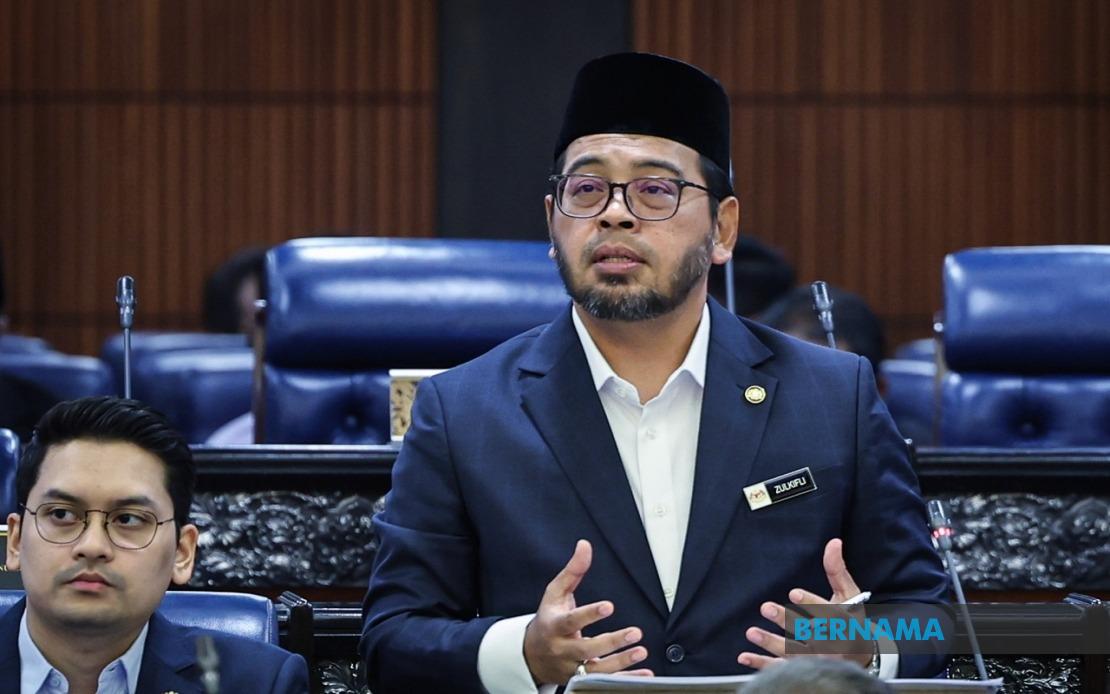
The financial collapse of Tabung Haji (TH), one of Malaysia's largest Islamic financial institutions, could have been prevented had the board and management properly responded to formal warnings issued by Bank Negara Malaysia over a two-year period beginning in 2014, Minister in the Prime Minister's Department (Religious Affairs) Dr. Zulkifli Hasan told Parliament on August 11. His remarks, delivered as he wound up a special parliamentary debate on a Royal Commission of Inquiry report into the pilgrim fund manager, underscore the extent to which institutional inaction contributed to what became a multi-billion-ringgit taxpayer-funded rescue operation.
Zulkifli disclosed that BNM transmitted five separate warning letters to TH's chairman and the supervising minister between August 2014 and September 2016, each addressing concerns about the institution's deteriorating financial position, eroding reserve levels, and weakening liquidity management practices. Despite this formal regulatory communication spanning more than two years, TH's management failed to implement corrective measures with the urgency the situation demanded. The minister suggested that had these warnings been treated with appropriate seriousness from 2014 onwards, the institution's difficulties could have been detected and remedied before spiralling into systemic crisis.
The scale of the eventual damage illustrates the cost of this regulatory neglect. By the end of 2018, TH's asset-liability deficit had ballooned to approximately RM10 billion, a shortfall so severe that the government was forced to intervene with a substantial bailout to prevent a broader financial catastrophe that could have undermined confidence in Malaysia's Islamic financial sector and threatened the savings of hundreds of thousands of pilgrims. Zulkifli framed the government's rescue package not as a sign of TH's inherent viability but rather as a damage-control measure necessitated by years of mismanagement and regulatory non-compliance.
Zulkifli's characterisation of events received support from the RCI report itself, which challenged the accuracy of audit certificates issued to TH during the period of financial deterioration. The inquiry found that TH should not have received a clean audit opinion; instead, auditors should have issued a qualified opinion highlighting matters that remained unresolved. This discrepancy raises uncomfortable questions about the effectiveness of TH's audit function and whether external auditors themselves failed to escalate concerns with sufficient force to trigger board-level action.
Central to the management failures documented in the RCI report were dividend and hibah distribution practices that violated both prudent Islamic banking principles and the Tabung Haji Act itself. Between 2014 and 2017, TH continued to declare and distribute dividends and grants to depositors even when the institution's liabilities exceeded its assets—a practice explicitly prohibited under Section 22 of the Tabung Haji Act. These distributions were not merely technically improper; they represented a systematic depletion of capital that should have been preserved to shore up the fund's deteriorating financial position.
The implications for Malaysia's regulatory architecture are substantial. BNM, as the nation's financial stability authority and non-bank financial institutions supervisor, clearly identified problems early but encountered institutional resistance to its guidance. Zulkifli acknowledged that while TH's leadership claimed to BNM that corrective steps were being undertaken, the evidence suggests these assurances were hollow. The disconnect between statements of compliance and actual operational behaviour points to governance failures at the board and senior management levels that extended beyond mere incompetence into the realm of negligence.
In response to these findings, the government has committed to immediate amendments to the Tabung Haji Act 1995, signalling recognition that legislative reform is necessary to prevent similar governance breakdowns. Additionally, forensic auditing has already commenced on investments identified in the RCI report as potentially problematic, and the government is examining the establishment of a Multi-Agency Task Force to investigate assets at risk of loss. These remedial steps suggest a determination to recover as much value as possible from the crisis and to strengthen oversight mechanisms.
The debate that consumed more than ten hours of parliamentary time on August 11 involved 39 members of Parliament asking questions and making contributions, with two ministers delivering wind-up remarks. This extended scrutiny reflects the political significance of the TH affair within Malaysia's governance discourse. The Fund's troubles had become emblematic of institutional failure in a sector serving primarily lower and middle-income Muslim Malaysians, many of whom depend on TH as a vehicle for saving for Hajj pilgrimage while accumulating retirement capital.
Dewan Rakyat Speaker Tan Sri Johari Abdul indicated that the parliamentary examination of the TH matter remains ongoing, with a third special meeting scheduled for October to allow legislators to pursue additional lines of questioning. This continuation suggests that many questions remain unresolved regarding individual accountability, the adequacy of existing safeguards, and whether current remedial measures will prove sufficient to restore depositor confidence in an institution that had operated under the Tabung Haji Act since 1981.
For Malaysian observers and regional financial sector analysts, the TH case serves as a cautionary study in the risks of regulatory forbearance and board-level inattention to early warning signals. The fund's collapse occurred not because warning signals were absent but because they were ignored, a distinction that should inform contemporary debates over financial institution governance standards across Southeast Asia. The government's decision to proceed with legislative amendments and comprehensive asset recovery efforts represents an attempt to salvage both public finances and the institutional credibility that years of poor governance had eroded.

